
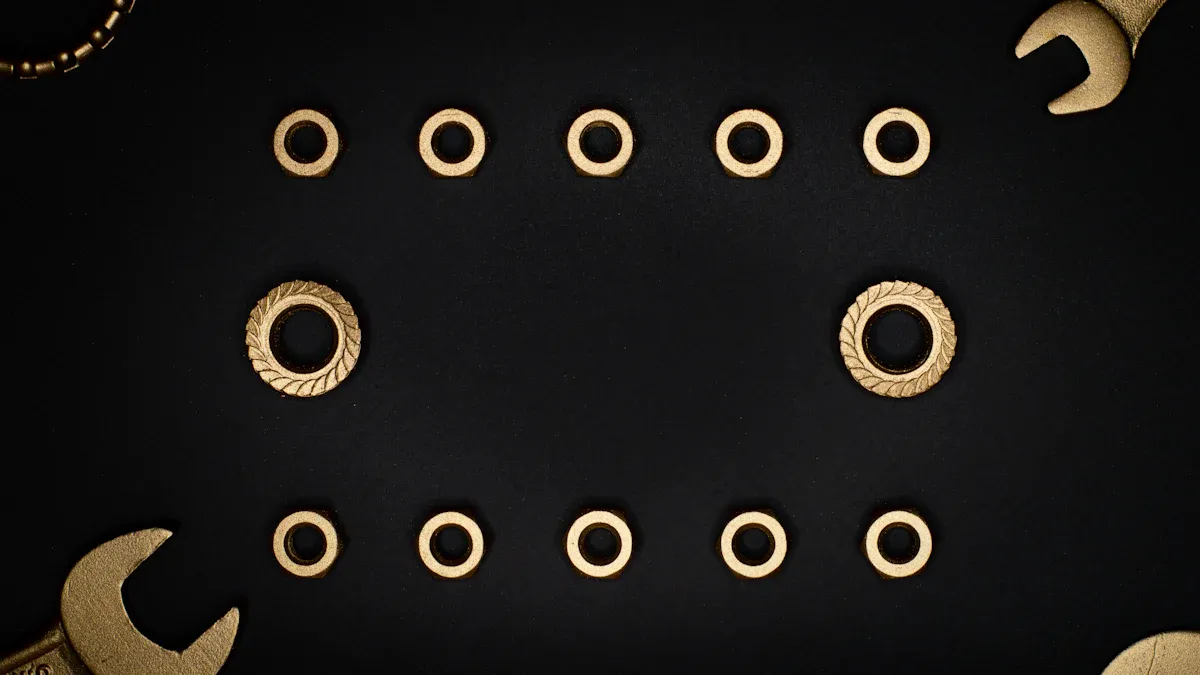
You want to choose the best flat washers for your project, but all the options can be confusing. Picking the right size, type, and material keeps your assembly safe and stops damage. When you match the washer to your fastener and where you use it, you help stop loosening from shaking and make your materials last longer. Stainless steel is good for use near water, while nylon helps insulate electronics. If you buy from good suppliers like Prince Fastener, you can feel sure your project will stay strong under pressure.
Principales conclusiones
- Know what your project needs before picking arandelas planas. Think about the weight, where you will use them, and if they fit with your fastener. This helps keep things safe and working well.
- Elige el best material for your washers. Stainless steel works well outside. Nylon is good for stopping electricity in electronics.
- Measure the inside and outside of the washer carefully. The inside must be the same size as your fastener. This makes sure it fits tight. The outside helps spread out the weight.
- Use flat washers to keep surfaces safe and stop harm. They spread out the force and help your project stay strong. This is important when things do not move.
- Use a checklist when you pick washers. This helps you remember to check the material, size, thickness, and rules for your project to work well.
Requisitos del proyecto
Before you choose flat washers, you need to understand what your project demands. You should look at how much weight the washer must support, the environment where you will use it, and how well it fits with your fastener. Each of these factors helps you pick the right washer for safety and long-lasting performance.
Load and Stress
You must think about the forces your washer will face. Some projects need washers that can handle heavy loads or constant pressure. If you use the wrong washer, your joint might fail or wear out too soon. Here are some important points to consider:
- The material of the washer matters. Steel washers give you strength, nylon resists corrosion, and rubber absorbs shock.
- The diameter of the washer affects how much load it can handle. Washers larger than ¼ inch can boost load capacity by up to 30%.
- The right size spreads the load and lowers the risk of damage.
- Using flat washers in high-stress areas can make your connections last up to 20% longer.
- You should always check if the washer can keep tension in your assembly, especially if you use it with wire ropes or heavy equipment.
Consejo: If you are not sure about the strength you need, talk to an expert or choose a trusted supplier like Prince Fastener for advice.
Environment Factors
Where you use your washer changes what type you need. Humidity, chemicals, and temperature swings can all affect washer performance. You want your washer to last and protect your project from damage. Think about these factors:
- High humidity can cause metal washers to rust.
- Chemicals, oils, and salts can break down some materials.
- Dust, sand, and vibration can lead to physical damage.
- Outdoor projects need washers that can handle weather changes. Non-metallic washers resist weather and vibration. Rubber washers work well when temperatures change a lot.
- Stainless steel and galvanized washers are good choices for outdoor use because they resist rust and corrosion.
Nota: Always match the washer material to your environment. This step helps prevent early failure and keeps your project safe.
Fastener Compatibility
You need to make sure your washer fits your fastener. The inner diameter of the washer should match the diameter of your screw or bolt. For example, if you use a ¾-16 bolt, you should pick a ¾ washer. The washer’s hole will be just a bit bigger than the bolt, so it fits well.
If you use the wrong washer size or type, you can cause problems:
- A soft washer with a hard, heat-treated fastener can deform and lose clamp load.
- The wrong size can create pressure points and damage your parts.
- Flat washers help spread the load and stop structural failure.
Reminder: Siempre check the size chart or ask your supplier, like Prince Fastener, to make sure your washer and fastener work together.
By looking at load, environment, and fastener fit, you set your project up for success. Taking time to match these requirements helps you avoid costly mistakes and keeps your assembly strong.
Flat Washer Functions and Types
What Flat Washers Do
Flat washers help make your project stronger and safer. They spread the force from a bolt or screw over a bigger area. This helps stop damage to your materials. Flat washers also keep your project secure. They protect surfaces from getting scratched or dented. Flat washers fill small gaps and help keep everything straight.
Here is a table that shows what flat washers do:
| Función | Descripción |
|---|---|
| Distribución de la carga | Spreads the load out, so the material does not get damaged. |
| Prevención del aflojamiento | Adds friction to help stop loosening from shaking, keeping things tight. |
| Compensation for Surface Irregularities | Fills in gaps from rough spots, so you get even tightening and good alignment. |
| Maintenance of Alignment | Works as a spacer to set the right distance between parts for a good fit. |
| Resistencia a la corrosión | Helps fasteners avoid rust and getting weak, especially in tough places. |
| Thermal Expansion Compensation | Lets the washer change size with heat or cold, so your project stays strong. |
Flat washers do more than just fill space. They help your project last longer and work better.
Consejo: Use flat washers to protect soft or finished surfaces. They act as a shield and stop fasteners from making scratches or dents.
Type A, Type B, and Fender Washers
There are different flat washers for different jobs. The most common are Type A, Type B, and fender washers.
- Type A washers have loose size rules. You use them when you do not need exact measurements. They are good for general projects where size is not super important.
- Type B washers have tighter size rules. They come in narrow, regular, and wide sizes. You use them when you need a better fit and more accuracy.
- Arandelas de guardabarros are much bigger around than regular flat washers. You use them to spread the load over a larger area. They are best for soft or thin materials that could get hurt by smaller washers.
Here is a table to compare Type A and Type B washers:
| Tipo | Tolerances | Outside Diameter Categories |
|---|---|---|
| Type A | Loose size rules | Not grouped |
| Type B | Tight size rules | Narrow, Regular, Wide |
Fender washers are easy to spot because they are so big. You use them when you need to stop fasteners from pulling through or hurting soft materials. They are also good for holding heavy or bulky things.
If you want to be sure you pick the right washer, you can ask a trusted supplier like Prince Fastener. They have many Type A, Type B, and fender washers for lots of uses.
When to Use Flat Washers
You should use flat washers when you need to spread the load and protect your materials. They work best in projects that do not move much, like building furniture or putting together electronics. Flat washers help keep your project tight and safe.
- Use flat washers when you want to:
- Spread the load of a fastener over a bigger area.
- Protect soft or finished surfaces from scratches or dents.
- Fill small gaps and keep parts lined up.
- Stop fasteners from loosening in things that do not move.
Flat washers are not the best for projects with lots of shaking. For those, you should use spring washers instead.
Nota: Always pick the washer type that fits your project. This helps you avoid damage and keeps your project strong.
When you know what flat washers do and how Type A, Type B, and fender washers are different, you can choose the best one for your project. You will protect your materials, make your project last longer, and get better results.
Washer Dimensions
Inner and Outer Diameter
You need to check both the inner and outer diameter when you pick a flat washer. The inner diameter should match the size of your bolt or screw. If the washer hole is too small, it will not fit. If it is too large, the washer will not spread the load well. The outer diameter decides how much area the washer covers. A larger outer diameter helps protect soft materials and spreads force over a bigger space. You can use a simple ruler or caliper to measure these diameters. Prince Fastener offers washers in many sizes, so you can find the right fit for your project.
| Washer Part | What It Means | Por qué es importante |
|---|---|---|
| Inner Diameter | Hole size for fastener | Ensures proper fit |
| Outer Diameter | Total washer width | Spreads load, protects surface |
Consejo: Always match the inner diameter to your fastener for a secure hold.
Thickness and Strength
Washer thickness affects how much weight it can handle. Thicker washers resist bending and hold up under heavy loads. You should choose a thicker washer if your project needs extra strength.
- Thicker washers have a higher load-bearing capacity because they resist deformation.
- Thin washers work for light jobs, but they may bend or break under pressure.
- Heavy-duty projects, like machinery or outdoor structures, need thick washers for safety.
If you want washers that last, Prince Fastener has options with different thicknesses for every need.
Measuring for Fit
You need to measure carefully to make sure your washer fits. Use a tape measure, a level, and a notepad to record your numbers. Measure the height from the floor to the top of your appliance, the width at the widest point, and the depth from back to front. Check for uneven floors and door handles that stick out. Leave 2-3 inches of space on each side and 4-6 inches at the back for easy installation.
- Use a tape measure for accurate results.
- Write down each measurement on your notepad.
- Double-check for obstacles like uneven floors or handles.
- Allow extra space for movement and airflow.
Nota: Careful measuring helps you avoid mistakes and keeps your project running smoothly.
Prince Fastener can help you find washers that fit your exact measurements, making your job easier and safer.
Flat Washer Materials
Materiales comunes
Flat washers come in many different materials. Each one is good for certain jobs. Here are some you will see a lot:
- Acero
- Acero inoxidable
- Latón
- El plastico
- Goma
Steel washers are strong and can last longer if treated. Arandelas de acero inoxidable are great outside because they do not rust fast. Brass washers are used in electrical work since they do not let electricity pass. Plastic and rubber washers keep out water and stop shaking. If you are not sure which to use, you can ask Prince Fastener for help.
Matching Material to Application
Pick the washer material that fits your project best. Some jobs need more strength. Others need to fight off wear or chemicals. The table below shows how each material works in hard places:
| Tipo de material | Fuerza | Wear Resistance | Aplicaciones ideales |
|---|---|---|---|
| Hardened Carbon Steel | Alta | Excelente | Construction, Heavy Machinery |
| Weathering Steel | Alta | Bien | Critical Infrastructure |
The right material spreads weight and keeps surfaces safe. It helps your project stay strong for a long time. ASTM F436 is a rule that makes sure washers for buildings and machines are safe.
Consejo: Always check what your project needs before picking a washer material.
Corrosion and Temperature
Some projects deal with water, chemicals, or heat. You need washers that can handle these things. Stainless steel does not rust and works in hot places. Brass and copper also fight rust, but brass can break if it gets too hot. Ceramic washers can take the most heat, but they can crack if hit.
| Material | Temperature Resistance (°F) | Resistencia a la corrosión | Notas |
|---|---|---|---|
| Acero inoxidable | 800 – 1000 | Bien | Grade 304 and 316 are common for high heat. |
| Latón | 400 – 600 | Bien | Can become brittle at high temperatures. |
| Cobre | 600 – 800 | Excelente | Good for electricity and resists corrosion. |
| Ceramic | 1000 – 2000 | Excelente | Best for extreme heat, but brittle. |
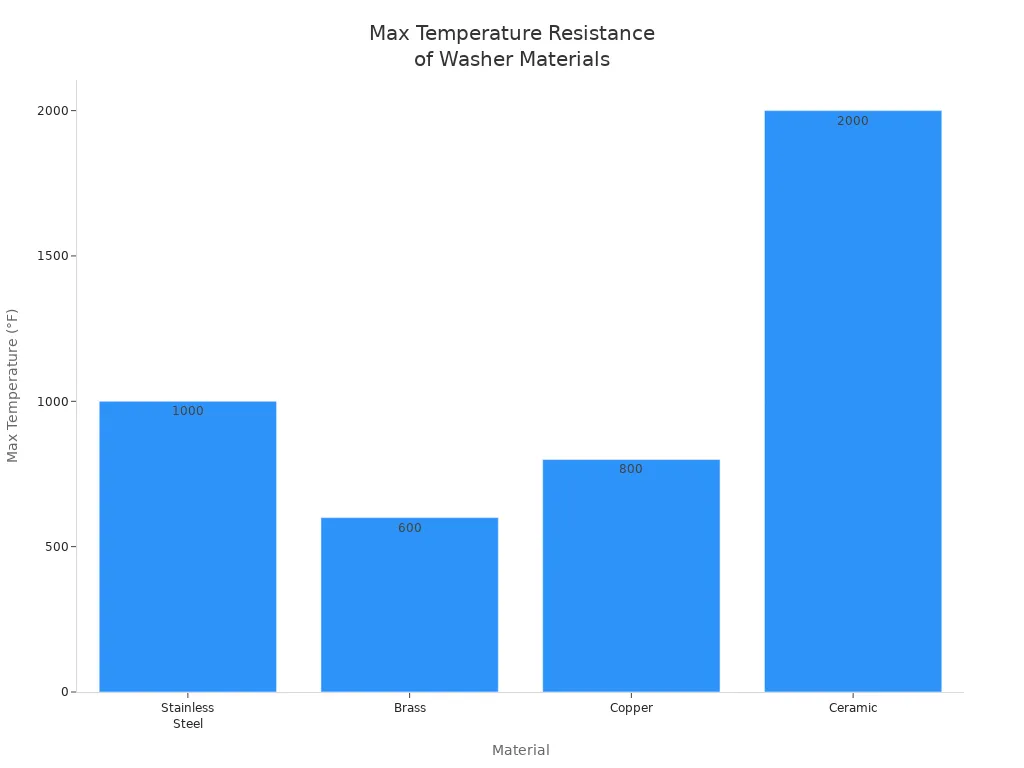
If you want your project to last, pick a washer that fits the place you use it. Prince Fastener has many choices for hard jobs, so you can always find what you need.
Consideraciones especiales
Resistencia a la corrosión
You want your washers to last a long time. Corrosion can make washers weak and cause them to break. You can pick washers with special coatings to stop rust and damage. Each coating works best in certain places. The table below lists common coating types and where they are used:
| Coating Technique | Descripción | Actuación | Application Areas |
|---|---|---|---|
| galvanizado | Thin zinc layer added by electroplating | Basic corrosion resistance, cost-effective | Automotive, construction, industry |
| Galvanización en caliente | Thick zinc layer from dipping in molten zinc | Excellent for outdoor and harsh environments | Outdoor equipment, marine, construction |
| Niquelado | Strong nickel layer on the surface | Strong resistance, improved hardness, nice look | Aerospace, electronics, chemical plants |
| Chrome Plating | Shiny chromium layer | Excellent resistance, hard surface, shiny finish | Automotive, decorative, high-wear parts |
| Phosphate Coating | Protective phosphate crystals | Better paint/lubricant grip, improved resistance | Machinery, automotive, fasteners |
| Organic Coatings | Polymer-based paints or epoxy | Versatile, chemical-resistant, extreme conditions | Industrial, marine, chemical industries |
| PTFE Coating | Non-stick, chemical-resistant PTFE layer | Excellent chemical resistance, reduces friction | Food, medical, chemical plants |
You can ask Prince Fastener for washers with the right coating. This helps your project last longer and stay safe.
Consejo: Always pick the washer coating that matches your environment. This step keeps your project from failing too soon.
Estándares de la industria
You need to know about normas del sector when picking flat washers. Standards help washers fit and work well in your project. They set rules for size, thickness, and strength. Many jobs use these standards to keep things safe and working right.
Here are some common standards for flat washers:
| Tipo de lavadora | Estándares |
|---|---|
| Arandela | ASME B18.21.1, ASTM F436, DIN125, DIN126, ISO7098, DIN9021 |
| Spring lock washer | ASME B18.21.1, DIN127, DIN7980 |
| Tooth lock washer | ASME B18.21.1, DIN6797 |
| Square washer | ASME B18.2.6, DIN434, DIN435, DIN436 |
You will see these standards in many places:
- COMO YO is used a lot in North America. It makes sure washers fit bolts in big machines.
- ESTRUENDO is common in Europe, especially for cars and machines.
- YO ASI is a worldwide standard. It covers size, fit, and how washers should work.
When you follow these standards, your washers will work well and pass checks. Prince Fastener has washers that meet these standards, so your project will stay strong.
Consejos de instalación
Correct Placement
Usted quiere que su flat washer to protect your project. Putting the washer in the right spot helps a lot. Here are steps for placing washers:
- Put the washer between the bolt head and the material. This spreads out the force and keeps the surface safe.
- Add a washer between the nut and the material. This helps spread the force and protects your project.
- Use locking washers for extra safety. Put the locking washer between the flat washer and the nut or bolt head. This stops loosening from shaking.
- Follow the maker’s rules for special washers. Some jobs need special washers. Always read the instructions for your project.
Consejo: You can ask Prince Fastener for help with washer placement. Their team can help you pick the best setup for your project.
Avoiding Mistakes
Mistakes when installing washers can hurt your project. You can stop problems by watching for these common errors:
- Wrong washer placement can cause bad force spreading and damage. Always read the instructions before you start.
- Not matching washer material can cause rust or breakage. Pick a washer that matches your fastener and where you use it.
- Wrong washer size changes how well the washer spreads force. Make sure the washer fits your bolt or screw.
| Error | Cómo evitarlo |
|---|---|
| Wrong placement | Read instructions and check your work |
| Wrong material | Match washer to fastener and place |
| Wrong size | Measure and pick the right fit |
🛠️ Nota: Prince Fastener has washers in many sizes and materials. You can find the right washer for any project and skip common mistakes.
You keep your project safe and strong when you place washers right and avoid these errors.
Flat Washer Selection Checklist
You want your project to last and stay safe. A checklist helps you pick the right flat washer every time. Use this list to guide your choice:
Type of Material
Check the washer material. Strong materials protect your base and stop damage. Choose steel for heavy loads. Pick nylon or rubber for insulation or vibration control.Match Washer to Bolt Strength
Make sure the washer matches the strength of your bolt. This keeps your assembly stable. A weak washer can fail if the bolt is too strong.Environmental Concerns
Think about where you will use the washer. If your project faces rain, chemicals, or salt, pick a washer that resists corrosion. Stainless steel and coated washers work well outside.Washer Size and Fit
Measure the inner diameter to match your bolt or screw. The outer diameter should cover enough area to spread the load. A good fit stops movement and protects your materials.Washer Thickness
Choose the right thickness for your load. Thicker washers handle more weight and resist bending. Thin washers work for light jobs.Tipo de lavadora
Decide if you need a Type A, Type B, or fender washer. Type A works for general use. Type B gives a precise fit. Fender washers cover soft or thin materials.Estándares de la industria
Check if your project needs washers that meet standards like ASME, DIN, or ISO. This step helps your project pass inspections and stay safe.
📝 Consejo: You can ask Prince Fastener for help if you are unsure about any step. Their team can guide you to the best washer for your needs.
When you use a checklist, you think about every detail—fastener type, materials, environment, and application. This careful approach helps your project work better and last longer. You avoid mistakes and get reliable results every time.
You can find the best flat washer by doing these things: First, pick a material that works with your fastener and where you will use it. Next, check that the washer is big enough to spread out pressure. Make sure the hole and thickness fit your bolt or screw. Always measure so the washer fits just right. If your project gets hot or cold, let the washer have room to change size.
Choosing the right washer helps in many ways: Washers help spread out force and keep your project safe. This can make your connection last 20% longer. They also help stop damage to soft materials. About 75% of contractors say they see fewer problems. The right washer keeps out rust and stops things from breaking. This means you will have fewer repairs and less waiting.
Always use the checklist for each project. If you want more tips, you can look at the washer guide from Prince Fastener.
Preguntas más frecuentes
What size flat washer should you use?
You should match the washer’s inner diameter to your bolt or screw size. The outer diameter should cover enough area to spread the load. Always check the size chart from Prince Fastener for the best fit.
Can you reuse flat washers?
You can reuse flat washers if they show no signs of bending, cracking, or rust. Always inspect washers before using them again. Damaged washers can weaken your project.
Do flat washers prevent loosening?
Flat washers help spread force and protect surfaces. They do not stop bolts from loosening by themselves. For extra security, you should use a lock washer or a thread-locking product.
Which material works best outdoors?
Stainless steel or hot-dip galvanized washers work best outside. These materials resist rust and last longer in wet or harsh weather. Prince Fastener offers many outdoor-ready options.
How do you know if a washer meets industry standards?
You should look for markings or ask your supplier for certification. Washers from Prince Fastener meet standards like ASME, DIN, or ISO. This ensures safety and quality for your project.



 Español
  English
  Português do Brasil
  Русский
  日本語
日本語  العربية