

Choosing between a 15 mm bolt and a 16 mm bolt may look like a minor dimensional change, but in a loaded joint, that 1 mm difference can affect cross-sectional area, preload capacity, shear resistance, fatigue margin, installation tooling, inspection requirements, and long-term reliability. A 16 mm bolt is not automatically the right answer in every design, but it often becomes the better option when the joint is close to its allowable load, vibration limit, or maintenance threshold.

Introducción
Context for bolt sizing decisions and the practical impact of diameter changes on strength and reliability
In real engineering work, bolt size changes usually happen for a reason: field technicians find repeated loosening, a fatigue review shows low margin, a machine is uprated, a bracket is redesigned, or procurement wants to replace a non-standard fastener with a standard metric size. The change from 15 mm to 16 mm is small enough to seem simple, but large enough to affect the whole joint system.
Using the nominal shank area formula, a 15 mm bolt has about 176.7 mm² of area, while a 16 mm bolt has about 201.1 mm². That is roughly a 13.8% increase in nominal area. In many joints, that extra area can improve load margin. However, the benefit only appears if the connected parts, thread engagement, nut, washer, grade, coating, and tightening method are also suitable.
Overview of common applications where small diameter differences matter
Small diameter changes matter most in compact, cyclically loaded, or safety-related assemblies. Examples include machinery frames, lifting fixtures, agricultural equipment, construction machinery, industrial skids, rail and transport brackets, renewable-energy supports, and custom equipment where hole patterns are already fixed.
There is also a supply-chain factor. A 15 mm bolt is less common than M16 in many metric fastener systems. For maintenance teams, moving to a standard 16 mm fastener can simplify stocking, torque-tool selection, washer matching, and emergency replacement. But if the surrounding plate or bracket cannot tolerate a larger hole, the upgrade may create a new weakness.
What readers will learn about when to upgrade from 15 mm to 16 mm
This guide explains the mechanical, material, installation, compliance, and lifecycle factors behind the upgrade decision. It includes calculation examples, an Excel-ready table, a bar chart, a pie chart, practical inspection triggers, standards references, industry insights, images, and a related YouTube video for understanding bolt preload and fastener calculations.
Introduction to Bolt Sizing: 15 mm vs 16 mm
What diameter tells you about a bolt’s role in a joint
Bolt diameter is one of the first clues about the expected load level of a joint. A larger diameter generally provides more metal area, higher stiffness, better resistance to tensile stress, and greater shear area. It can also reduce local bearing pressure under the head, nut, and washer when the joint is properly designed.
However, diameter does not define strength by itself. A high-grade 15 mm bolt can outperform a low-grade 16 mm bolt. A properly preloaded smaller bolt can perform better than a larger bolt installed with poor torque control. In a bolted joint, diameter works together with grade, thread pitch, material, coating, grip length, clearance, preload, and surface condition.
Typical applications for 15 mm and 16 mm bolts
A 15 mm bolt is often associated with special machinery, legacy equipment, custom shafts, non-standard clamping components, or replacement parts where the original design used a non-preferred size. A 16 mm bolt, commonly known as M16 in standard metric systems, is widely used in structural brackets, machinery bases, equipment frames, heavy-duty supports, maintenance repairs, and industrial assemblies.
For buyers comparing standard and custom bolt options, Prince Fastener’s page on bolt manufacturing for industrial applications is a useful reference. If the bolt head style affects wrench access or installation speed, the guide to hex head fastener selection provides additional context.
Quick rules of thumb for early design considerations
- If the current 15 mm bolt is close to its tensile, shear, or fatigue limit, evaluate the 16 mm option early.
- If the connection is safety-critical, verify grade, preload method, thread engagement, and standards—not only diameter.
- If 15 mm is a custom size, check whether standard M16 improves availability and maintenance efficiency.
- If the connected plates are thin, narrow, or edge-distance limited, a larger hole may weaken the part.
- If the joint sees vibration or impact, preload control may matter more than the 1 mm diameter increase.

Mechanical Basics: What Size Means for Strength
Cross-sectional area and shear/tension implications
The simplest comparison is nominal shank area:
Area = π × d² / 4
For a 15 mm bolt, the nominal shank area is approximately 176.7 mm². For a 16 mm bolt, the nominal shank area is approximately 201.1 mm². The 16 mm bolt provides about 24.4 mm² more nominal area, or about 13.8% more.
In tension, engineers usually use the tensile stress area of the thread rather than the full shank area. In shear, the result depends on whether the shear plane passes through the smooth shank or through the threaded section. A 16 mm bolt can provide more area, but the connection layout decides how much of that area is actually useful.
Stress distribution and necking considerations
Bolts do not carry stress perfectly evenly. Threads create stress concentrations, especially near the first engaged thread and at changes in section. Under overload, a bolt may begin to neck in the most highly stressed region before fracture. A larger diameter reduces nominal stress under the same load, but it does not eliminate thread-root stress concentration, bending from misalignment, or uneven bearing under the head.
This is why a 16 mm bolt installed through misaligned holes may not perform as expected. If the bolt is forced into position, it can carry bending stress before the external load is even applied.
Relation between diameter, grade, and allowable load
Allowable load depends on both area and material strength. For metric carbon and alloy steel bolts, ISO 898-1 mechanical property requirements define property classes such as 8.8, 10.9, and 12.9. Higher property classes can provide higher tensile and yield strength, but they also require more care in tightening, coating, and inspection.
For structural steel applications, ASTM F3125 high-strength structural bolts are commonly referenced in North American practice. The important industry lesson is clear: bolt diameter, property class, nut grade, washer hardness, coating, and installation method should be specified together.
Bar Chart: Nominal Shank Area Comparison
Unit: mm². The 16 mm bolt has about 13.8% more nominal shank area.
Pie Chart: Main Factors in Bolt Upgrade Decisions
- Load and stress margin — 32%
- Fatigue and vibration — 24%
- Standards and compliance — 18%
- Installation and tooling — 14%
- Cost and availability — 12%
Material and Grades: Why It Matters
Common steel grades for transient and structural bolts
Common metric bolt property classes include 4.6, 8.8, 10.9, and 12.9. Class 8.8 is widely used in machinery, brackets, equipment frames, and general load-bearing joints. Class 10.9 and 12.9 are used where higher strength is required, but they demand better control of tightening, coating selection, and operating conditions.
For temporary or transient loads, a lower property class may be adequate if the joint is not safety-critical and the load is predictable. For structural, transport, lifting, or heavy-equipment applications, grade selection should follow engineering calculations, project standards, and inspection requirements.
Corrosion resistance and coatings implications
Corrosion reduces bolt cross-section, damages threads, changes friction, and makes torque readings less reliable. A 16 mm bolt may begin with more area than a 15 mm bolt, but poor corrosion protection can remove that advantage over time. Zinc plating, hot-dip galvanizing, mechanical galvanizing, zinc flake coatings, and stainless steel each have different limits.
For humid, outdoor, chemical, or marine environments, stainless fasteners may be considered. Prince Fastener’s page on stainless steel bolts for corrosive environments is relevant when corrosion risk is part of the upgrade decision. For a broader comparison of stainless assemblies, the article on stainless steel bolts and nuts in projects explains where stainless materials reduce maintenance problems.
Heat treatment and its effect on strength
Heat treatment changes tensile strength, yield strength, hardness, and ductility. A properly heat-treated high-strength bolt can carry more load than a larger low-strength bolt. However, higher hardness can increase sensitivity to hydrogen embrittlement, especially when coatings or acid cleaning processes are involved.
Industry insight: many field failures blamed on “wrong bolt size” are actually specification failures. The drawing may call out diameter but omit property class, coating, nut grade, washer hardness, lubrication condition, or tightening method. A diameter upgrade should be treated as a full fastener-system upgrade, not only a hole-size change.

Load Scenarios: Tensile, Shear, and Fatigue
Tensile loading differences between 15 mm and 16 mm
In tensile loading, the bolt resists force along its axis. If grade, thread pitch, and installation quality are comparable, a larger effective tensile area allows a higher tensile load before reaching the same stress level. This is where the 16 mm bolt’s larger area can be valuable.
Preload is equally important. A properly preloaded joint keeps clamped parts together and reduces external load variation on the bolt. If a 16 mm bolt is under-tightened or installed with inconsistent lubrication, its theoretical strength advantage may not show up in service.
Shear strength and thread engagement considerations
In shear loading, the force acts across the bolt. If the shear plane passes through the smooth shank, the 16 mm diameter provides more shear area. If the shear plane passes through the threaded portion, the effective area is lower and stress concentration increases.
Thread engagement also matters. A larger bolt installed into a weak tapped hole may strip the internal thread before the bolt reaches its theoretical strength. The receiving material, thread depth, and thread quality must be checked before upgrading.
Fatigue life implications with diameter changes
Fatigue failures occur under repeated loading and often start at thread roots, surface defects, or locations with bending stress. A 16 mm bolt can reduce nominal stress compared with a 15 mm bolt under the same load, but fatigue life also depends on preload consistency, thread rolling quality, alignment, vibration, and joint stiffness.
For fatigue-sensitive joints, a diameter upgrade should be paired with improved installation control. Better washers, hardened bearing surfaces, controlled lubrication, locking features, or revised joint geometry may produce more benefit than diameter alone.
Strength Benefits of Upgrading to 16 mm
Increased cross-sectional area and potential pull-out resistance
The primary benefit of moving from 15 mm to 16 mm is increased area. A larger bolt can reduce stress under the same external load and may improve thread stripping resistance when the mating material and engagement length are adequate. In tapped-hole applications, pull-out resistance depends on both bolt diameter and internal thread strength.
Impact on joint stiffness and load distribution
A larger bolt is usually stiffer. Higher stiffness can improve joint response in some applications, but it can also change load distribution across a bolt group. If several bolts share the same load, upgrading only one position may create uneven loading. In flanges, machine bases, and multi-bolt brackets, engineers should review the full bolt pattern before changing only selected fasteners.
Safety margin and design factor adjustments
A 16 mm upgrade can increase safety margin where the 15 mm bolt was close to its allowable stress. But the design factor must be recalculated. If the connected plate, weld, bracket, or tapped hole becomes the new weak link, the upgrade may only move the failure location instead of improving the assembly.
This is especially important in retrofit work. Maintenance teams may request a larger bolt because it “feels stronger,” but engineering should verify edge distance, bearing stress, washer coverage, access, and the condition of the base material before approving the change.
When to Consider Upgrading: Practical Thresholds
Load thresholds and failure indicators
Consider upgrading from 15 mm to 16 mm when calculated stress margins are low, when proof-load requirements are difficult to meet, when equipment has been uprated, or when the joint repeatedly loses preload. In lifting, guarding, support, transport, and high-vibration applications, small signs of distress should trigger a formal review.
Inspection findings that prompt upgrade
Inspection findings that may justify an upgrade include elongated holes, fretting marks, cracked paint around the joint, washer indentation, bolt bending, thread galling, corrosion pitting, broken fasteners, or repeated torque loss. These signs often indicate that the joint is moving, overloaded, misaligned, corroding, or not maintaining preload.
Cost-benefit considerations in heavy-use environments
In heavy-use environments, the cost of a larger bolt can be minor compared with downtime. Upgrading a compact equipment bracket from a custom 15 mm fastener to a standard 16 mm assembly may reduce spare-parts risk and allow maintenance teams to use standard torque tools, nuts, and washers. The benefit is not only strength; it is serviceability and repeatability.
Safety and Compliance: Codes and Standards
Relevant standards: ISO, ASTM for 15 mm and 16 mm bolts
Metric bolt mechanical properties are commonly referenced through ISO 898-1 for carbon and alloy steel bolts. For structural bolting, ASTM specifications such as ASTM F3125 are frequently used in North American steel construction. Fastener distributors also publish useful technical references; for example, Fastenal provides a PDF on mechanical properties of metric fasteners.
Because 15 mm is less common than M16, a 15 mm bolt may require special documentation, custom tooling, or controlled inventory. M16 components are usually easier to match with standard nuts, washers, clearance holes, and torque references.
Documentation and traceability requirements
When upgrading bolt size, document the reason for the change, the new diameter, property class, material, coating, thread pitch, nut specification, washer specification, torque or tension method, hole size, inspection criteria, and drawing revision. For regulated or safety-critical industries, traceability may require mill certificates, heat numbers, batch records, and supplier conformity documents.
Prince Fastener supports OEM and custom requirements where buyers need controlled dimensions, coatings, packaging, and documentation. The page on custom fastener services is useful when a project needs a non-standard 15 mm component or a documented transition to a standard 16 mm assembly.
Installation best practices aligned with standards
Installation should follow the selected standard, project specification, and fastener manufacturer’s instructions. Best practices include cleaning mating surfaces, using compatible nuts and washers, controlling lubrication, applying torque in stages, checking final torque or tension, and recording installation data for critical joints.
Do not reuse high-strength bolts in critical applications unless the governing standard and project procedure allow it. If a bolt has yielded, corroded, galled, or lost thread form, replacement is safer than reuse.
Installation and Fit: Threads, Clearance, and Tools
Thread engagement length and engagement quality
Thread engagement length determines whether internal or external threads can carry load without stripping. Steel-to-steel tapped holes may require less engagement than aluminum, cast iron, or softer alloys. If a 15 mm bolt is upgraded to 16 mm in a tapped component, the receiving thread depth and material strength must be reviewed.
Engagement quality matters as much as length. Dirty, painted, damaged, or corroded threads distort torque readings and reduce preload consistency. A 16 mm upgrade should include inspection of mating threads, replacement of damaged nuts, and cleaning of bearing surfaces.
Clearance, shank-to-thread ratio, and fit considerations
Moving from 15 mm to 16 mm may require larger holes, revised edge distances, different washers, and new clearance rules. If the hole pattern is tight, the larger hole can reduce the net section in the plate or interfere with adjacent components. For shear joints, engineers should review the shank-to-thread ratio so the threaded portion is not unintentionally placed in the primary shear plane.
Recommended tools and torque strategies for different diameters
A 16 mm bolt usually requires a different torque range than a 15 mm bolt of similar grade and thread condition. Use calibrated torque wrenches, torque-angle methods, direct tension indicators, or hydraulic tensioning where appropriate. Lubrication must be controlled because dry and lubricated threads can produce very different preload at the same torque.
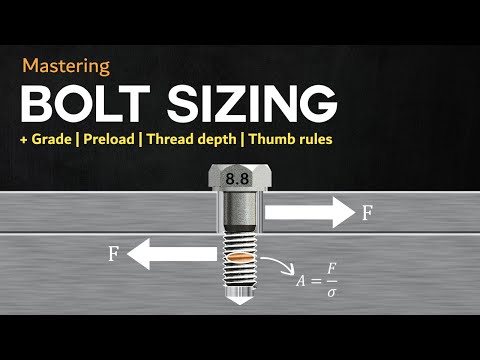
The video below provides a practical explanation of bolt size, grade, preload, and calculation concepts. It is useful background for teams reviewing whether a diameter upgrade should also include a tightening procedure update.
If the embedded video is blocked by your CMS, use this direct YouTube link: Complete Guide to Bolt Calculation – Size, Grade, Preload
Cost Implications: Material, Labor, Lifecycle
Material and coating costs comparison
A 16 mm bolt typically uses more material than a 15 mm bolt and may require larger nuts and washers. Coating cost may also increase slightly because of surface area and process requirements. However, if M16 is a standard stocked size while 15 mm is custom, the standard 16 mm option may be cheaper and faster to source despite being larger.
Labor time and precision risks in upgrading
The largest upgrade cost is often labor, not the bolt. Reaming holes, checking alignment, changing fixtures, updating torque tools, revising inspection documents, and retraining technicians all take time. In field repairs, access may be limited, and hole enlargement can introduce alignment problems if not controlled.
Lifecycle cost: maintenance, replacement intervals
Lifecycle cost includes downtime, inspection frequency, replacement intervals, and spare-part availability. A standard M16 bolt assembly may reduce maintenance risk if technicians can source replacements quickly and use standard tooling. Staying with a custom 15 mm bolt may still be justified if the design envelope cannot tolerate larger holes or if the original joint already has enough safety margin.
Decision Guide and Quick Reference
Checklist for deciding to upgrade
- Confirm the actual load case: tensile, shear, combined loading, vibration, impact, or fatigue.
- Calculate the 15 mm and 16 mm effective areas using the correct thread pitch and shear plane.
- Verify bolt grade, nut grade, washer hardness, and coating compatibility.
- Check whether the connected material can support the larger hole and bearing pressure.
- Confirm edge distance, spacing, and wrench access for larger tools.
- Review preload method, torque procedure, and lubrication condition.
- Check applicable ISO, ASTM, project, or industry standards.
- Document the design change, inspection criteria, and replacement parts list.
Simple calculation example: how diameter affects allowable load
Assume the same material grade and compare nominal shank area only:
- 15 mm area = π × 15² / 4 = approximately 176.7 mm²
- 16 mm area = π × 16² / 4 = approximately 201.1 mm²
- Area increase = 201.1 / 176.7 − 1 = approximately 13.8%
If the joint were controlled purely by nominal shank tensile stress, the 16 mm bolt could theoretically support about 13.8% more load at the same stress. In practice, engineers must adjust this estimate for thread stress area, grade, preload, shear plane, bending, fatigue, and base material strength.
Field notes and practical tips for engineers and technicians
Field technicians should report more than “bolt loose” or “bolt broken.” Useful inspection notes include bolt grade marking, coating condition, hole shape, washer indentation, thread damage, corrosion location, torque history, vibration exposure, and whether the same position fails repeatedly. These details help engineers decide whether the solution is a larger bolt, better preload, different coating, harder washers, improved alignment, or a redesigned bracket.
Excel-Ready Table: 15 mm vs 16 mm Bolt Upgrade Review
Copy this table directly into Excel or Google Sheets for early engineering, maintenance, and procurement review.
| Review Item | 15 mm Bolt | 16 mm Bolt | Engineering Note | Upgrade Trigger |
|---|---|---|---|---|
| Nominal shank area | 176.7 mm² | 201.1 mm² | 16 mm gives about 13.8% more nominal area | Low tensile or shear margin |
| Availability | Often custom or less common | Widely available as M16 | Standard size can reduce sourcing risk | Long lead time or difficult spare sourcing |
| Hole and clearance | Smaller hole requirement | Requires larger clearance | Check edge distance and net section | Enough plate width and spacing available |
| Preload and torque | Lower torque range depending on grade | Higher torque range depending on grade | Torque tools and procedures may need revision | Controlled tightening is available |
| Fatigue performance | Higher stress at same load | Lower nominal stress at same load | Preload quality and thread condition remain critical | Vibration, repeated loosening, or cracking |
| Cost impact | May be costly if custom | May cost more per piece but less to source | Evaluate total lifecycle cost | Frequent replacement or downtime |
| Documentation | May need special drawing callout | Often aligns with standard metric documentation | Update BOM, inspection plan, and torque sheet | Formal design revision required |

Summarize the key takeaways on when a 16 mm bolt is advantageous over a 15 mm bolt
A 16 mm bolt is advantageous when the joint needs more cross-sectional area, better stress margin, improved service availability, or alignment with standard metric components. The nominal area increase from 15 mm to 16 mm is about 13.8%, which can be meaningful in tensile, shear, and fatigue-sensitive applications. The upgrade is especially worth reviewing when inspections show repeated loosening, corrosion, fretting, thread damage, or low calculated safety margin.
Emphasize considering load, material grade, and standards rather than diameter alone
Diameter alone does not guarantee strength. The final decision must consider property class, material, coating, thread pitch, thread engagement, preload method, washer and nut compatibility, hole clearance, edge distance, and applicable standards. A well-specified 15 mm bolt may outperform a poorly installed 16 mm bolt, while a properly documented 16 mm upgrade can improve both strength and maintenance reliability.
Provide a closing recommendation framework for readers’ projects
Use this framework: calculate the current margin, inspect the field condition, verify the governing standard, check the connected material, confirm installation controls, and then compare lifecycle cost. If the 15 mm fastener is custom, difficult to source, or repeatedly failing, a documented move to 16 mm may reduce risk. If your project needs standard M16 bolts, stainless options, or custom non-standard 15 mm components, Sujetador Príncipe can support specification discussions across material, grade, coating, head style, packaging, and traceability requirements.
FAQs
How much stronger is a 16 mm bolt compared to a 15 mm bolt under similar conditions?
By nominal shank area, a 16 mm bolt has about 201.1 mm² compared with about 176.7 mm² for a 15 mm bolt. That is approximately 13.8% more area. Actual strength gain depends on thread stress area, grade, preload, shear plane, coating condition, and the connected material.
Are there situations where a 15 mm bolt is preferable despite higher loads?
Yes. A 15 mm bolt may be preferable when the design has limited edge distance, fixed hole patterns, thin connected plates, strict weight limits, or enough existing safety margin. It may also be necessary for legacy equipment where enlarging holes would weaken the surrounding part.
What should I document when upgrading bolt size in a design?
Document the reason for the upgrade, new diameter, property class, material, coating, thread pitch, nut and washer specifications, hole size, torque or tension method, inspection criteria, drawing revision, and replacement part numbers.
Is M16 always easier to source than a 15 mm bolt?
In many markets, yes. M16 is a widely used standard metric size, while 15 mm bolts are often custom or less common. Availability depends on region, grade, coating, head style, and order quantity.
Does upgrading from 15 mm to 16 mm require a new torque value?
Usually yes. Torque depends on diameter, pitch, property class, lubrication, coating, and target preload. Do not reuse the 15 mm torque value for a 16 mm bolt without checking the fastener specification and tightening procedure.
Can a higher grade 15 mm bolt replace a 16 mm bolt?
Sometimes, but it must be calculated. A higher grade can increase tensile capacity, but it may also change ductility, fatigue behavior, coating restrictions, and installation sensitivity. The joint, not only the bolt, must be verified.
What failure signs suggest a bolt size upgrade should be reviewed?
Repeated loosening, bolt bending, thread stripping, corrosion pitting, broken bolts, elongated holes, fretting marks, washer indentation, and cracking near the joint are all signs that the fastener system should be reviewed.
Does a 16 mm bolt always improve fatigue life?
No. A larger diameter can reduce nominal stress, but fatigue life also depends on preload control, thread quality, alignment, vibration, surface finish, and joint stiffness. Poor installation can still cause fatigue failure in a larger bolt.
Should I upgrade all bolts in a group from 15 mm to 16 mm?
Often, yes, but it depends on the joint. Mixed bolt sizes can create uneven load sharing and maintenance confusion. For bolt groups, engineers should review the full load path before upgrading only selected positions.






 Español
  English
  Português do Brasil
  Русский
  日本語
日本語  العربية