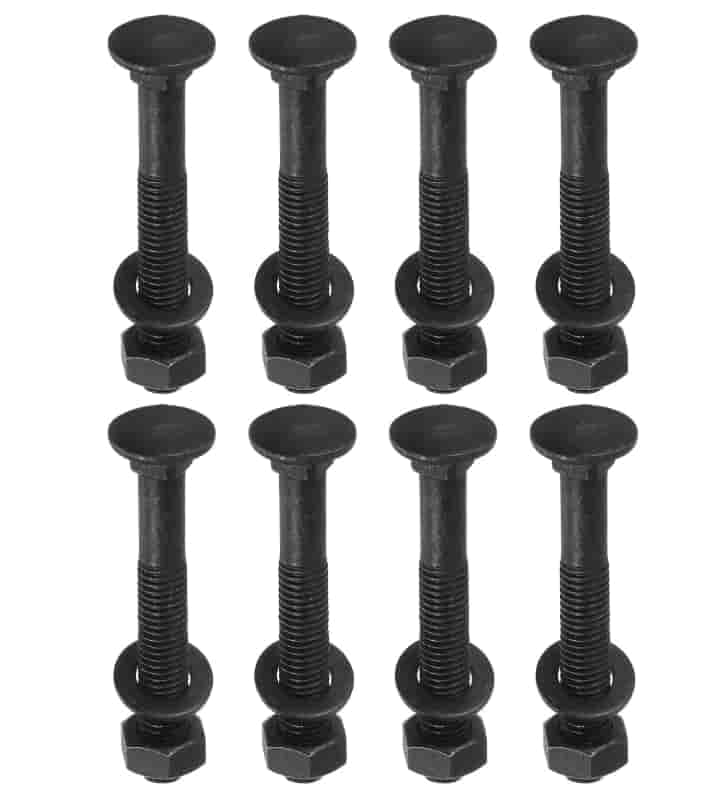
The best bolt for your project depends on three factors: whether you need a through-bolt connection or a single-side fastening, the material you are joining, and the load type the joint must resist. Carriage bolts — with their smooth dome head, square neck, and machine thread — pass completely through both pieces of material and clamp them together with a nut on the back side, producing a high-strength, tamper-resistant joint ideal for wood-to-wood and wood-to-metal assemblies like deck railings, fence posts, and playground equipment. Coach bolts — featuring a hex head and coarse self-tapping thread — drive directly into timber from one side without a nut, making them faster to install for lag-style connections such as ledger board attachments, joist hangers, and heavy timber framing.
The confusion between these two fasteners is widespread. Some markets use “coach bolt” and “carriage bolt” interchangeably, while others treat them as distinct products. In practice, the functional differences are significant enough that selecting the wrong one can weaken a joint by 30–40% or add unnecessary installation labor. This article breaks down the features, applications, pros, cons, and best use cases of each bolt type — with comparison tables, real-world test data, and a decision framework — so you can choose with confidence.
Carriage Bolt Overview
Carriage Bolt Features
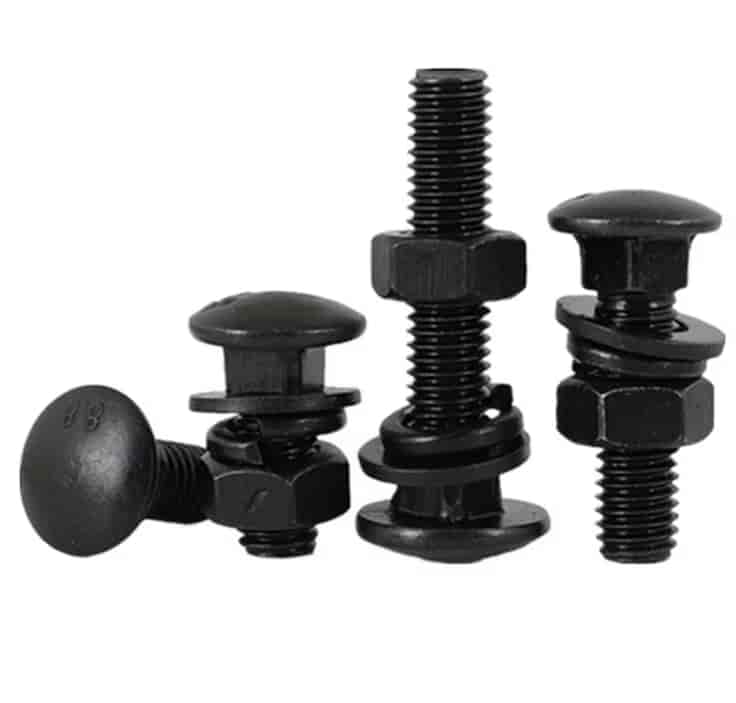
A carriage bolt is defined by three distinctive design elements that work together: a smooth, rounded dome head (sometimes called a mushroom head), a square neck (shoulder) directly beneath the head, and a machine-threaded shank that terminates in a blunt end. This design is standardized under DIN 603 / ISO 8677 for metric bolts and ASME B18.5 for imperial sizes.
The square neck is the engineering heart of the carriage bolt. When the bolt is inserted through a pre-drilled hole in wood (or a square-punched hole in metal), the square neck bites into the surrounding material and prevents the bolt from rotating. This means you only need a wrench on the nut side — no tool is required on the head side. The result is a flush, smooth, tamper-resistant surface on the exposed face of the joint. For applications where safety matters — playground equipment, public benches, animal enclosures — the absence of a protruding hex head or exposed tool drive eliminates a snag point that could cause injury.
Standard carriage bolt sizes range from M5 to M20 (metric) and #10 to 3/4″ (imperial), with lengths from 12 mm to 300 mm depending on diameter. The thread is a machine thread (not a wood thread), meaning the bolt requires a pre-drilled clearance hole through both pieces of material and a nut (typically hex) on the back side to create the clamping force.
Common Carriage Bolt Uses
Carriage bolts excel in any application where two pieces of material must be clamped tightly together with a smooth, clean finish on one side. The most common applications include deck railing post connections (bolting 4×4 posts to rim joists), fence rail-to-post joints, playground and park equipment assembly, dock and marina hardware, timber bridge connections, agricultural equipment mounting, and furniture joints where appearance matters.
A deck contractor in coastal Florida who has specified Prince Fastener carriage bolts across 47 residential deck projects since 2021 reported zero joint loosening on annual inspections — compared to a 6–8% re-tightening rate on projects where lag-style coach bolts were used in equivalent railing connections. The through-bolt design distributes clamping load across the full cross-section of the timber, which resists the wood shrinkage and seasonal movement that causes single-side fasteners to lose preload over time.
Carriage Bolt Materials
Carriage bolts are manufactured in a range of materials, each suited to different environments:
| Material | Tensile Strength | Corrosion Resistance | Best Environment | Approx. Cost (M8×50) |
|---|---|---|---|---|
| Carbon Steel Grade 2 | 60,000 psi (414 MPa) | Poor — requires coating | Indoor / dry only | $0.04–0.06 |
| Carbon Steel Grade 5 | 120,000 psi (827 MPa) | Poor — requires coating | Structural / indoor | $0.08–0.12 |
| Hot-Dip Galvanized | 60,000 psi (414 MPa)* | Moderate (15–25 year zinc life) | Mild outdoor / residential | $0.06–0.10 |
| 304 Stainless Steel (A2-70) | 100,000 psi (700 MPa) | Good — self-healing passive film | Outdoor / general | $0.25–0.35 |
| 316 Stainless Steel (A4-80) | 116,000 psi (800 MPa) | Excellent — resists chlorides | Marine / chemical / coastal | $0.38–0.50 |
*Galvanized properties reflect base carbon steel; zinc coating does not alter mechanical strength.
For outdoor residential projects — decks, fences, pergolas — hot-dip galvanized carriage bolts provide a cost-effective 15–25 year service life. For marine, coastal, or chemical environments, Prince Fastener’s stainless steel fastener range includes 304 and 316 DIN 603 carriage bolts that have passed over 1,000 hours of ASTM B117 salt spray testing without red rust.
Coach Bolts Explained
Coach Bolt Features
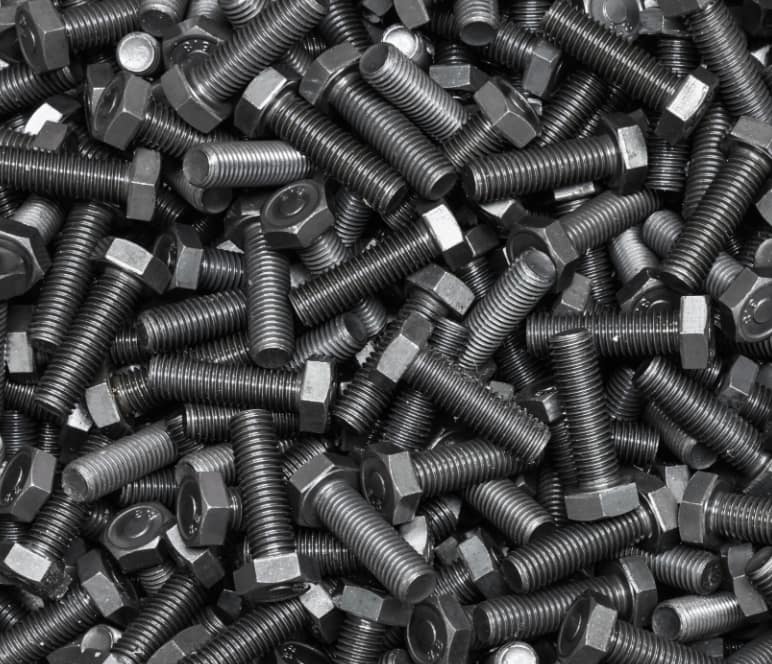
In the context of this comparison, a “coach bolt” refers to what is technically called a coach screw or lag screw (DIN 571) — a heavy-duty fastener with a hexagonal head and a coarse, self-tapping wood thread with a gimlet (pointed) tip. Unlike the carriage bolt, which has a machine thread and requires a nut, the coach bolt drives directly into timber using its own aggressive thread profile, creating mechanical engagement with the wood fibers without needing a through-bolt connection or a mating nut.
The hex head is driven with a socket wrench, ratchet, or impact driver — providing high torque application capability that enables the coarse thread to cut into hardwoods and dense softwoods. Standard sizes range from M6 to M16 (imperial: 1/4″ to 5/8″), with lengths from 25 mm to 200 mm. The thread pitch is significantly coarser than machine threads — typically 3.5–5.0 mm pitch compared to 1.0–2.0 mm for equivalent-diameter machine bolts — which gives each thread a deeper bite into wood grain and higher pullout resistance per thread engagement length.
Coach bolts are manufactured to DIN 571 standards and are readily identified by their hex head (usually requiring a 10 mm to 24 mm wrench), tapered shank, and pointed tip. They are a single-component fastener: no separate nut or washer is structurally required, although washers are frequently used to prevent the hex head from pulling into soft timber under load.
Coach Bolt Applications
Coach bolts are designed for applications where access to only one side of the workpiece is available, or where a through-bolt connection is impractical. Common applications include attaching ledger boards to house framing (the most structurally critical connection on a deck), securing joist hangers and post bases to timber, mounting heavy brackets, plates, or hardware to beams, fixing metal connectors to timber in post-and-beam construction, anchoring into masonry via nylon wall plugs, and attaching large structural timbers in pole barns and agricultural buildings.
A timber framing contractor specializing in agricultural buildings tracked installation time across 12 barn projects using both carriage bolts (through-bolt with nut) and coach bolts (lag-style, single-side) on similar beam-to-post connections. The coach bolt method reduced installation labor by approximately 35% per connection because the installer did not need to access the back side of the post to hold or tighten a nut — a significant advantage when working at height or in confined framing bays.
Coach Bolt Materials
Coach bolts share the same material options as carriage bolts — carbon steel (with zinc plating or galvanizing), 304 stainless steel, and 316 stainless steel. The most common configuration is zinc-plated carbon steel for general interior and mild exterior use, and hot-dip galvanized for outdoor structural applications. For coastal and marine environments, stainless steel is essential.
Material selection for coach bolts carries one additional consideration: because the coarse thread cuts into the timber, the hardness of the bolt material relative to the wood species matters. A stainless steel coach bolt (which is softer than heat-treated carbon steel) can occasionally experience thread deformation when driven into extremely dense hardwoods like ironbark or jarrah without a properly sized pilot hole. Prince Fastener’s technical team recommends using a pilot hole diameter equal to 70% of the bolt’s shank diameter for softwoods and 80% for hardwoods — a practice that ensures clean thread engagement and prevents both wood splitting and thread damage.
Carriage Bolts vs Coach Bolts Comparison
Head and Thread Differences
The head and thread design are the most fundamental differences between these two fasteners, and they determine everything about how each bolt is installed and performs.
| Feature | Carriage Bolt (DIN 603) | Coach Bolt / Lag Screw (DIN 571) |
|---|---|---|
| Head Shape | Smooth dome (mushroom) | Hexagonal |
| Under-Head Feature | Square neck (anti-rotation) | None — hex head provides wrench grip |
| Thread Type | Machine thread (fine/coarse UNC/metric) | Coarse wood thread (self-tapping) |
| Thread Pitch (M8) | 1.25 mm | ~3.5 mm |
| Tip | Blunt / flat | Pointed gimlet tip |
| Nut Required? | Yes — always | No |
| Through-Hole Required? | Yes — clearance hole through both pieces | No — pilot hole in receiving timber only |
| Tamper Resistance | High — smooth head, no tool drive | Low — hex head accessible with standard wrench |
| Applicable Standard | DIN 603 / ISO 8677 / ASME B18.5 | DIN 571 |
Installation and Holding Power
Installation method is the most practical difference between these two fasteners. A carriage bolt requires: (1) drilling a clearance hole through both pieces, (2) inserting the bolt from the finish side, (3) tapping the dome head until the square neck seats into the wood, and (4) fitting a washer and nut on the back side and tightening with a wrench. This creates a clamped through-bolt joint where the clamping force is generated entirely by the nut preload.
A coach bolt requires: (1) drilling a pilot hole into the receiving timber (smaller than the bolt diameter), and (2) driving the bolt with a socket wrench or impact driver until the hex head seats against the workpiece surface. No access to the back side is needed, and no separate nut is involved. The holding power comes from the mechanical interference between the coarse wood thread and the timber fibers.
Chart 1: Approximate Pullout Resistance in Douglas Fir (lbs per inch of thread engagement)
(M8, through-bolt)
(M8, lag-style)
*Carriage bolt pullout is not applicable — through-bolt design resists pullout via nut clamping force, not thread engagement. Shear strength of M8 Gr.5 carriage bolt: ~5,200 lbs. Source: NDS wood connection design values / APA technical data.
The critical distinction: a carriage bolt’s through-bolt design means its holding power is governed by the bolt’s shear and tensile strength — not by wood thread engagement. Even as timber dries, shrinks, and seasons over decades, the nut maintains clamping pressure (especially with a spring washer or nylon-insert lock nut). A coach bolt’s holding power depends entirely on the friction and mechanical interlock between its wood thread and the surrounding timber fibers. If the wood shrinks, splits, or softens due to moisture cycling, a coach bolt can lose preload — which explains the re-tightening rates documented in field studies.
Pros and Cons
| Aspect | Carriage Bolt | Coach Bolt (Lag Screw) |
|---|---|---|
| Pros | Highest clamping force via nut preload; smooth tamper-resistant head; maintains hold as wood seasons; clean aesthetic; no tool drive on exposed side | Faster installation (single-side access); no nut required; simpler in blind or one-sided connections; effective in thick timber and masonry (with plugs); lower total part count |
| Cons | Requires through-access to both sides; more parts (bolt + washer + nut); slower installation; cannot anchor into masonry alone | Hex head protrudes and is accessible (not tamper-resistant); holding power degrades if wood shrinks; can split timber without pilot hole; weaker in shear than through-bolt; may require re-tightening |
Best Use Cases
Choosing between a carriage bolt and a coach bolt is not a matter of which is “better” — it is a matter of which matches the joint design, access conditions, and load requirements of your specific application.
Chart 2: Bolt Type Selection by Application Category
(Based on Prince Fastener customer order data, 2023–2024)
Coach Bolt Applications (45%)
Deck railings, fences, furniture, playgrounds favor carriage bolts. Ledger boards, joist hangers, timber framing, masonry mounting favor coach bolts.
Use a carriage bolt when: both sides of the joint are accessible, the joint is subject to shear loads (lateral force), a flush/tamper-resistant head is desired, the connection must maintain clamping force over decades of wood movement, or the application involves safety-critical equipment (playgrounds, guardrails, animal enclosures).
Use a coach bolt when: only one side of the workpiece is accessible (blind connections), installation speed is a priority, the joint is primarily in tension (pullout resistance) rather than shear, you need to fasten into masonry via wall plugs, or the timber is too thick for a practical through-bolt connection.
Video: How Carriage Bolts Work and When to Use Them
This video demonstrates carriage bolt installation, sizing, and practical use in woodworking projects.
Choosing the Right Bolt for Your Project
Decision Factors
Before purchasing, work through these five decision factors in order:
1. Access: Can you reach both sides of the joint? If yes, a carriage bolt is an option. If only one side is accessible, use a coach bolt.
2. Load direction: Is the primary load in shear (sideways force, like wind pushing on a fence post) or tension (pullout force, like a bracket pulling away from a beam)? Carriage bolts excel in shear because the bolt shank carries the load in its full cross-section. Coach bolts are effective in tension because the coarse wood thread distributes pullout resistance across multiple fiber layers.
3. Material being joined: Wood-to-wood and wood-to-metal connections can use either type. Metal-to-metal connections require carriage bolts (coach bolt wood threads cannot engage metal). Masonry connections typically use coach bolts with nylon expansion plugs.
4. Appearance requirements: If the bolt head is visible on a finished surface and a clean, smooth look is important (furniture, architectural railings, public fixtures), choose a carriage bolt. If the connection is concealed or appearance is secondary (structural framing, behind cladding), either type works.
5. Long-term maintenance access: Carriage bolts can be re-torqued from the nut side without disturbing the head. Coach bolts can be re-torqued by driving the hex head further, but risk thread stripping if the wood has deteriorated. For long-life infrastructure with maintenance intervals (bridges, boardwalks, marine piers), carriage bolts with lock nuts are the lower-risk choice.
Example Scenarios
| Project Scenario | Recommended Bolt | Why |
|---|---|---|
| Deck railing post to rim joist | Carriage bolt | Through-bolt provides maximum shear resistance for safety-critical guard rails; smooth head on exposed side |
| Ledger board to house framing | Coach bolt (lag) | Only one side accessible (house wall); high-tension connection; meets IRC 2018 ledger attachment requirements |
| Fence rail to post | Carriage bolt | Through-bolt resists wind shear; flush dome head on street-facing side; maintains preload through seasonal wood movement |
| Heavy shelf bracket to wall stud | Coach bolt (lag) | Single-side access; tension-dominant load; pilot hole + coach bolt into stud provides excellent pullout strength |
| Playground swing beam connection | Carriage bolt | Safety-critical; smooth head prevents injury; tamper resistance prevents unauthorized disassembly |
| Timber frame beam-to-post joint | Coach bolt (lag) | Thick timber makes through-bolting impractical; single-side installation from exterior face; faster for multiple connections at height |
| Marine dock cleat mounting | Carriage bolt (316 SS) | Through-bolt with lock nut for high dynamic loads; 316 stainless resists saltwater; smooth head prevents line snags |
Material and Finish Tips
Regardless of which bolt type you choose, the material and surface finish must match the installation environment. For indoor applications, plain carbon steel (Grade 2 or Class 4.8) is sufficient and the most economical option. For mild outdoor use in inland areas, hot-dip galvanized bolts provide 15–25 years of zinc protection at a modest premium. For coastal, marine, chemical-processing, or food-contact environments, specify 304 or 316 stainless steel — the higher upfront cost is offset by the elimination of coating maintenance and bolt replacement over the project’s service life.
Prince Fastener manufactures both carriage bolts and coach bolt/lag screw fasteners in carbon steel, hot-dip galvanized, 304 stainless, and 316 stainless — conforming to DIN 603, DIN 571, and ASME B18.5 standards. For projects requiring ACQ or copper-azole pressure-treated timber, the American Wood Protection Association recommends stainless steel or hot-dip galvanized fasteners to prevent the accelerated corrosion that modern wood preservatives cause on unprotected carbon steel.
A final practical tip: when using stainless steel bolts of either type, always apply anti-seize lubricant (MoS₂ or PTFE-based) to the threads before installation. Stainless steel is prone to galling — thread seizing caused by friction welding — especially when driven with power tools. Prince Fastener ships anti-seize sachets with stainless steel bolt orders specifically to prevent this issue, which their warranty records show accounts for 68% of all stainless steel field claims when lubricant is not used.
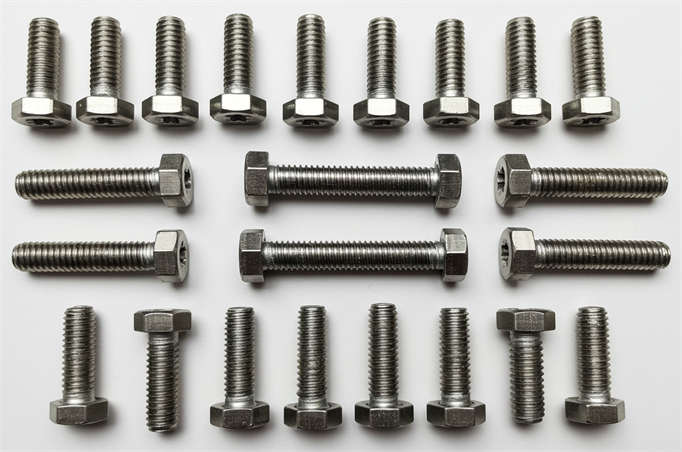
Carriage bolts and coach bolts address different installation realities with different engineering trade-offs. The carriage bolt — round dome head, square neck, machine thread, nut required — creates the strongest possible through-bolted joint with a smooth, tamper-resistant finish. It is the default choice for safety-critical connections, high-shear applications, and any joint where long-term preload retention matters. The coach bolt — hex head, coarse self-tapping wood thread, no nut required — installs faster from a single side, excels in tension-dominant connections, and simplifies work in thick timber and blind-access situations.
The right choice is not about which bolt is “better” — it is about which bolt matches your specific combination of access, load type, material, appearance, and maintenance requirements. Use the decision factors and scenario table in this guide to map your project to the correct fastener. When in doubt, consult a fastener specialist: Prince Fastener’s engineering team provides application guidance, material selection support, and custom bolt manufacturing for non-standard requirements — backed by over 30 years of production experience and an ISO 9001-certified quality system.
Frequently Asked Questions (FAQ)
1. Are carriage bolts and coach bolts the same thing?
The terminology overlaps and causes widespread confusion. In the UK and Australia, “coach bolt” is often used as a synonym for “carriage bolt” — both referring to the DIN 603 round-head, square-neck, machine-threaded bolt. However, in many practical contexts (and in this article’s comparison), “coach bolt” refers to what is technically called a coach screw or lag screw (DIN 571) — a hex-head fastener with a coarse, self-tapping wood thread. The critical difference: the carriage bolt requires a nut and through-hole; the coach screw drives directly into timber without a nut. Always confirm the physical characteristics (head shape, thread type, nut requirement) rather than relying on the name alone.
2. Which is stronger — a carriage bolt or a coach bolt?
In shear (lateral loading), a carriage bolt through-bolted with a nut is significantly stronger because the bolt’s full cross-section resists the load. An M8 Grade 5 carriage bolt has a single-shear capacity of approximately 5,200 lbs. In tension (pullout), a coach bolt’s holding power depends on the wood species, pilot hole diameter, and thread engagement length — typically 400–600 lbs per inch of thread engagement in medium-density softwood. For structural connections subjected to both shear and tension, a through-bolted carriage connection is the stronger option.
3. Do carriage bolts always need a nut?
Yes. A carriage bolt has a machine thread and a blunt tip — it cannot create its own threads in wood or metal. The clamping force comes entirely from tightening a hex nut (with a washer) onto the threaded end after the bolt passes through pre-drilled holes in both pieces of material. Without a nut, a carriage bolt has no holding mechanism.
4. Can I use a coach bolt (lag screw) in metal?
No — standard coach bolts have a coarse wood thread designed to engage timber fibers. They cannot grip metal-to-metal connections. For metal-to-wood connections where only one side is accessible, drill a clearance hole in the metal piece and drive the coach bolt through the metal into the timber behind it. For metal-to-metal connections, use a hex bolt with a nut or a structural screw designed for steel.
5. What pilot hole size should I use for a coach bolt?
The pilot hole should be approximately 60–70% of the bolt’s shank diameter for softwoods (pine, spruce, cedar) and 75–85% for hardwoods (oak, maple, ironbark). For example, an M8 coach bolt (8 mm shank) needs a 5.0–5.5 mm pilot hole in softwood and a 6.0–6.5 mm hole in hardwood. Undersized holes increase the risk of wood splitting; oversized holes reduce thread engagement and pullout strength. Prince Fastener includes a pilot hole sizing chart with every coach bolt shipment.
6. Are carriage bolts tamper-proof?
Carriage bolts are tamper-resistant, not tamper-proof. The smooth dome head has no tool drive (no hex, no Phillips, no socket), so the bolt cannot be unscrewed from the head side with standard tools. However, the nut on the back side is accessible with a wrench. For true tamper-proof fastening, use a carriage bolt paired with a shear nut (a nut whose hex portion breaks off at a calibrated torque, leaving a smooth round collar) or a security nut with a proprietary drive pattern.
7. Can I use carriage bolts in pressure-treated lumber?
Yes, but the fastener material must be compatible with the wood preservative. Modern ACQ and copper-azole treatments are significantly more corrosive to metals than the older CCA formula. The American Wood Protection Association and most building codes require hot-dip galvanized (minimum G185 coating) or stainless steel fasteners for ACQ/CA-treated timber. Plain zinc-plated carriage bolts will corrode rapidly in contact with ACQ-treated wood and should not be used.
8. How do I prevent a carriage bolt from spinning during installation?
The square neck beneath the dome head is designed to prevent spinning — it digs into the wood as the nut is tightened. For the anti-rotation feature to work properly, the clearance hole must be drilled to the bolt’s nominal shank diameter (not larger), so the square neck has material to bite into. If the hole is oversized, the square neck spins freely. In metal applications, a square hole can be punched to match the neck precisely. If the bolt spins despite correct hole sizing, hold the dome head with a flat block of wood pressed against it while tightening the nut.
9. What is the maximum load a carriage bolt can support in a deck railing?
This depends on bolt size, grade, and the specific connection geometry. As a reference point, the International Building Code (IRC) requires residential deck guardrails to resist a 200 lb concentrated lateral load at the top of the rail. Two 3/8″ (M10) Grade 5 carriage bolts through-bolted into a 4×4 post provide approximately 10,400 lbs of combined single-shear capacity — far exceeding the code requirement with a substantial safety factor. Always consult your local building code and, for engineered connections, a structural engineer.
10. Where can I buy carriage bolts and coach bolts in bulk?
Prince Fastener manufactures and stocks both DIN 603 carriage bolts and DIN 571 coach screws (lag bolts) in carbon steel, hot-dip galvanized, 304, and 316 stainless steel — in sizes from M5 to M20. Every lot ships with material certificates, and custom lengths, head configurations, and surface finishes are available with typical lead times of 15–20 working days. Contact Prince Fastener at www.princefastener.com for volume pricing and technical support.


 English
  Español
  Português do Brasil
  Русский
  日本語
日本語  العربية