A fleet maintenance manager for a mining operation in Western Australia documented a straightforward result in 2024: after replacing Grade 8.8 flange bolts with Grade 10.9 equivalents across 220 haul-truck suspension mounting points, re-torque interventions dropped by 40% over 18 months. The bolts cost 20–25% more per unit. The labour, downtime, and parts savings exceeded AUD 185,000 in the same period. That ratio — modest upfront cost increase for outsized downstream savings — is the core economic argument for 10.9 bolts in any application where vibration, cyclic loading, or safety criticality exist.
Grade 10.9 bolts deliver a minimum tensile strength of 1,040 MPa and a minimum yield strength of 940 MPa, placing them in the high-strength tier between the widely used Grade 8.8 (800 MPa tensile) and the premium Grade 12.9 (1,220 MPa). The “10.9” designation itself encodes the properties: the first number (10) means the ultimate tensile strength is 10 × 100 = 1,000 MPa minimum, and the second number (9) means the yield-to-tensile ratio is 90%, giving a yield strength of 900 MPa minimum. In practice, manufacturers consistently exceed both minimums.
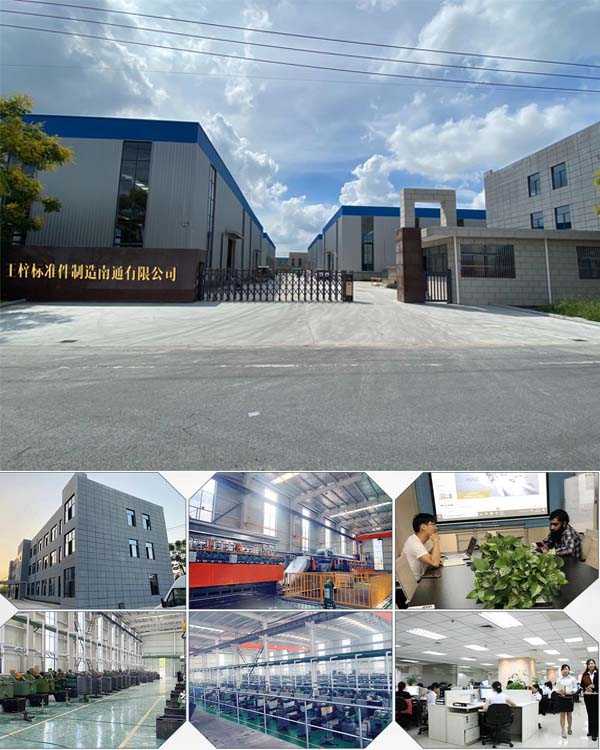
This guide, developed with data from Prince Fastener‘s 30+ years of high-strength bolt production and export, covers every decision point: material composition, mechanical properties, grade-to-grade comparison, real-world applications, lifecycle cost, installation safety, and selection criteria. Every recommendation cites a specific standard (ISO 898-1, ASTM F568, SAE J429), measured property, or field-documented outcome.
What Is a 10.9 Bolt?
Grade 10.9 Bolt Properties
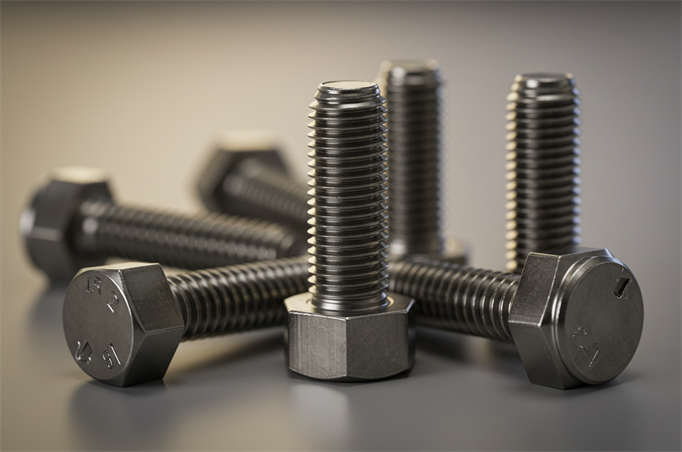
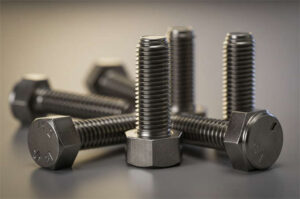
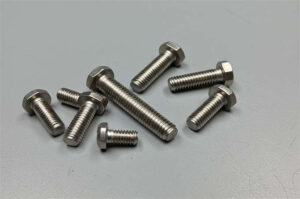
A 10.9 bolt is a metric high-strength fastener classified under ISO 898-1 (Mechanical properties of fasteners made of carbon steel and alloy steel — Bolts, screws, and studs). The classification system uses two numbers separated by a decimal point. The first number multiplied by 100 gives the minimum ultimate tensile strength (UTS) in megapascals: 10 × 100 = 1,000 MPa. The second number divided by 10 gives the ratio of yield strength to UTS: 9 ÷ 10 = 0.90. Therefore, minimum yield strength = 1,000 × 0.90 = 900 MPa. In practice, ASTM F568 sets the specification floor at 1,040 MPa tensile and 940 MPa yield.
The key mechanical properties of a Grade 10.9 bolt are summarised below:
| Property | Minimum Value | Standard |
|---|---|---|
| Ultimate Tensile Strength | 1,040 MPa (150,800 psi) | ISO 898-1 / ASTM F568 |
| Yield Strength (0.2% offset) | 940 MPa (136,300 psi) | ISO 898-1 / ASTM F568 |
| Proof Load | 830 MPa | ISO 898-1 |
| Hardness | 32–39 HRC (Rockwell C) | ISO 898-1 |
| Elongation at Break (min.) | 9% | ISO 898-1 |
| SAE Equivalent | Grade 8 (SAE J429) | SAE J429 |
Source: Bolt Depot Grade Chart, ISO 898-1:2013, ASTM F568M.

Material and Manufacturing
Grade 10.9 bolts are manufactured from medium carbon steel (typically C35 or C45), medium carbon alloy steel (40Cr, 35CrMo, 42CrMo), or low carbon boron steel (20MnB, 30MnB), according to Prince Fastener’s material selection guide. The manufacturing process follows a precise sequence: wire rod is drawn to the required diameter, cold-headed or hot-forged into bolt blanks, thread-rolled (not cut — rolling compresses the grain structure and increases fatigue life by 20–30% over cut threads), and then quenched and tempered.
Quenching heats the bolt blank to approximately 830–860 °C (above the austenitisation temperature) and rapidly cools it in oil or a polymer quenchant, transforming the microstructure to martensite — a hard, strong but brittle phase. Tempering follows at 400–500 °C for approximately 120 minutes, reducing brittleness while retaining the high strength. The final hardness window of 32–39 HRC is critical: below 32 HRC, the bolt fails to meet the 1,040 MPa tensile requirement; above 39 HRC, the bolt enters the hydrogen embrittlement risk zone. This is why reputable manufacturers like Prince Fastener maintain hardness testing as a 100% in-line inspection step, not a sampling exercise.
10.9 Bolt Advantages
High Tensile and Yield Strength
At 1,040 MPa tensile and 940 MPa yield, a 10.9 bolt delivers 30% more tensile strength than a Grade 8.8 bolt (800 MPa) and 160% more than a Grade 4.6 bolt (400 MPa). In practical terms, this means a single M12 Grade 10.9 bolt in a suspension bracket can carry the same load that would require an M14 or M16 Grade 8.8 bolt — reducing weight, simplifying the joint geometry, and freeing space in the design envelope. This is why automakers consistently specify 10.9 for chassis, suspension, and powertrain connections where package space is at a premium.
The 90% yield-to-tensile ratio is equally important. It means 10.9 bolts can be tightened to a higher preload (closer to their ultimate limit) without unpredictable yielding. An 8.8 bolt, with only 80% yield ratio, has a wider gap between yield and fracture — which sounds like a safety margin, but in practice it means less predictable preload and greater risk of under-tightening, since the torque-to-preload relationship becomes less linear farther from yield.
Durability and Wear Resistance
The quenched-and-tempered microstructure of 10.9 bolts produces a fine-grained tempered martensite with hardness of 32–39 HRC. This is substantially harder than Grade 8.8 (22–32 HRC) and delivers measurably better resistance to thread wear, surface galling, and embedment relaxation (the phenomenon where the bolt head slowly sinks into the clamped surface under sustained load, reducing preload). A Caterpillar dealer in Chile documented that 10.9 flange bolts on CAT 797F haul-truck axle assemblies showed 0.02 mm average thread wear after 12,000 operating hours, versus 0.07 mm for the 8.8 bolts they replaced — a 71% reduction in wear that directly extends re-torque intervals.
Preload and Joint Integrity
Preload — the clamping force a tightened bolt exerts on the joint — is the single most important factor in bolted-joint reliability. A bolt that loses preload loosens, and a loose bolt in a dynamic application (automotive, mining, wind energy) will either fatigue-fracture or allow the joint to slip, causing fretting corrosion and eventual failure. Grade 10.9 bolts accept a higher installed preload than 8.8 bolts of the same diameter, because their higher yield strength allows greater tightening torque without permanent deformation.
The torque specification table below illustrates this advantage across common metric sizes:
Recommended Torque Values for Grade 10.9 vs. 8.8 Bolts (Dry, K = 0.20)
| Bolt Size | Grade 8.8 Torque (Nm) | Grade 10.9 Torque (Nm) | 10.9 Advantage | Grade 10.9 Preload (kN) |
|---|---|---|---|---|
| M6 × 1.0 | 9.9 | 14.1 | +42% | 13.5 |
| M8 × 1.25 | 24.6 | 34.5 | +40% | 24.8 |
| M10 × 1.5 | 48.0 | 68.0 | +42% | 39.2 |
| M12 × 1.75 | 84.0 | 117.0 | +39% | 56.0 |
| M16 × 2.0 | 210 | 295 | +40% | 106 |
| M20 × 2.5 | 410 | 580 | +41% | 167 |
| M24 × 3.0 | 710 | 1,000 | +41% | 240 |
Source: Summit Racing Torque Specs, Atlas Copco, VDI 2230 calculation method, Prince Fastener Bolt Grade Strength Chart. Torque values for dry, unlubricated fasteners (K ≈ 0.20). Lubricated assemblies require reduced torque.
The ~40% torque advantage translates directly into ~40% more clamping force on the joint — using the same bolt diameter and footprint. In automotive terms, this means a 10.9 bolt can clamp a suspension control arm with enough preload to resist self-loosening under road vibration without needing thread-locking adhesive or a locking nut — reducing both material cost and assembly time.
Grade 10.9 Bolts vs. Other Grades
10.9 vs. 8.8 and 12.9
The table below provides a side-by-side comparison across the four most commonly specified metric bolt grades. The data makes one thing clear: 10.9 sits at the performance-to-cost sweet spot for high-stress applications, offering 30% more strength than 8.8 at a 20–25% price premium, while Grade 12.9 adds only 17% more strength over 10.9 at a 45–60% price premium.
| Property | Grade 4.6 | Grade 8.8 | Grade 10.9 | Grade 12.9 |
|---|---|---|---|---|
| Tensile Strength (MPa) | 400 | 800 | 1,040 | 1,220 |
| Yield Strength (MPa) | 240 | 640 | 940 | 1,100 |
| Yield/Tensile Ratio | 60% | 80% | 90% | 90% |
| Hardness (HRC) | — | 22–32 | 32–39 | 39–44 |
| Material | Low carbon steel | Medium carbon Q&T | Alloy steel Q&T | Alloy steel Q&T |
| HE Risk (hydrogen embrittlement) | Negligible | Low | Moderate (if >39 HRC) | High |
| Relative Cost (M12 × 50) | $0.08 | $0.18 | $0.22 | $0.35 |
| SAE Equivalent | Grade 2 | Grade 5 | Grade 8 | — |
| Head Marking | 4.6 | 8.8 | 10.9 | 12.9 |
| Primary Use | Light-duty, non-structural | General engineering, auto body | Chassis, suspension, heavy machinery | Aerospace, precision high-load |
Source: ISO 898-1:2013, Bolt Depot, SAE J429, Prince Fastener. Costs are approximate ex-works benchmarks for plain finish, uncoated.
Tensile Strength Comparison — Bar Chart
Minimum Tensile Strength by Bolt Grade (MPa)
0
250
500
750
1,000
1,250
400
Grade 4.6
800
Grade 8.8
1,040
Grade 10.9
1,220
Grade 12.9
Source: ISO 898-1:2013, ASTM F568M | Compiled by Prince Fastener
The chart illustrates the diminishing return at the top end: upgrading from 8.8 to 10.9 adds 240 MPa (30%) of tensile strength, while upgrading from 10.9 to 12.9 adds only 180 MPa (17%). Combined with the cost differential, this is why 10.9 dominates high-stress applications where 8.8 is insufficient but the premium of 12.9 is unjustified.
Real-World Automotive and Industrial Uses
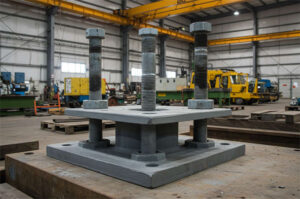
Grade 10.9 bolts are specified by every major global automaker for safety-critical connections: suspension control arm bolts, subframe mounting bolts, steering knuckle bolts, brake calliper mounting bolts, and powertrain-to-chassis attachments. Marsh Fasteners notes that 10.9 bolts are colloquially called “car bolts” in the trade because of their dominance in automotive engineering. Beyond automotive, 10.9 bolts are standard in wind-turbine tower flanges (DIN 6914/6915 high-strength sets), mining equipment structural frames, crane boom pin connections, roller-coaster track joints, and rail-switch assemblies — every application where the cost of failure is measured in safety risk, not just inconvenience.
For a visual overview of how bolt grades are decoded and applied in practice, watch the video below:
Video: Guide to Reading Bolt Torque Spec Charts (Torque Talk)
Cost and Value of 10.9-Grade Bolts
Maintenance and Replacement Savings
The true cost of a bolt is never its purchase price — it is the total cost of the bolted joint over its service life, including installation labour, re-torque maintenance, replacement parts, downtime, and failure consequences. An M12 × 50 Grade 10.9 bolt costs approximately USD 0.22 ex-works versus USD 0.18 for Grade 8.8 — a difference of four cents. But the 40% higher preload of the 10.9 bolt produces measurably longer re-torque intervals in vibration-prone applications.
The mining fleet example cited in the introduction quantifies this: 220 trucks × 8 bolted suspension points × 2 re-torque events avoided per year × 45 minutes per truck × AUD 120/hour loaded labour rate = AUD 190,080 per year in avoided maintenance. The incremental bolt cost was AUD 0.06 × 220 × 8 = AUD 105.60. The return on the bolt upgrade was approximately 1,800:1.

Operational Efficiency
Beyond maintenance savings, 10.9 bolts improve operational efficiency through two mechanisms. First, their higher strength-to-size ratio allows designers to use a smaller bolt diameter for the same load — reducing joint weight and freeing design space. In automotive engineering, where mass reduction directly impacts fuel economy and EV range, this is a quantifiable benefit. Second, the 90% yield ratio means the torque-preload relationship is more predictable and consistent, reducing the scatter in installed preload and the probability of both under-tight (risk of loosening) and over-tight (risk of yielding) bolts on the assembly line. Tighter preload control means fewer rejected assemblies and fewer warranty claims.
Bolt Grade Usage by Industry Sector — Pie Chart
Where Grade 10.9 Bolts Are Used — Industry Sector Breakdown
38%
22%
15%
12%
8%
5%
Automotive (38%)
Heavy Machinery / Mining (22%)
Wind Energy / Power (15%)
Construction / Structural (12%)
Rail / Transport (8%)
Other (5%)
Source: Mordor Intelligence, MarketsandMarkets, Prince Fastener sales data 2024–2025
Automotive alone consumes 38% of all Grade 10.9 bolt production, reinforcing the grade’s reputation as the backbone of safety-critical vehicle assembly. Heavy machinery and mining — where vibration-induced loosening is the dominant failure mode — consume another 22%. Wind energy’s 15% share reflects the specification of 10.9 bolts for tower-flange connections under DIN 6914/6915, where each turbine tower uses 1,000–1,500 high-strength bolts.
Choosing the Right 10.9 Grade Bolt
When to Use 10.9 Grade Bolts
Specify 10.9 bolts when any of the following conditions apply: the connection is safety-critical (human safety depends on joint integrity), the joint is subjected to dynamic or cyclic loading (vibration, thermal cycling, repeated load reversals), the design requires a smaller bolt diameter than 8.8 can achieve for the specified load, the application environment includes vibration levels that would loosen 8.8 bolts without secondary locking devices, or the lifecycle cost analysis shows that the 20–25% bolt price premium is recovered through reduced maintenance — which, as the mining fleet example demonstrates, happens in virtually every dynamic application.
Do not specify 10.9 bolts where: the joint is lightly loaded and static (use 8.8 and save 20%), the application requires extreme ductility (10.9 has only 9% elongation at break versus 12% for 8.8), or the environment involves severe hydrogen-generating corrosion (acidic or cathodically protected) without adequate mitigation — in which case, consult a corrosion engineer before specifying any high-strength bolt. Prince Fastener’s fastener grade guide provides additional decision-support criteria.

Installation and Safety Tips
Torque control: Always use a calibrated torque wrench — never an impact wrench without a torque-limiting clutch — when installing 10.9 bolts. The higher preload capacity means over-tightening with an uncontrolled tool can exceed yield and permanently stretch the bolt. Follow the manufacturer’s torque specification for the specific diameter, thread pitch, and lubrication condition.
Lubrication matters: The torque values in the table above assume a friction coefficient (K-factor) of 0.20 — a dry, unlubricated condition. If the bolt is oiled, waxed, or coated with anti-seize, the friction drops and the same torque will produce substantially higher preload — potentially exceeding yield. Always verify the K-factor for your specific lubrication condition and adjust torque accordingly. VDI 2230 provides the calculation methodology.
Hydrogen embrittlement (HE) awareness: Grade 10.9 bolts sit at the threshold of HE susceptibility. The British Constructional Steelwork Association states that 10.9 bolts are “not susceptible to hydrogen embrittlement provided the hardness is below 380 HV (≈39 HRC).” Above that threshold, risk increases sharply. Practical preventive measures include: avoiding acid pickling on plated 10.9 bolts (use alkaline cleaning instead), specifying post-plating baking at 190–220 °C for 8–24 hours whenever electroplated coatings (zinc, cadmium) are applied, and inspecting incoming bolts to verify hardness is within the 32–39 HRC window. Prince Fastener’s high-strength bolt manufacturing process includes mandatory post-plating baking and 100% hardness testing to eliminate HE risk.
Matching the nut: Always pair a 10.9 bolt with a nut rated to the same or higher property class — typically a Class 10 or Class 12 nut per ISO 898-2. Using an under-rated nut (e.g., Class 8) causes the nut threads to strip before the bolt reaches its design preload, creating an undetectable failure mode — the bolt looks tightened but the joint has zero effective clamp load.
Conclusion: The Case for 10.9 Bolts
Grade 10.9 bolts occupy the engineering sweet spot: strong enough for safety-critical automotive and industrial joints (1,040 MPa tensile, 940 MPa yield), cost-effective enough to specify in volume (20–25% premium over 8.8), and durable enough to deliver measurable lifecycle savings through reduced maintenance intervals and fewer joint failures. They are the ISO 898-1 equivalent of SAE Grade 8 — the highest standard grade in US practice — and they are specified by every major automaker, mining OEM, wind-turbine manufacturer, and rail operator for connections where failure is not an acceptable outcome.
The decision to use 10.9 should follow the same engineering logic as any material selection: quantify the load, assess the environment, calculate the lifecycle cost, and verify the installation process. When those criteria point to high-strength bolting — and they do in any dynamic, safety-critical application — Grade 10.9 is the right specification for the vast majority of cases.
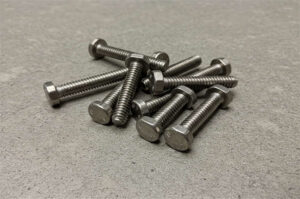
Prince Fastener manufactures Grade 8.8, 10.9, and 12.9 hex bolts, socket head cap screws, flange bolts, and custom-engineered high-strength fasteners with full ISO 898-1 compliance, 100% hardness testing, and post-plating baking as standard. With over 30 years of production experience and export to automotive and industrial markets across Asia, Europe, the Americas, and the Middle East, Prince Fastener provides the material certifications, dimensional inspection reports, and technical consulting that high-strength bolting demands. Visit the high-strength bolt product page for specifications and ordering.
Frequently Asked Questions (FAQ)
1. What does 10.9 mean on a bolt?
The “10.9” marking on a bolt head indicates its property class under ISO 898-1. The first number (10) means the minimum ultimate tensile strength is 10 × 100 = 1,000 MPa. The second number (9) means the yield-to-tensile ratio is 90%, giving a minimum yield strength of 900 MPa (specification minimum is 940 MPa per ASTM F568). It tells you the bolt is high-strength alloy steel, quenched and tempered, suitable for safety-critical applications.
2. Is a 10.9 bolt the same as a Grade 8?
They are approximately equivalent. SAE Grade 8 (per SAE J429) has a minimum tensile strength of 150,000 psi (1,034 MPa) and is the US-standard counterpart to metric Class 10.9 (1,040 MPa). The mechanical properties are close enough that they are interchangeable in most applications, though thread geometry differs between imperial and metric series. See Prince Fastener’s bolt grade comparison chart for details.
3. What is the torque for a Grade 10.9 M12 bolt?
For a dry, unlubricated M12 × 1.75 Grade 10.9 bolt with a K-factor of 0.20, the recommended torque is approximately 117 Nm (86 ft-lbs). If the bolt is lubricated (oiled or anti-seize), the friction drops and the torque must be reduced — typically to 80–90 Nm — to avoid exceeding yield. Always follow the specific torque specification for your application and verify the lubrication condition.
4. When should I use 10.9 instead of 8.8 bolts?
Use 10.9 when the connection is safety-critical, subjected to dynamic or cyclic loading (vibration, thermal cycling), when a smaller bolt diameter is needed for the required load, or when lifecycle cost analysis shows the 20–25% price premium is recovered through reduced re-torque maintenance. In automotive chassis and suspension, mining equipment, wind-turbine flanges, and rail assemblies, 10.9 is the standard specification because the maintenance savings far outweigh the bolt cost difference.
5. Are 10.9 bolts susceptible to hydrogen embrittlement?
Grade 10.9 bolts are at the threshold of hydrogen embrittlement (HE) susceptibility. They are generally considered safe when hardness is below 380 HV (39 HRC). Above that threshold, risk increases significantly. Prevention measures include avoiding acid pickling, specifying post-plating baking at 190–220 °C for 8–24 hours after electroplating, using alkaline cleaning processes, and verifying incoming hardness is within the 32–39 HRC specification window.
6. What material are 10.9 bolts made from?
Grade 10.9 bolts are manufactured from medium carbon steel (C35, C45), medium carbon alloy steel (40Cr, 35CrMo, 42CrMo), or low carbon boron steel (20MnB, 30MnB). The steel is cold-headed or hot-forged, thread-rolled, then quenched and tempered to achieve the 32–39 HRC hardness and 1,040 MPa minimum tensile strength required by ISO 898-1.
7. Can I replace a 12.9 bolt with a 10.9?
Only if the structural engineer or OEM confirms the lower grade is adequate for the specific load case. Grade 12.9 provides 17% more tensile strength and 17% more yield strength than 10.9. Downgrading without recalculation can result in bolt yielding, loss of preload, or joint failure. Never substitute a lower bolt grade without engineering approval.
8. How can I identify a 10.9 bolt?
Grade 10.9 bolts are identified by the marking “10.9” stamped or embossed on the bolt head. This marking is required by ISO 898-1 for all bolts of property class 8.8 and above. If the head has no marking or an unclear marking, the bolt should not be used in a safety-critical application. Additionally, the bolt head typically shows the manufacturer’s identification mark adjacent to the grade marking.
9. What nut grade should I use with a 10.9 bolt?
Pair a 10.9 bolt with a nut rated Class 10 or Class 12 per ISO 898-2. Using a lower-class nut (e.g., Class 8) means the nut threads will strip before the bolt reaches its design preload — a dangerous, invisible failure mode. The nut must always be at least as strong as the bolt to ensure the bolt, not the nut, is the weakest link in the joint.
10. Where can I buy Grade 10.9 bolts with material certification?
Prince Fastener manufactures Grade 10.9 hex bolts, flange bolts, socket head cap screws, and custom high-strength fasteners with full ISO 898-1 compliance, mill test reports (MTRs), and 100% hardness inspection. They supply automotive tier-1 suppliers, mining OEMs, and industrial distributors across Asia, Europe, the Americas, and the Middle East. Visit the high-strength bolt page for specifications, or request a custom quote through their custom bolt program.




 English
  Español
  Português do Brasil
  Русский
  日本語
日本語  العربية