
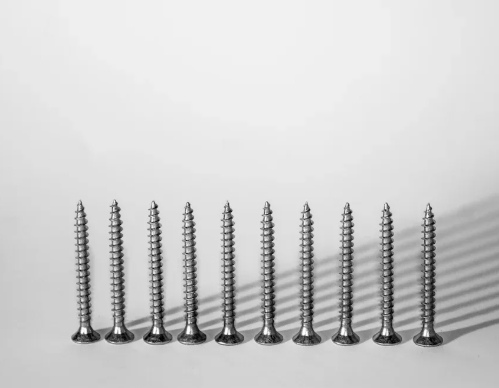
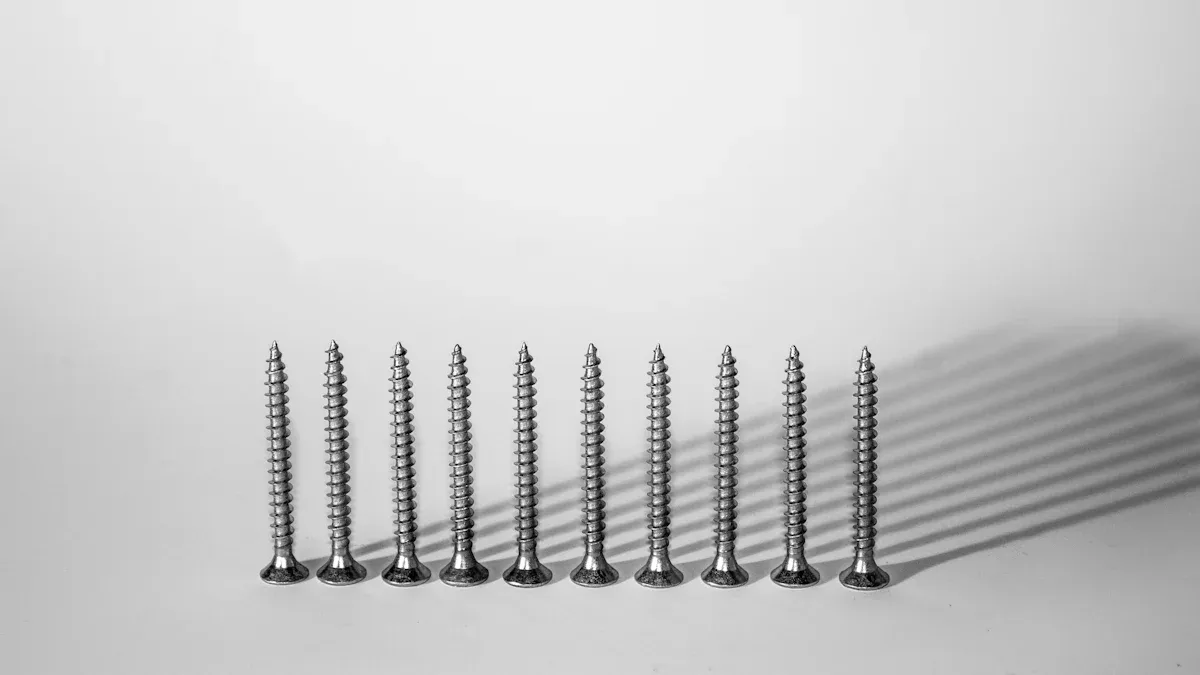
If you want the best results when hanging cabinets, you need the right screws for mounting cabinets. Most professionals trust cabinet screws like SPAX and GRK for mounting cabinets. These screws offer features you can’t get with standard options:
- SPAX screws come heat-treated for strength and use a 4CUT point to stop splitting.
- GRK cabinet screws use a built-in washer head and a slim design for a tight, clean fit.
- Both types let you skip pre-drilling, which saves you time.
You get better clamping force and head size, so your cabinets stay secure. When you pick screws for mounting cabinets from a brand like Prince Fastener, you know you have the right screws for hanging cabinets. You’ll see why screws for mounting cabinets make all the difference for hanging cabinets.
Key Takeaways
- Pick SPAX or GRK cabinet screws for strong support. These screws are stronger than standard screws. They last longer and hold better.
- You do not need to pre-drill with cabinet screws. Their sharp tips make them easy to use. This saves you time and work on your project.
- Find screws with bigger heads. Bigger heads hold cabinets tighter to the wall. This helps stop gaps from forming.
- Buy good cabinet screws. They cost more than standard screws. But they work better and last longer, so they are worth it.
- Always use the right screw size for your cabinet. Match the screw to your cabinet’s weight and material. The right screws keep your cabinets safe and steady.
Cabinet Screws vs Standard Screws
Strength and Holding Power
When you hang cabinets, you want them to stay put for years. Cabinet screws like SPAX and GRK give you that peace of mind. These screws use hardened carbon steel, which means they hold up under heavy loads. Standard wood screws often use softer steel, so they can bend or strip more easily. You get better pull-out resistance with cabinet screws. That means your cabinets stay tight against the wall, even if you load them up with dishes or tools.
Take a look at how these screws compare:
| Feature | SPAX/GRK Screws | Standard Wood Screws |
|---|---|---|
| Material | Hardened carbon steel | Varies (often softer steel) |
| Coating | Weather-resistant coating | Typically uncoated |
| Thread Design | Patented design reducing wood splitting | Standard thread design |
| Pull-out Resistance | Exceptional pull-out resistance | Generally lower pull-out resistance |
| Installation Efficiency | No pre-drilling required | Often requires pre-drilling |
You can see that cabinet screws win in almost every category. The special thread design helps prevent wood from splitting, so your cabinets stay strong. If you use standard screws, you might notice the cabinets start to sag or loosen over time.
Head Size and Clamping Force
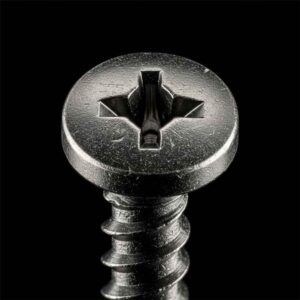
Cabinet screws have a larger head size than regular wood screws. This gives you more clamping force, which keeps the cabinet tight against the wall. GRK screws use a washer head that spreads out the pressure. SPAX screws also have a wide head, so you get a solid grip. Standard screws usually have a smaller head, so they don’t clamp as well. You might see gaps between the cabinet and the wall if you use them.
Tip: Always check the head size before you buy screws for mounting cabinets. A bigger head means better support.
Brands like Prince Fastener offer cabinet screws with the right head size for this job. You get a professional finish and fewer worries about cabinets shifting.
Installation Experience
You want your project to go smoothly. Cabinet screws make installation easier. SPAX and GRK screws don’t need pre-drilling, so you save time. The sharp tip bites into the wood and holds tight. Standard screws often need you to drill a pilot hole first. That adds extra steps and can slow you down.
If you’re working alone or on a tight schedule, cabinet screws help you finish faster. You also get fewer stripped screws and less frustration. The threads on cabinet screws pull the cabinet tight with less effort.
Cost and Availability
Cabinet screws cost a bit more than standard wood screws. You pay for the extra strength and features. Most hardware stores carry SPAX and GRK, and you can also find Prince Fastener cabinet screws online or in specialty shops. Standard screws are cheaper and easy to find, but they don’t offer the same reliability.
If you want your cabinets to last, it’s worth spending a little more on cabinet screws. You get better performance and save time during installation. For most homeowners and pros, the extra cost pays off in the long run.
SPAX Screws for Mounting Cabinets
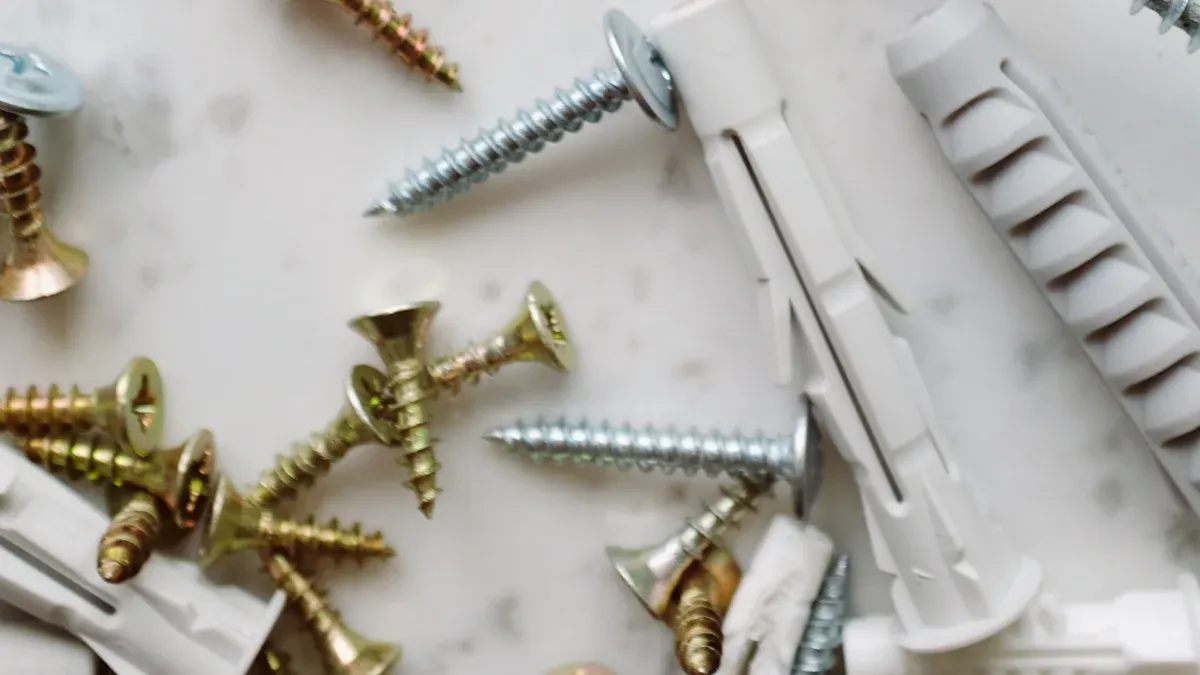
Strength and Support
You want your cabinets to stay put, even when loaded with heavy dishes or tools. SPAX cabinet screws give you that confidence. These screws come with clear load ratings right on the packaging. You can use them with many wood types, like Southern Pine, Douglas Fir, plywood, and OSB. The strength of SPAX screws adjusts based on the wood’s density, so you always know what to expect. You get solid withdrawal and head pull-through values, which means your cabinets stay tight and secure.
Installation and Usability
SPAX cabinet screws make your job easier. You don’t need to drill pilot holes, which saves you time and effort. The sharp tip bites into wood fast, and the threads pull everything together with less work. You can use these screws for mounting cabinets in both soft and hard woods. Many users say they work well for framing and subfloors, too. If you want a smooth installation, SPAX is a solid choice.
Tip: If you want extra accuracy, you can still drill a pilot hole, but most of the time, you won’t need to.
Cost and Sourcing
SPAX products are a favorite among professionals. You can find them at most hardware stores and online. Many builders say SPAX is their go-to for construction and furniture projects. The price is a bit higher than standard screws, but you get better performance and reliability. Brands like Prince Fastener also offer SPAX cabinet screws, so you have options when shopping.
Pros and Cons
Here’s a quick look at what you get with SPAX cabinet screws:
Pros:
- Easy to use—no pilot holes needed
- Works with many wood types
- Strong performance and clear load ratings
- Durable and rust-resistant
Cons:
- The counter sinking nibs can overdrive in softer materials like OSB
You get peace of mind with SPAX screws for mounting cabinets. They help you finish your project faster and keep your cabinets secure for years.
GRK Cabinet Screws
Strength and Durability
You want your cabinets to stay solid for years. GRK cabinet screws give you that strength. These screws use hardened steel, so they resist bending and snapping. The washer head design spreads out the force, which helps keep your cabinets tight against the wall. You can trust these screws in both soft and hardwoods. Many installers say they switched to GRK after other brands broke in tough materials. You get peace of mind knowing your cabinets are secure.
Installation Process
GRK cabinet screws make your job easier, but you might notice a few quirks. Here’s what installers say:
- Some users love GRK screws because they leave small, neat holes.
- Others say the screws can break bits, especially the T10 driver.
- A few installers got tired of other brands snapping in hardwood and now use GRK instead.
- Some still feel frustrated when the driver breaks, even if they like the screw.
You can drive these screws fast, and you usually don’t need to pre-drill. That saves you time. If you want a smooth installation, try using a quality bit and steady pressure.
Tip: If you want fewer broken bits, use a fresh driver and don’t force the screw.
Cost and Availability
GRK cabinet screws cost more than standard options, but you get what you pay for. You can find them at most hardware stores, online, or through brands like Prince Fastener. Here’s a quick look at prices:
| Screw Size | Price per Screw | Tier Price (100) | Volume Pricing (1000) |
|---|---|---|---|
| #8 x 1-1/4″ | $0.43 | $0.11 | $0.21 |
| #8 x 1-1/2″ | $0.45 | $0.13 | $0.098 |
| #8 x 2″ | $0.47 | $0.15 | $0.126 |
| #8 x 2-1/2″ | $0.51 | $0.18 | $0.154 |
| #8 x 3-1/8″ | $0.51 | $0.18 | $0.154 |

You can save money by buying in bulk. If you want reliable screws for mounting cabinets, GRK is easy to find and worth the investment.
Pros and Cons
Let’s break down the good and the not-so-good:
Pros:
- Strong and durable
- Washer head gives great clamping force
- Works in many wood types
- Easy to find in stores and online
Cons:
- Can break bits if you’re not careful
- Costs more than standard screws
You get top performance with GRK cabinet screws. If you want your cabinets to last, these screws are a smart choice.
Standard Screws for Cabinets
Strength and Limitations
You might think standard wood screws can handle cabinets, but they have some big drawbacks. These screws use softer steel, so they bend or snap under heavy weight. You get much less holding power compared to cabinet screws. Over time, standard screws can pull out of the wall, especially if you open and close your cabinets a lot. This can lead to sagging or even a cabinet falling down. Standard screws are not code-compliant for cabinets in many areas. If you want your cabinets to last, you need more strength and reliability.
Installation Experience
Standard screws feel familiar if you have done other wood projects. You can mount cabinets at any position, which helps with tricky layouts. You might find it easier to line up your cabinets exactly where you want them. But you will probably need to drill pilot holes first. The screws can split the wood or strip out if you skip this step. You may also notice more frustration with stripped heads or screws that just spin in place. Cabinet screws from brands like Prince Fastener make the job smoother and faster.
Tip: If you use standard screws, always drill a pilot hole to avoid splitting the wood.
Cost and Sourcing
Standard screws cost less than cabinet screws. You can find them at any hardware store or even in your garage. This makes them tempting for quick jobs or small repairs. But you get what you pay for. The lower price means you give up strength and safety. If you want peace of mind, it is better to spend a little more on screws for mounting cabinets.
Pros and Cons
Here is a quick look at the most common pros and cons of standard wood screws for cabinets:
| Pros | Cons |
|---|---|
| Can mount at any position | Much lower weight capacity |
| Works where studs aren’t available | Can fail catastrophically |
| Easier to position cabinets exactly where desired | Not code-compliant for cabinets |
| Risk of cabinet falling | |
| Pulls out over time with repeated stress |
You can use standard screws in a pinch, but cabinet screws offer much better performance. For most projects, you will want the extra holding power and safety that cabinet screws provide.
Head-to-Head Comparison of Screws for Mounting Cabinets
Real-World Performance
When you start mounting cabinets, you want screws that work hard for you. SPAX and GRK cabinet screws stand out in real jobs. You get strong grip and less risk of splitting wood. SPAX screws use a heat-treated design and a sharp tip. You can drive them into studs without pre-drilling. GRK screws have a washer head that spreads out pressure. Your cabinets stay tight against the wall. Standard screws often struggle. You may see stripped heads or loose cabinets after a few months.
Installers say SPAX and GRK screws save time. You spend less effort lining up cabinets. You get fewer mistakes. Prince Fastener offers both SPAX and GRK options, so you can pick what fits your project. You want cabinets that last. Cabinet screws help you get there.
Note: If you use standard screws, you might need to fix cabinets sooner than you expect.
Best Use Cases
You want the right screw for your cabinet job. Here’s a quick guide:
- SPAX cabinet and wafer head screws: Best for mounting cabinets to wooden studs. The large diameter head gives you extra hold.
- T-STAR Plus Wafer Head: Great for connecting different materials. The low profile and wide head make it perfect for cabinet installations.
- Cross Recess Wafer Head: Use these for thin wood panels on wood or MDF. The zinc coating adds durability.
- MDF Fasteners with T-STAR Plus Trim Head: Choose these for finishing work inside. They work well with hardwood trim and MDF.
Prince Fastener carries these specialty screws. You can match the screw to your cabinet type and wall material. If you have heavy wall cabinets, go with SPAX or GRK. For lightweight cabinets or trim, try MDF fasteners. You get better results when you use the right screw for the job.
Expert and User Insights on Cabinet Screws
Professional Installer Recommendations
When you talk to cabinet installers, you hear a lot about the importance of using the right screw. Most pros reach for cabinet screws with a large head. This gives you more holding power and keeps your cabinets tight against the wall. You also see them using thicker screws for heavy cabinets. They want to make sure everything stays put, even when the cabinets are full.
Here’s a quick look at what installers recommend:
| Screw Type | Description | Size Options |
|---|---|---|
| Cabinet Screws | Large diameter head for increased holding power. | #8, #10 |
| Multi-Purpose Flat Head Screws | Ideal for fastening cabinets to studs behind drywall. | Various |
| Lag Screws | Heavy-duty option for concrete or masonry walls, requires pre-drilling. | Various |
You usually see #8 or #10 screws for kitchen cabinets. Installers like these sizes because they give you a strong grip. They also say you should drive the screw at least halfway into the stud. This keeps your cabinets safe and secure. If you want to make things easy, brands like Prince Fastener offer cabinet screws in the right sizes for any project.
DIYer Experiences
If you’re a DIYer, you might wonder if you can use any screw for cabinets. Many people try standard wood screws first. That’s where problems start. Here are some common challenges you might face:
- Picking the right screw for your cabinet material and weight can be confusing.
- Using the wrong size or length can make your cabinets wobbly or unsafe.
- Screw design matters—a poor thread or soft metal can cause the screw to fail.
You want your cabinets to last. Cabinet screws from Prince Fastener help you avoid these headaches. They’re designed for the job, so you get better results and less stress. If you want a project that looks pro, start with the right screws.
You want your cabinets to stay safe for a long time. Most experts say cabinet screws like SPAX and GRK are the best choice. These screws start quickly and are easy to drive in. They hold better than regular wood screws. You can trust them, especially if you use Prince Fastener screws.
Remember: Pick screws that match your cabinet’s material, weight, and where you put them.
| Factor | Why It Matters |
|---|---|
| Length | Holds heavy cabinets deeper |
| Diameter | Gives more strength, stops splitting |
| Head Style | Grips better and looks neat |
| Coating | Keeps screws from rusting |
If you pick the right screw, your cabinets will stay strong!
FAQ
What size screw should you use for mounting cabinets?
You should use #8 or #10 cabinet screws. These sizes give you strong holding power. Make sure the screw goes at least halfway into the wall stud for the best grip.
Can you use drywall screws for cabinets?
No, you should not use drywall screws. They break easily under heavy weight. Cabinet screws like those from Prince Fastener give you much better strength and safety.
Do you need to pre-drill holes for cabinet screws?
Most cabinet screws, like SPAX and GRK, do not need pre-drilling. Their sharp tips bite into wood fast. If you use standard screws, you should pre-drill to avoid splitting the wood.
How many screws do you need to hang a cabinet?
You should use at least two screws at the top and two at the bottom of each cabinet. This keeps your cabinet level and secure.
What makes cabinet screws different from regular wood screws?
Cabinet screws have larger heads and stronger steel. They give you better clamping force and hold cabinets tight to the wall. Regular wood screws can bend or pull out over time.



 English
  Español
  Português do Brasil
  Русский
  日本語
日本語  العربية