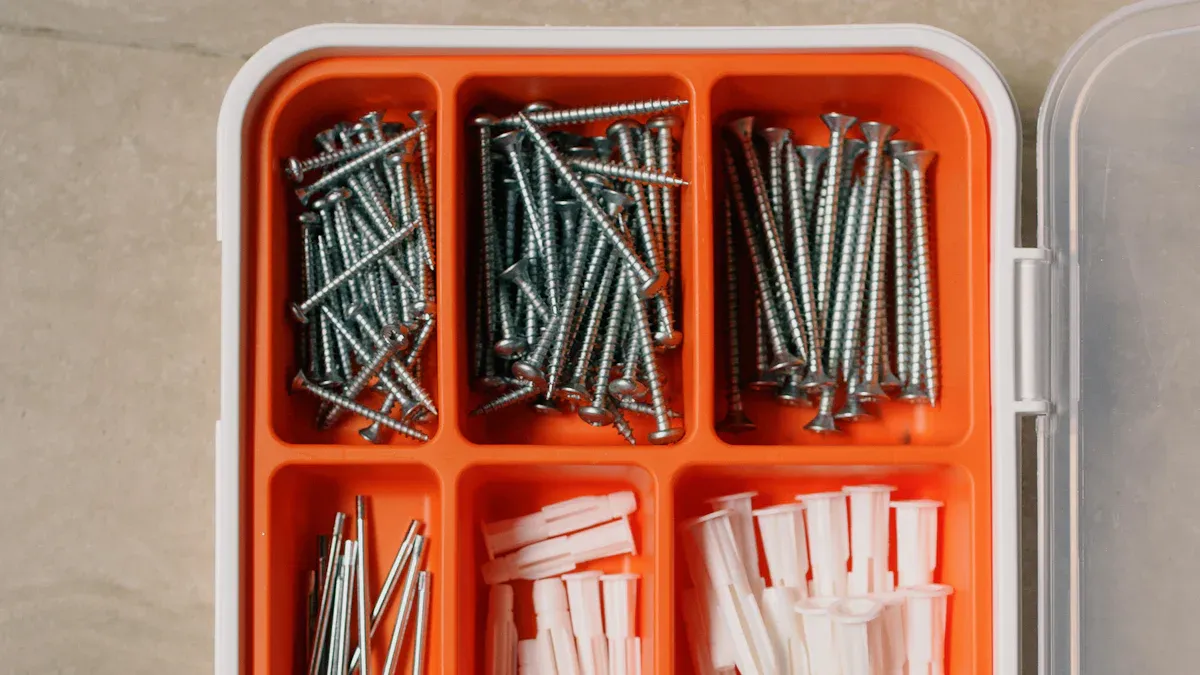
When you pick a metric or imperial fastener, you must think about more than size. Mixing these systems can make threads strip and joints loose. This can also slow down your project. You might pay more for repairs if you need special parts or must wait for new ones. Many industries use metric because it is the world standard. But imperial is still important in the U.S. At Prince Fastener, experts help you avoid these mistakes.
Основные выводы
- Pick fasteners that match your equipment. Use metric fasteners with metric tools. Use imperial fasteners with imperial tools.
- Do not mix metric and imperial fasteners. Mixing them can damage threads. It can make joints loose. This can cause safety problems.
- Think about what your project needs. Choose fasteners that hold the weight. Pick ones that stand up to heat. Make sure they resist chemicals.
- Look for fasteners that are easy to get near you. Metric fasteners are found in many places. Imperial fasteners are easier to find in the U.S.
- Ask experts like Prince Fastener for help. They can guide you. They help you pick the best fasteners for your needs.
What Are Metric and Imperial Fasteners?
Metric Fasteners Overview
Metric fasteners are used in many places. They use the metric system for measuring. This means they measure length in millimeters and meters. You see labels like M6 or M8 on them. The “M” means metric. The number tells the diameter in millimeters. Metric fasteners use thread pitch. Thread pitch shows the space between threads in millimeters. This helps you measure very exactly. Most places outside the U.S. use metric fasteners. You find them in cars, electronics, and machines from Europe or Asia. Metric fasteners help you match parts and tools easily. This is helpful when working with suppliers from other countries.
Imperial Fasteners Overview
Imperial fasteners follow old British rules from 1824. You measure these in inches and feet. Here are some important facts about imperial fasteners:
- Sizes are shown in inches, feet, or thou.
- Thread pitch is measured by threads per inch.
- Common thread types are UNC and UNF. Both have a 60° thread angle.
- Stress and pressure use pound force per square inch.
- Standards come from groups like AISI, ANSI, ASME, ASTM, and SAE.
Imperial fasteners are found in many things made in the U.S. They are also used in older machines and some industries that use U.S. rules.
Global and Regional Usage
It is important to know where each type is used. The table below shows the main places for each fastener:
| Тип крепления | Predominant Regions |
|---|---|
| Metric Fasteners | Europe, Asia, South America, Africa, Australia, Canada, and international suppliers serving U.S. companies. |
| Imperial Fasteners | United States and parts of the Caribbean, with limited use in countries importing U.S.-built machinery. |
Think about where your project will be used before you pick fasteners. Prince Fastener can help you choose the right type for your area and job.
Key Differences in Fasteners
Measurement Systems and Units
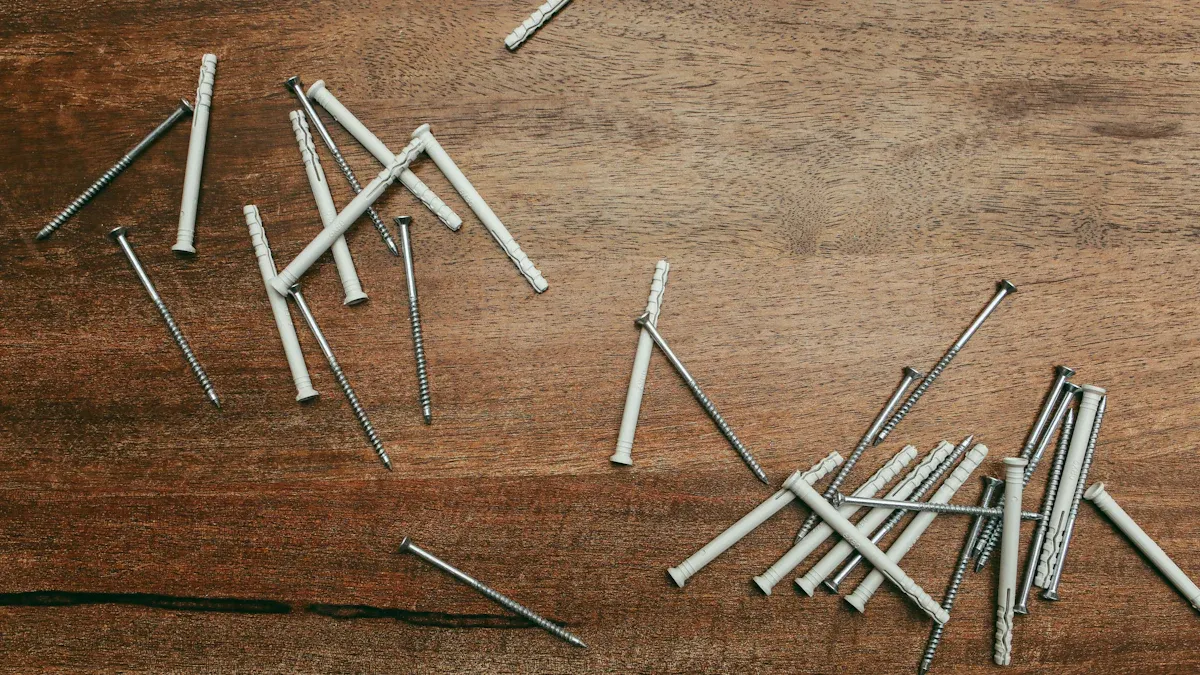
Fasteners use different ways to measure size. The metric system uses millimeters and meters. The imperial system uses inches, feet, and pounds. This changes how you read sizes and pick tools. Look at the table below for a quick comparison:
| Imperial Fasteners | Metric Fasteners |
|---|---|
| Sized in fractional or decimal inches (like 1/4-20 bolt) | Sized by diameter, pitch, and length (like M8 × 1.25 × 30) |
| Uses inches, feet, and pounds | Uses millimeters (mm) and meters |
| Mostly used in the U.S. | Used almost everywhere except the U.S. |
Always check which system your project needs before buying fasteners.
Thread Pitch vs. Thread Count
Thread pitch and thread count help match bolts and nuts. The metric system uses pitch. Pitch means the space between threads in millimeters. The imperial system uses threads per inch (TPI). Mixing these means parts will not fit. See the table below for the main differences:
| Особенность | Metric (ISO) | SAE / US (Inch) |
|---|---|---|
| Measurement Unit | Millimeters (mm) | Inches |
| Thread Spec | Pitch (mm between peaks) | TPI (threads per inch) |
| Coarse vs Fine | Smaller pitch = finer (like 1.0 vs 1.25) | Higher TPI = finer (like 32 vs 24) |
You can ask Prince Fastener for help if you are not sure which thread type you need.
Strength Grades and Markings
You need to know the strength of your fasteners for safety. Metric and imperial fasteners use different markings. Metric fasteners use numbers like 8.8 or 10.9. Imperial fasteners use grades like 2, 5, or 8. The table below shows how these compare:
| Тип крепления | Markings | Материал | Прочностные характеристики |
|---|---|---|---|
| SAE Grade 2 | No radial lines | Low/medium-carbon steel | Lowest strength |
| SAE Grade 5 | Three radial lines | Medium quenched and tempered carbon steel | Medium strength |
| SAE Grade 8 | Six radial lines | Medium quenched and tempered carbon alloy steel | Highest strength |
| Метрический класс 8.8 | 8.8 | Среднеуглеродистая сталь | Min tensile strength 800-830 MPa |
| Метрический класс 10.9 | 10.9 | Alloy steel, quenched & tempered | Min tensile strength 1,040 MPa |
| Метрический класс 12.9 | 12.9 | Alloy steel, quenched & tempered | Min tensile strength 1,220 MPa |

Use these markings to pick the right fasteners for your project.
Compatibility Issues
Mixing metric and imperial fasteners can cause problems. You might see stripped threads, loose joints, or even broken parts. The table below lists общие вопросы:
| Issue | Описание |
|---|---|
| Полосатые нити | Happens when metric and imperial fasteners do not line up. |
| Loose Joints | Comes from threads that do not match, so the fastener does not hold well. |
| Mechanical Failures | Happens when the wrong size fastener damages threads and connections. |
Tip: Always use the same system for all fasteners in your project. This helps you avoid mistakes and keeps your work safe.
Pros and Cons of Metric or Imperial Fastener
Metric Fasteners: Advantages and Disadvantages
Metric fasteners have many good points for your projects. The metric system uses easy measurements. This helps you pick the right size fastener. Metric fasteners are trusted for being exact and safe. They follow strict rules for quality. Many industries use the metric system. You can work with teams from other countries without trouble. This worldwide standard helps you avoid mistakes. It also makes it simple to find new parts.
Here is a table that shows the main advantages of metric fasteners:
| Advantage | Описание |
|---|---|
| Global Standardization | You can use metric fasteners in many countries and industries. |
| Accurate and Precise | You get reliable and safe connections for important jobs. |
| Weight Savings | Metric fasteners are often lighter, which helps in cars and planes. |
| Экономическая эффективность | You save money because metric fasteners are easy to make and buy. |
But there are some problems too. If you work on old machines or in the U.S., metric fasteners may be hard to find. You might need special tools if your shop uses the imperial system.
Imperial Fasteners: Advantages and Disadvantages
Imperial fasteners are still used a lot in the U.S. The imperial system works well for old machines and buildings. You can find imperial fasteners in many stores in America. If you fix old equipment, imperial fasteners make your job easier.
But mixing metric and imperial fasteners can cause trouble. Using the wrong type can make joints weak and not fit right. You may need different tools for imperial fasteners. This can slow down your work. Mixing systems can also make threads not line up and cause safety problems.
Tip: Prince Fastener says you should use one system for your whole project. This helps you avoid mistakes and makes fixing things easier.
When you pick metric or imperial fasteners, think about where you will use them and what tools you have. The right choice will help you save time and money later.
Applications of Metric and Imperial Fasteners
Typical Uses for Metric Fasteners
Metric fasteners are used in many new projects. They work well when you need things to fit exactly. Here are some places you see metric fasteners:
- Machinery assembly: These fasteners hold machine frames and parts together. They are good when machines shake a lot.
- Automotive manufacturing: Cars from Europe and Asia use metric fasteners. They help make strong and tight connections.
- Industrial equipment: Pumps, valves, and automation systems need metric fasteners. This keeps them working safely.
- Construction projects: Builders use metric fasteners to hold up buildings and machines.
- Marine and outdoor applications: Stainless steel metric fasteners do not rust. They last in bad weather.
Prince Fastener has many metric fasteners for these jobs. They help you pick the right one for your project.
Typical Uses for Imperial Fasteners
Imperial fasteners are still used a lot in the U.S. You see them in old machines and buildings. Many repair shops and builders use imperial fasteners. They fit U.S.-made equipment best. If you fix old systems, you need imperial fasteners. They help you keep repairs easy and safe.
Tip: Check your equipment before you pick fasteners. The wrong type can make joints loose or threads break.
Industry and Regional Preferences
Different places and jobs like certain fasteners. The table below shows where metric and imperial fasteners are used. It also tells why people like them:
| Тип крепления | Industries Using It | Locations Using It | Reasons for Preference |
|---|---|---|---|
| Metric Fasteners | Automotive, aerospace, heavy equipment, electronics | Europe, Asia, South America, Africa, Australia, Canada, and international suppliers | Used everywhere, easy to find, simple to use because of decimals |
| Imperial Fasteners | U.S. construction, infrastructure, legacy equipment | United States and parts of the Caribbean | Matches U.S. machines and vehicles, helps avoid wrong parts |
Think about where your project is and what job you have before you choose fasteners. Prince Fastener can help you find the best fastener for your needs.
How to Choose the Right Fasteners
Decision Guide for Metric or Imperial Fastener
Picking between metric or imperial fastener systems can be tricky. You want your project to work well and stay safe. Follow these steps to help you choose the right one:
- Check your equipment and tools. Look at what you already own. If your machines use metric bolts, keep using metric. If your tools fit imperial sizes, pick imperial fasteners.
- Review project requirements. Think about what your project needs. Does it need to hold heavy things? Will it face heat, water, or chemicals? Pick a fastener that matches these needs.
- Match material compatibility. Make sure the fastener material works with your parts. Some metals need special coatings or types of fasteners.
- Consider location and availability. Metric fasteners are easy to find in most places. Imperial fasteners are common in the U.S. and some Caribbean areas. Choose what is easy to buy and replace.
- Follow industry standards. Some jobs need fasteners that meet special rules. Check if your project needs ASTM, ISO, or other standards.
- Ask for expert advice. Talk to a trusted supplier like Prince Fastener. They can help you find the right fastener for your job.
Tip: Always use the same system for your whole project. Mixing metric and imperial fastener types can cause problems and make repairs harder.
Factors: Project, Location, Compatibility
You need to think about a few things before you choose metric or imperial fastener systems. Each thing can change how your project works and how easy it is to fix later.
| Фактор | What to Consider |
|---|---|
| Application Needs | Does your project need to hold heavy things or resist shaking? |
| Material Specs | Will the fastener work with the materials you use? |
| Availability | Can you buy the fasteners you need in your area? |
| Стандарты | Does your job need fasteners that meet ASTM, ISO, or other rules? |
| Equipment Compatibility | Will the fastener fit your tools and machines? |
| Расходы | Will the fastener help you save money and avoid buying special tools? |
Where you work matters a lot. Metric fasteners are used in Europe, Asia, and most of the world. The U.S. uses imperial fasteners more often. If you work on projects in many countries, metric fasteners help you match parts and avoid mistakes. If you work in the U.S., imperial fasteners may be easier to find and use.
Equipment compatibility is very important. If your tools and machines use one system, stick with it. This helps you avoid problems and keeps your project running well.
Примечание: Mixing fastener systems can cause misfits, stripped threads, and extra costs. Always check your equipment before you buy.
Tips to Avoid Mistakes
You want your project to last and stay safe. Use these tips to avoid common mistakes when picking fasteners:
- 🛠️ Start with quality. Pick fasteners made from strong materials. Ask about coatings that stop rust and wear.
- 🧑🔧 Work with experts. Talk to your fastener supplier early. Prince Fastener gives advice, testing, and support to help you choose the best option.
- 📦 Check inventory. Make sure you can get the fasteners you need in the right size and amount. This saves time and money.
- 🏭 Tour the facility. If you can, visit your supplier’s factory. You can see how fasteners are made and check their quality.
- 📞 Ask about support. Pick suppliers who help you when you need it. Good customer service can fix problems fast.
- 🔍 Look for standards. Use fasteners that meet ASTM, ISO, or other rules. This helps you avoid problems with parts that do not fit.
- 💡 Test and prototype. Try out fasteners before you use them in your project. Testing helps you find problems early.
Tip: Always use the same fastener system for your whole project. This makes repairs easier and keeps your work safe.
Choosing the right metric or imperial fastener helps you avoid costly mistakes. You save time, money, and effort when you match standards, check compatibility, and work with trusted suppliers.
You now know the main differences between metric and imperial fasteners. Each kind works best in certain jobs and places. The table below shows what experts think are their top uses:
| Тип крепления | Лучшее для | Where Used | Why |
|---|---|---|---|
| Метрика | Automotive, aerospace, electronics | Europe, Asia, South America, Africa, Australia, Canada | Used everywhere, easy to find, simple sizes |
| Imperial | U.S. construction, legacy equipment | United States, Caribbean | Fits U.S. machines, stops wrong parts |
Picking the right system helps you avoid expensive problems. Use Prince Fastener’s guide to make your project better:
- You choose fasteners that fit your project.
- You think about how strong the material is for safety.
- You check the weather and other things for long-lasting use.
Tell Prince Fastener your questions or stories. Your ideas help others pick the best fasteners.
Часто задаваемые вопросы
What is the main difference between metric and imperial fasteners?
Metric fasteners measure size in millimeters. Imperial fasteners measure size in inches. Most countries use metric fasteners. The United States mostly uses imperial fasteners.
Can you mix metric and imperial fasteners in one project?
Do not mix metric and imperial fasteners. Their threads do not fit together. This can make joints weak or break parts. Use only one system for your whole project.
Do you need special tools for metric or imperial fasteners?
You need metric tools for metric fasteners. You need inch tools for imperial fasteners. Look in your toolbox before you begin your project.
Where can you get help choosing the right fastener?
Prince Fastener can help you choose fasteners. Their team gives advice for your project. They support both metric and imperial systems.



 Русский
  English
  Español
  Português do Brasil
  日本語
日本語  العربية