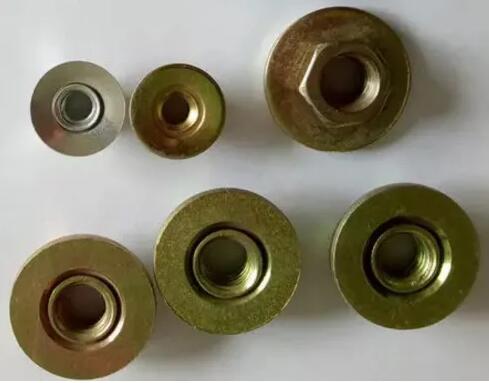

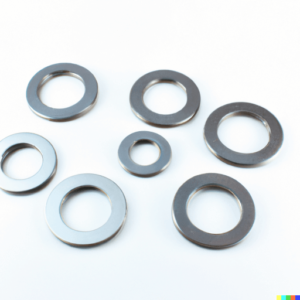
The best washers for screws are made from aço inoxidável for outdoor and corrosive environments, carbon steel with zinc plating for general indoor use, and nylon or plastic for electrical insulation and lightweight applications. The right material and finish should always match the screw type, load requirements, and the environment where the assembly will be installed.
Matching your washer material and finish to your screw is not optional — it is essential. A mismatched combination can lead to corrosão galvânica, premature fastener failure, and costly repairs. Corrosion resistance, mechanical durability, and the specific demands of your application environment are the three pillars of smart washer selection. Whether you are assembling outdoor decking, wiring an electrical panel, or building heavy machinery, choosing both the right material e the right finish will directly determine how long your fastener assembly lasts.
In this guide — developed with insights from prendedor de príncipe, a leading fastener manufacturer with over 30 years of industry experience — you will find practical, no-nonsense advice on every major washer material and finish available today. Let’s get into the details.
Washers for Screws: Material Choices
Steel Washers
Steel washers (carbon steel or mild steel) are the workhorse of the fastener world. They offer high tensile strength, wide availability, and low cost. Carbon steel washers are commonly used in construction framing, automotive assembly, and general machinery where indoor or controlled environments keep moisture exposure to a minimum. However, bare steel rusts quickly when exposed to water or humidity, so these washers almost always require a protective finish such as zinc plating or galvanizing. If your project involves heavy loads and indoor conditions, carbon steel washers with a zinc-plated finish are among the most cost-effective choices you can make.
Stainless Steel Washers
Stainless steel washers are the go-to option when corrosion resistance is a priority. The two most common grades are 304 (A2) e 316 (A4). Grade 304 resists rust in most indoor and mildly outdoor conditions, making it suitable for kitchen equipment, architectural hardware, and light exterior use. Grade 316 contains molybdenum, which gives it superior resistance to salt spray and chemical exposure — making it the standard for marine, coastal, and chemical-processing environments. Prince Fastener’s stainless steel washer catalog includes both grades in a full range of sizes. The tradeoff is price: stainless steel washers typically cost two to three times more than zinc-plated carbon steel, but the long-term savings from eliminating corrosion-related replacement often justify the investment.
Arruelas de Alumínio
Aluminum washers are lightweight and naturally resist corrosion through the formation of a thin oxide layer on their surface. They are frequently used in aerospace, HVAC systems, and automotive applications where weight reduction is critical. Aluminum conducts electricity well, so it is sometimes used in electrical grounding assemblies. The main limitation is strength: aluminum is significantly softer and weaker than steel, so it should not be used in high-load or high-vibration applications unless the engineering specifically calls for it.
Bronze Washers
Bronze washers combine good corrosion resistance with excellent bearing properties and low friction. They are common in marine hardware, pump assemblies, and valve systems. Silicon bronze, in particular, offers outstanding saltwater resistance and is a staple in boat-building and dock construction. Bronze washers also perform well in applications where the washer must act as a bearing surface. Their cost is higher than steel or aluminum, which limits their use to environments that truly demand their unique combination of properties.
Brass Washers
Brass washers share many of bronze’s corrosion-resistant qualities and add excellent electrical conductivity to the mix. This makes them popular in electrical terminals, plumbing fixtures, decorative hardware, and instrumentation. Brass has an attractive golden appearance that makes it a preferred choice for visible architectural and decorative applications. Like bronze, brass is softer than steel, so it is not suited for high-load structural connections. If you are working with brass screws on a home project, matching them with brass washers avoids the risk of galvanic corrosion.
Chrome Washers
Chrome washers are typically steel or brass washers that have been electroplated with a layer of chromium. The chrome finish provides a bright, mirror-like appearance and adds a moderate layer of corrosion protection. Chrome washers are used primarily in decorative and visible applications — bathroom fixtures, automotive trim, furniture hardware, and consumer products. The chrome layer is relatively thin and can chip or wear over time, so these washers are best for indoor or sheltered environments rather than harsh industrial conditions.
Nylon and Plastic Washers
Nylon, PTFE (Teflon), polycarbonate, and other plastic washers fill a critical niche: electrical insulation, chemical resistance, and non-marring surface protection. Nylon washers are used in electronics, printed circuit boards, and appliance assembly where metal-to-metal contact must be eliminated to prevent short circuits or galvanic corrosion. PTFE washers resist nearly all chemicals and are used in laboratory and chemical-processing equipment. Plastic washers also prevent scratching on delicate surfaces such as glass, painted panels, and polished wood. They do not have the load-bearing capacity of metal washers, so they should only be used in light-duty or specialized applications.
Specialty Materials
For extreme environments, specialty washer materials are available. These include titanium (aerospace and medical implants), Inconel and Hastelloy (high-temperature and highly corrosive chemical processing), ceramic (extreme heat and electrical insulation), and rubber or neoprene (vibration damping and sealing). Selection of specialty materials should always be guided by a qualified engineer or an experienced fastener supplier such as prendedor de príncipe, who can advise on material compatibility and performance in your specific operating conditions.
Washer Material Comparison Table
The table below summarizes the key properties of each washer material to help you make a quick, informed decision.
| Material | Força | Resistência à corrosão | Weight | Custo | Melhor para |
|---|---|---|---|---|---|
| Aço carbono | Alta | Low (needs finish) | Heavy | $ | Indoor structural, machinery |
| Stainless Steel 304 | Alta | Alta | Heavy | $$ | General outdoor, food-grade |
| Aço inoxidável 316 | Alta | Muito alto | Heavy | $$$ | Marine, chemical processing |
| Alumínio | Low-Medium | Medium-High | Light | $$ | Aerospace, HVAC, weight-sensitive |
| Bronze | Médio | Alta | Heavy | $$$ | Marine, pumps, valves |
| Latão | Médio | Alta | Heavy | $$ | Electrical, plumbing, decorative |
| Chrome (plated) | Depends on base | Médio | Depends on base | $$ | Decorative, automotive trim |
| Nylon / Plastic | Baixa | Muito alto | Very Light | $ | Electrical insulation, non-marring |
| Specialty (Titanium, Inconel, etc.) | Muito alto | Muito alto | Varia | $$$$ | Aerospace, medical, extreme conditions |
Corrosion Resistance by Washer Material (Relative Rating)
The following bar chart illustrates the relative corrosion resistance of common washer materials on a scale of 1 to 10.
Note: Ratings are approximate and reflect general performance in atmospheric conditions. Actual results vary by grade, alloy, and environment.
Washer Finishes and Corrosion Protection
Even the strongest washer material will fail prematurely without the right surface finish. Finishes serve two primary roles: they protect the base metal from corrosion, and they can improve appearance for visible applications. Below is a breakdown of the most common washer finishes used alongside parafusos e porcas.
Zincado
Zinc plating is the most widely used finish for steel washers. An electroplated layer of zinc acts as a sacrificial barrier — even if the surface is scratched, the zinc corrodes before the steel underneath. Zinc-plated washers have a bright, silvery appearance and provide reliable corrosion protection for indoor environments and dry outdoor conditions. They are not recommended for marine or highly corrosive environments. A clear or yellow chromate conversion coating is often applied on top of the zinc layer for additional protection. Zinc plating is the default finish for most general-purpose arruelas planas sold at hardware stores and by industrial suppliers.
óxido preto
Black oxide is a chemical conversion coating that produces a dark, matte-black finish on steel. It provides minimal corrosion resistance on its own and is usually supplemented with oil or wax to improve protection. The primary advantages of black oxide are its appearance (popular in tactical, firearms, and machinery applications), its negligible dimensional change (critical for precision parts), and its relatively low cost. Black oxide washers are ideal for indoor or controlled environments where aesthetics and tight tolerances matter more than weather resistance.
Galvanizado
Hot-dip galvanizing applies a thick layer of zinc by dipping the washer into a bath of molten zinc. This creates a much heavier, more durable coating than electroplated zinc, making galvanized washers the standard choice for outdoor construction, fencing, agricultural equipment, utility poles, and any application exposed to rain, humidity, or soil contact. The finish is dull gray and rougher than zinc plating. Because the coating is thick, dimensional tolerances are wider, so galvanized washers may not fit in precision assemblies. For outdoor wood screw projects, galvanized washers paired with galvanized screws provide a reliable, long-lasting fastening system.
Chrome and Nickel
Chrome plating and nickel plating both produce bright, reflective finishes with good corrosion resistance. Chrome is harder and more wear-resistant but can be brittle; nickel is softer and provides slightly better corrosion protection. Both finishes are common in automotive, plumbing, furniture, and consumer-product applications where appearance is critical. Nickel plating is also used in electronics and food-processing equipment due to its non-toxicity and ease of cleaning. These finishes add significant cost and are typically reserved for visible or consumer-facing applications.
Anodized and Epoxy Coatings
Anodizing is an electrochemical process applied primarily to aluminum washers. It thickens the natural oxide layer, producing a hard, durable, corrosion-resistant surface that can be dyed in a wide range of colors. Anodized aluminum washers are popular in electronics, consumer goods, and specialty industrial applications. Epoxy coatings (also called powder coatings) can be applied to steel or aluminum washers and provide excellent chemical and corrosion resistance along with customizable colors. Epoxy-coated washers are used in chemical plants, water treatment facilities, and architectural projects.
Other Surface Treatments
Additional finishes include phosphate coating (a dark gray or black finish used as a base for paint or as a mild corrosion inhibitor with oil), cadmium plating (excellent corrosion resistance, especially in salt spray; used in aerospace but restricted due to toxicity), Dacromet and Geomet (non-electrolytic zinc-aluminum flake coatings with outstanding corrosion resistance and no hydrogen embrittlement risk), and ceramic coatings (for extreme temperature or chemical environments). The choice among these specialty finishes depends on the exact operating conditions and industry standards governing your project.
Market Share of Washer Finishes in General Industry

Source: Industry estimates based on fastener distribution data. Actual percentages vary by sector.
Washer Finish Comparison Table
| Terminar | Corrosion Protection | Aparência | Dimensional Impact | Custo | Aplicações típicas |
|---|---|---|---|---|---|
| Zincado | Bom | Bright silver | Mínimo | $ | Indoor general purpose |
| óxido preto | Low (with oil: moderate) | Matte black | Negligible | $ | Machinery, firearms, precision |
| Galvanizado por imersão a quente | Excelente | Dull gray, rough | Significant | $$ | Outdoor construction, agriculture |
| Chrome Plated | Good-Excellent | Mirror bright | Mínimo | $$$ | Automotive, furniture, decorative |
| Nickel Plated | Good-Excellent | Bright, warm tone | Mínimo | $$$ | Electronics, food equipment |
| Anodized | Excelente | Customizable colors | Mínimo | $$ | Aluminum parts, electronics |
| Epoxy / Powder Coat | Excelente | Custom colors, matte/gloss | Moderado | $$ | Chemical plants, architecture |
| Dacromet / Geomet | Excelente | Silver-gray | Mínimo | $$$ | Automotive OEM, wind energy |
How to Choose Washers for Screws

Match Material and Finish
The most important rule in washer selection is to match the washer material and finish to the screw (or bolt) it will be used with. Using a stainless steel washer with a plain carbon steel screw in a wet environment will almost certainly cause corrosão galvânica — the dissimilar metals create an electrochemical reaction that accelerates deterioration of the less noble metal. As a general rule, use stainless washers with stainless screws, zinc-plated washers with zinc-plated screws, and galvanized washers with galvanized fasteners. When in doubt, consult a galvanic compatibility chart or reach out to an experienced supplier like prendedor de príncipe for guidance.
Consider Environment
Your operating environment dictates your material and finish requirements. Indoor, climate-controlled spaces allow you to use cost-effective zinc-plated steel. Outdoor exposure to rain and UV demands hot-dip galvanized or stainless steel. Marine and coastal environments require 316 stainless steel or silicon bronze. Chemical plants may need specialty alloys or PTFE-coated washers. Electrical applications often call for nylon or plastic to prevent conductivity. Temperature extremes — either very hot or very cold — affect material behavior, so check the rated service temperature range of any washer before specifying it for a high-heat or cryogenic application.
Dicas de aplicação
Beyond material and finish, keep these practical tips in mind. Always ensure the washer’s inner diameter is slightly larger than the screw or bolt shank so it fits without binding. The outer diameter should be large enough to distribute the load across the joint surface — arruelas de para-lama are ideal when you need extra surface coverage on soft materials like wood or plastic. For vibration-prone assemblies, pair your flat washer with a lock washer or use a Nord-Lock style locking system. Do not stack multiple washers to compensate for an oversized hole — instead, use the correct fender or repair washer. Finally, always torque your fastener to specification; over-tightening can crush a washer and destroy its load-distributing function, while under-tightening defeats the purpose of using one in the first place.
Video: All About Washers – Types & Materials Explained
This video from Albany County Fasteners provides an excellent visual overview of washer types, materials, and sizing standards.
Quick-Reference: Washer Selection by Scenario
| Cenário | Material recomendado | Recommended Finish |
|---|---|---|
| Indoor furniture assembly | Aço carbono | Zinc plated |
| Outdoor wood deck | Carbon steel or SS 304 | Hot-dip galvanized or none (SS) |
| Marine / coastal structure | SS 316 or silicon bronze | None (inherent resistance) |
| Electrical panel | Nylon or PTFE | N/A |
| Automotive underbody | Aço carbono | Dacromet / Geomet or zinc-flake |
| Decorative bathroom fixture | Brass or steel | Chrome or nickel plated |
| Chemical processing plant | SS 316L, Hastelloy, or PTFE | None or epoxy coated |
| Heavy machinery (indoor) | Aço carbono | Black oxide with oil |
Conclusão
Selecting the right washer for your screws comes down to three decisions: material, finish, and environment. For most indoor, general-purpose work, zinc-plated carbon steel washers deliver the best balance of performance and cost. For outdoor and mildly corrosive conditions, upgrade to stainless steel 304 or hot-dip galvanized steel. For marine, chemical, and extreme environments, invest in 316 stainless steel, bronze, or specialty alloys. For electrical insulation and non-marring applications, turn to nylon or PTFE plastic washers.
Always match your washer material and finish to the screw it accompanies — mismatched metals are the single most common cause of premature fastener corrosion. Consider the temperature, moisture, chemical exposure, and mechanical loads your assembly will face over its intended lifespan.
Use the comparison tables and scenario guide in this article as a starting point for your next project. And if you need expert help or want to source high-quality washers in bulk, prendedor de príncipe has been serving the global fastener industry for over 30 years with a comprehensive product range and engineering support.
For more detailed technical specifications and product catalogs, visit Prince Fastener’s stainless steel washer page, explore their complete washer material comparison guide, or read industry standards at ASTM International e ISO.
Frequently Asked Questions (FAQ)
1. What material washer should I use with stainless steel screws?
Use a stainless steel washer — ideally the same grade (304 or 316) as your screw. Matching the material prevents galvanic corrosion and ensures consistent corrosion resistance across the entire fastener assembly. prendedor de príncipe offers both 304 and 316 stainless steel washers in all standard sizes.
2. Can I use a steel washer with an aluminum screw?
This combination is risky. Steel is more noble than aluminum in the galvanic series, meaning the aluminum will corrode preferentially when moisture is present. If you must combine these metals, use an insulating nylon washer between them to break the electrical circuit, or switch to an aluminum washer.
3. What is the difference between zinc-plated and galvanized washers?
Both use zinc for corrosion protection, but the application method and thickness differ. Zinc plating (electroplating) deposits a thin, uniform layer suitable for indoor and light outdoor use. Hot-dip galvanizing dips the part in molten zinc, creating a much thicker, more durable coating ideal for outdoor and harsh environments. Galvanized washers last significantly longer in rain, snow, and soil contact.
4. Are nylon washers strong enough for structural applications?
No. Nylon and other plastic washers have significantly lower compressive strength and load capacity than metal washers. They are designed for electrical insulation, chemical resistance, vibration dampening, and surface protection — not for bearing structural loads. For structural applications, use steel or stainless steel washers.
5. When should I use a black oxide washer instead of a zinc-plated washer?
Choose black oxide when you need a dark, low-reflectivity appearance, when dimensional accuracy is critical (black oxide adds virtually zero thickness), or when the application is in a dry, indoor environment. Choose zinc plating when corrosion protection is more important than appearance or dimensional precision.
6. Do I always need a washer with a screw?
Not always, but in most cases a washer improves performance. Washers distribute the clamping load, protect the surface from damage, and help maintain preload by preventing the fastener from embedding into softer materials. You can read more about when to use washers with screws at Prince Fastener’s blog.
7. What is the best washer material for outdoor wood decks?
For outdoor wood decks, use either hot-dip galvanized steel washers (budget option) or 304 stainless steel washers (premium option). Both resist the moisture, rain, and UV exposure that decks endure. Avoid plain steel and black oxide washers outdoors — they will rust within weeks.
8. Can I mix chrome-plated washers with stainless steel screws?
Chrome-plated steel washers and stainless steel screws have different base metals, which can create a galvanic corrosion risk in wet environments. For indoor decorative use this is generally acceptable, but for any exterior or humid application, match your metals consistently.
9. What washer finish lasts the longest outdoors?
Hot-dip galvanizing provides the longest-lasting zinc protection for steel washers outdoors, often exceeding 25–50 years depending on the environment. For even greater longevity, stainless steel washers (304 or 316) eliminate the need for a coating entirely, as the base material itself resists corrosion.
10. Where can I buy high-quality washers in bulk for industrial projects?
prendedor de príncipe is an established fastener manufacturer and supplier with over 30 years of experience, offering a full range of washers in steel, stainless steel, brass, bronze, nylon, and specialty materials. They ship globally and provide technical support for material and finish selection. You can also find washers at major distributors like McMaster-Carr, Grainger, e Bolt Depot.





 Português do Brasil
  English
  Español
  Русский
  日本語
日本語  العربية