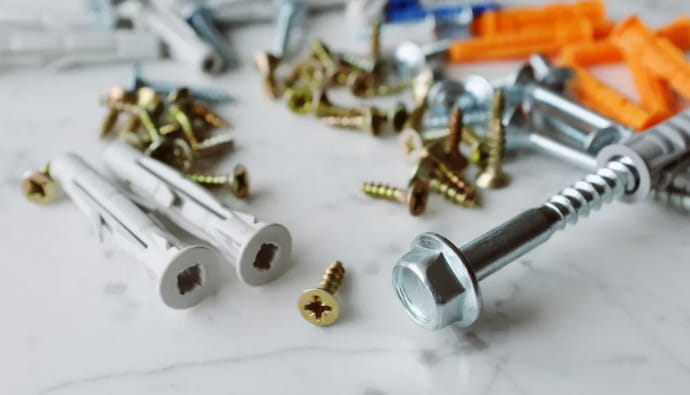
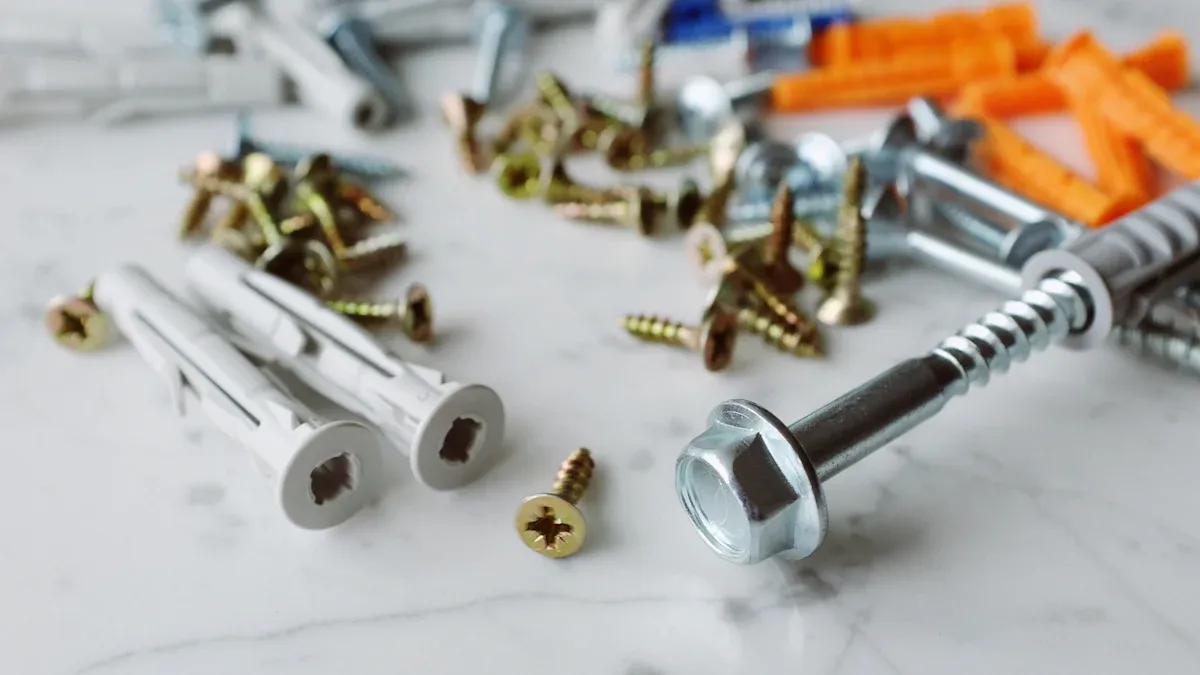
Metal anchors are the strongest and most reliable for big jobs. Plastic anchor screws work well for light things. Before picking, check these main points:
| Decision Factor | What to Think About |
|---|---|
| 強さ | Type, size, and depth change how much weight it holds. |
| 耐久性 | Stainless steel does not rust outside; plastic is good in wet places. |
| コスト | Metal costs more than plastic most times. |
| インストールの容易さ | Plastic anchors are fast to put in many surfaces. |
| 壁タイプ | Use the right anchor for your wall for best results. |
| Load | Anchors handle pulling and side forces in different ways. |
Think about your wall, how much weight you need to hold, and where you will use it. Pick the anchor that fits your needs for a safe and strong setup.
要点
- Pick metal anchors for heavy things like cabinets or TVs. This helps keep your stuff safe and secure. Use plastic anchor screws for light things like picture frames. They are quick and easy to put in. Always look at your wall type and how much your item weighs. This helps you pick the right anchor and stops damage. Think about the cost over time. Metal anchors can help you avoid repairs and replacements later. Follow the steps for installation closely. This will help your project stay strong and safe.
Plastic Anchor Screw vs Metal Anchor: Key Differences
Strength and Load Capacity
You need to think about how much weight your anchor will hold. Plastic anchor screws work best for lightweight items like small shelves or picture frames. Metal anchors give you much more strength. They can hold heavy objects such as cabinets or TVs. In tests, plastic anchors failed at 58 pounds in drywall, but metal anchors in wood studs held up to 329 pounds. This shows a big difference in performance. You should always choose metal anchors for heavy-duty jobs.
Here is a quick look at how much weight each type can handle:
| Anchor Type | Load Capacity in Concrete | Load Capacity in Drywall |
|---|---|---|
| Plastic Expansion | 30 lbs | 10 lbs |
| Metal Anchors | Ideal for heavier items | 該当なし |
- Plastic anchors are best for lightweight items.
- Metal anchors are suitable for heavier items.
耐久性
Durability matters when you want your project to last. Plastic anchor screws resist moisture, so you can use them in damp places. However, they may crack or wear out over time, especially if you move the screw often. Metal anchors offer much better durability. They do not break easily and can last for many years. Stainless steel anchors do not rust, so you can use them outside. If you want the best durability, metal anchors are the right choice. Prince Fastener offers metal anchors that stand up to tough conditions.
Cost Comparison
You will notice that plastic anchor screws usually cost less than metal anchors. If you have a lot of small, light things to hang, plastic anchors can save you money. Metal anchors cost more, but they give you better performance and durability. You should think about how much you want to spend and how important strength is for your project. Sometimes, paying a little more for metal anchors means you get better results and fewer problems later.
インストールの容易さ
Plastic anchor screws are easy to install. You only need a drill and a drill bit that is a bit smaller than the anchor. You can put them into drywall, plaster, or hollow block quickly. Metal anchors may take more time and care. Some types need special tools or more steps. You must avoid drilling too deep, especially in drywall. If you want a fast and simple job, plastic anchors make sense. If you want top performance, you may need to spend more time with metal anchors.
Wall Type Suitability
You must match the anchor to your wall for the best performance. Plastic anchor screws work well in drywall, plaster, and hollow block. Metal anchors fit best in concrete and masonry. Some metal anchors, like lag-shield or drop-in anchors, work great in brick or solid concrete. Molly bolts, which are a type of metal anchor, are good for drywall and give you a reusable screw. Here is a table to help you decide:
| Anchor Type | Compatible Wall Materials |
|---|---|
| Plastic Anchors | Drywall, Plaster, Hollow Block |
| Metal Anchors | Concrete, Masonry |
You should always check your wall type before you start. This helps you get the best durability and performance from your anchors.
Tip: For heavy loads or important items, always choose the anchor with the highest performance and durability. Prince Fastener can help you find the right anchor for your wall and your project.
When to Use Plastic Anchor Screws
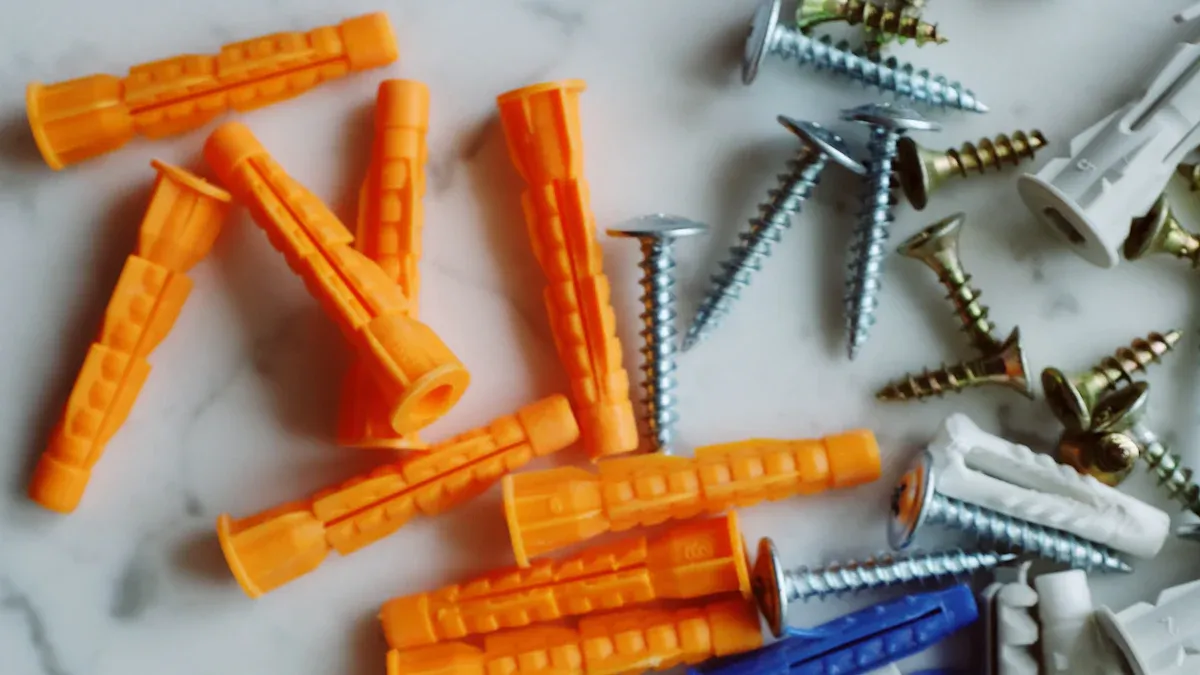
Best Uses for Plastic Anchor Screws
You can use a plastic anchor screw for many light-duty tasks around your home or office. These anchors work well when you want to hang small shelves, picture frames, mirrors, or lightweight decorations. You will find them easy to install in drywall, plaster, or hollow block walls. If you need a quick solution for simple jobs, a plastic anchor screw gives you a fast and reliable hold.
Here is a table showing the claimed and tested weight limits for popular plastic anchor screws in drywall:
| Anchor Type | Claimed Weight | Tested Weight |
|---|---|---|
| Cobra DrillerToggle | 90 Lbs. | 140 Lbs. |
| WallClaw Anchors | 90 Lbs. | 90 Lbs. |
| Everbilt Ribbed | 22 Lbs. | 80 Lbs. |
| Cobra TripleGrip | 45 Lbs. | 90 Lbs. |
| Pop Toggle | 60 Lbs. | 130 Lbs. |
| E-Z Ancor Twist-N-Lock Medium Duty | 75 Lbs. | 100 Lbs. |
| Toggler SNAPTOGGLE | 80 Lbs. | 180 Lbs. |
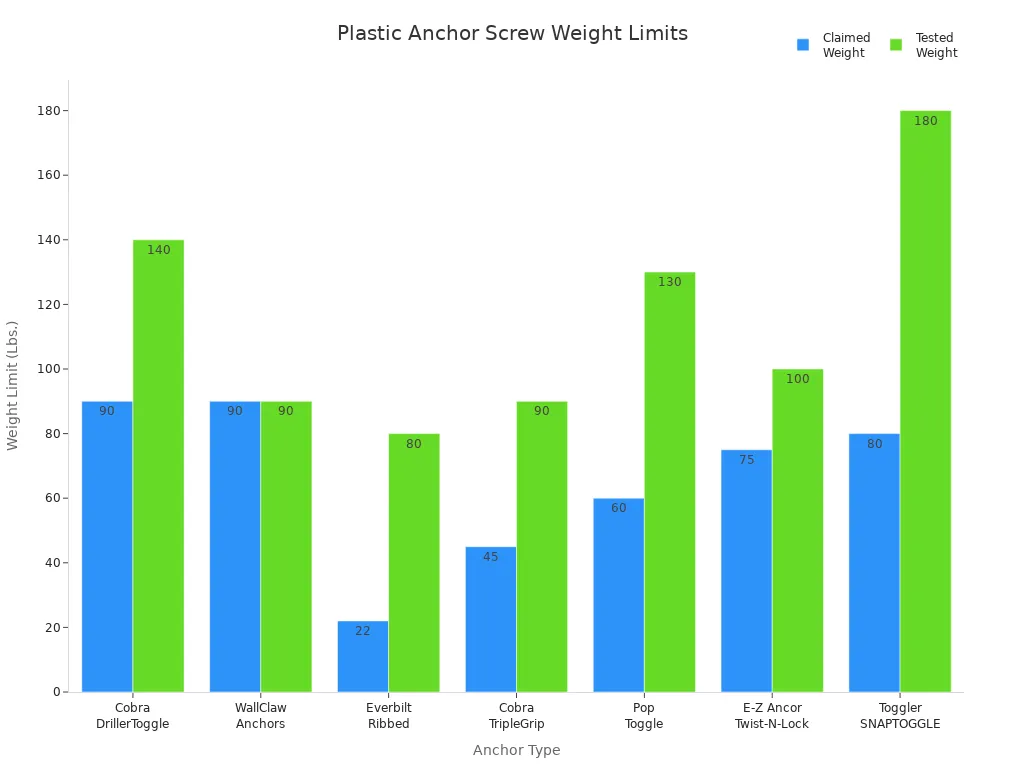
You should always check the weight of your item before choosing a plastic anchor screw. For most small household items, these anchors provide enough support. Prince Fastener offers a range of plastic anchor screw options to help you complete your projects with confidence.
Limitations and Risks
A plastic anchor screw does not suit every job. If you try to use it for heavy objects, you risk failure. Overloading can cause the anchor to pull out of the wall, which may damage your wall or your belongings. You should avoid using a plastic anchor screw for large shelves, TVs, or cabinets.
Moisture also affects plastic anchor screws. In high-moisture areas, such as bathrooms or basements, water and chemicals can wear down the plastic. This weakens the anchor and may cause it to fail over time. You should choose a different anchor type for wet or outdoor locations.
Tip: Always match the anchor to your wall type and the weight of your item. For heavy or important items, consider using a metal anchor for extra safety.
When to Use Metal Anchors
Best Uses for Metal Anchors
You should choose metal wall anchors when you need to hang heavy or valuable items. These anchors work best for mounting cabinets, large mirrors, wall-mounted TVs, and heavy shelves. You can use them in concrete, brick, or masonry walls. Metal wall anchors give you strong support in places where plastic anchors would fail.
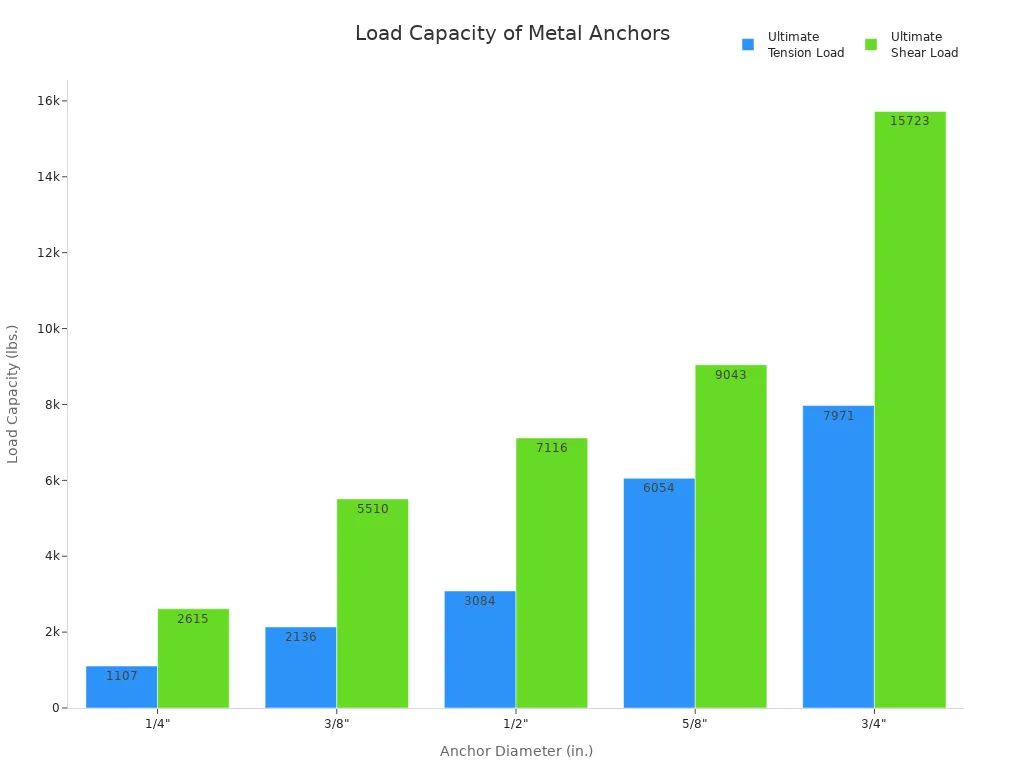
If you want to see how much weight metal wall anchors can handle, look at この表. It shows the maximum load capacity for different anchor sizes in concrete walls:
| Nominal Anchor Diameter (in.) | Minimum Embedment Depth (in.) | Ultimate Tension Load Capacity (lbs.) | Ultimate Shear Load Capacity (lbs.) |
|---|---|---|---|
| 1/4″ | 1-1/8″ | 1,107 | 2,615 |
| 3/8″ | 1-5/8″ | 2,136 | 5,510 |
| 1/2″ | 2-1/4″ | 3,084 | 7,116 |
| 5/8″ | 2-3/4″ | 6,054 | 9,043 |
| 3/4″ | 3-3/8″ | 7,971 | 15,723 |
You can see that metal wall anchors hold thousands of pounds in concrete. This makes them the best choice for safety and reliability. Prince Fastener offers a range of metal wall anchors for your toughest jobs.
Limitations
Metal wall anchors have a few limits you should know. You may find them harder to install than plastic anchors. You need the right tools and must drill precise holes. If you use them in soft walls like drywall without a stud, they may not hold as well. Metal wall anchors also cost more than plastic ones.
You should avoid using metal wall anchors in places where you want a quick or low-cost solution for light items. If you only need to hang a small picture, you do not need this much strength. For most heavy-duty jobs, though, metal wall anchors give you the best results.
Note: Always check your wall type and the weight of your item before choosing an anchor. This helps you avoid damage and keeps your project safe.
Choosing the Right Anchor for Your Project
Assessing Wall Material
You need to know what kind of wall you have before you pick an anchor. The wall material changes how well an anchor will hold. One simple way to check your wall is to knock on it. If you hear a hollow sound, you likely have drywall. If the sound is solid, your wall may be plaster or masonry. Drywall is common in many homes, but some rooms have brick, concrete, or plaster walls.
The type of wall affects the strength of your anchor. For example:
- Plastic expansion anchors hold about 10-25 pounds in drywall.
- Threaded drywall anchors (EZ Anchors) can hold 25-75 pounds.
- Molly bolts support 50-75 pounds.
- Toggle bolts can hold 100-200 pounds.
Drywall anchors are small compared to the size of the wall panel. This means the force from the item you hang is focused on a small area. If you do not install the anchor correctly, the drywall can crumble or the anchor can pull out. Always match the anchor to your wall type for the best results.
Tip: If you are unsure about your wall type or need help choosing, Prince Fastener can guide you to the right anchor for your wall.
Determining Load Requirements
You must know how much weight your anchor needs to hold. Start by weighing the item you want to hang. Add a little extra weight to be safe. Each anchor type has a weight limit. If you use a drywall anchor, check the package for its load rating.
To figure out the right anchor, follow these steps:
- Find the weight of your item.
- Check the anchor’s load rating.
- Make sure the anchor can hold more than your item’s weight.
If you want to be exact, you can use formulas to calculate the load. For example, you can find the pressure thrust by measuring the area of the anchor’s contact point. You can also check the spring load by multiplying the spring rate by the movement. For most home projects, you only need to know the anchor’s weight limit.
If you use an anchor that cannot hold enough weight, you risk damage. The anchor may pull out of the wall, the drywall may crumble, or your item may fall. This can cause injury or break your things. Always choose an anchor with a higher weight limit than you need.
- Knowing the weight capacity of a drywall anchor helps you pick the right one.
- Exceeding the limit can cause the anchor to pull out or the wall to break.
- Overloading can lead to falling objects and possible injury.
環境への配慮
You should think about where you will install the anchor. Temperature and humidity can change how well an anchor works. For example, high heat or moisture can make plastic anchors bend or break. Metal anchors may rust if you use them outside or in wet places.
Here is a table showing how temperature and humidity affect anchors:
| Parameter | Impact on Anchors |
|---|---|
| Temperature and Humidity Amplitude | High changes can cause plastic anchors to deform or soil to crack. |
| Lower Limit Values | Low values can make the wall weaker and reduce anchor strength. |
| Axial Force Fluctuations | Changes in temperature and humidity can make anchors less stable. |
For outdoor projects, use anchors made for tough conditions. Choose high-quality plastic anchors like nylon or polyethylene for outdoor use. These resist UV rays and moisture. Make sure the anchor fits your wall and can handle wind or rain. Always follow the manufacturer’s instructions for installation. You can also use sealants to protect the anchor from water and sun. Check your anchors often and replace them if you see damage.
Balancing Cost and Performance
You need to balance how much you spend with how well the anchor works. Plastic anchors cost less, usually between $0.25 and $0.40 each. They work well for light items. Metal anchors cost more but can hold much heavier loads. For example, a metal toggle bolt can support up to 100 pounds.
Here is a table to help you compare:
| 特徴 | Plastic Expansion Screws | Metal Anchors |
|---|---|---|
| 初期費用 | より低い | より高い |
| 負荷容量 | Light to Medium | より高い |
| インストールの容易さ | Easier | More Complex |
| 耐食性 | Better | Varies |
| Fire Resistance | 限定 | Better |
| Service Life | Limited in extreme conditions | Longer |
Plastic anchors are easy to install and save money for small jobs. Metal anchors last longer and give you more safety for heavy items. Think about the long-term cost. If you use a weak anchor and it fails, you may have to repair your wall or replace your things. Sometimes, spending a little more at the start saves you money and trouble later.
Note: Always choose the anchor that matches your wall, your load, and your environment. For important or heavy items, safety and reliability matter most. Prince Fastener offers both plastic and metal anchors for all types of projects.
インストールに関するヒント
よくある間違い
You can avoid many problems during installation by knowing the most common mistakes. Many people rush through installation and miss important steps. Here are some mistakes you should watch out for:
- You might forget to clean the hole after drilling. Dust left inside can weaken the hold, especially when using a metal toggle bolt. Always remove dust and debris before you continue.
- You may use the wrong amount of torque. If you do not tighten the metal toggle bolt enough, it will not grip the wall. If you overtighten, you can break the anchor or damage the wall.
- You might skip the manufacturer’s instructions. Each metal toggle bolt has special steps for installation. Not following these can lead to failure and unsafe results.
Tip: Prince Fastener provides clear instructions with every metal toggle bolt. Following these steps helps you get the best performance for your projects.
Secure Installation Steps
You can achieve a strong and safe installation by following these steps. This process works for most wall anchors, including the metal toggle bolt. You will find that these steps add ease to your work and help you avoid mistakes.
- Check your wall type. Drywall, concrete, and brick need different anchors. A metal toggle bolt works best in drywall and hollow walls.
- Pick the right anchor for your project. Use a metal toggle bolt for heavy items or when you need extra strength.
- Drill a hole in the wall. Make sure the hole matches the size of the metal toggle bolt.
- Clean out the hole. Remove all dust and loose material.
- Insert the metal toggle bolt into the hole. Make sure it opens fully behind the wall.
- Tighten the screw until the metal toggle bolt feels snug. Do not overtighten.
- Hang your item and test the strength. Gently pull to check if the installation is secure.
Note: For the best results, use high-quality anchors from Prince Fastener. This ensures your installation will last and keep your items safe.
- Pick metal anchors if you need to hang heavy things like cabinets or TVs.
- Use plastic anchor screws for light stuff, like picture frames.
- Always look at your wall type and check the weight before starting.
- Prince Fastener has anchors for any project you want to do.
Safety is very important. Choose the anchor that is strong and lasts a long time. This helps your project stay safe and last longer.
よくあるご質問
What is the main difference between plastic anchors and metal wall anchors?
You will find that plastic anchors work best for light items. Metal wall anchors hold heavier loads. You should use plastic anchors for small shelves or frames. Choose metal wall anchors for cabinets or TVs. Always match the anchor to your wall and the weight you need to support.
Can I reuse a plastic anchor after removing the screw?
You should not reuse plastic anchors. When you remove the screw, the anchor may lose its grip in the wall. For a secure hold, always use a new anchor. This helps you avoid damage and keeps your wall safe.
How do I know which anchor to use for my wall?
You need to check your wall type before picking an anchor. Drywall, plaster, and masonry need different anchors. Plastic anchors work in drywall and plaster. Metal wall anchors fit concrete or brick. Prince Fastener can help you choose the right anchor for your wall.
Are there special installation instructions for anchors?
You should always follow the installation instructions on the package. Each anchor type needs a certain hole size and screw. Cleaning the hole and using the right screw help you get a strong hold. This keeps your wall anchor secure and your items safe.
Why does my anchor pull out of the wall?
Your anchor may pull out if you use the wrong type or overload it. Plastic anchors can fail with heavy items. Metal wall anchors give more strength. Always check the weight limit and match the anchor to your wall. This prevents damage and keeps your wall anchor strong.


 日本語
日本語  English
  Español
  Português do Brasil
  Русский
  العربية