
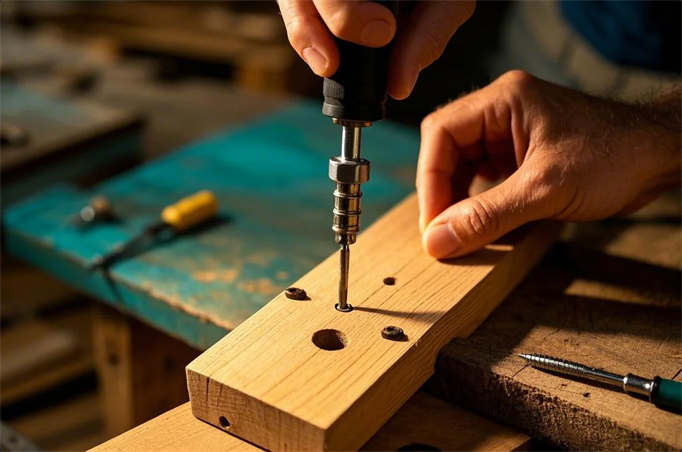
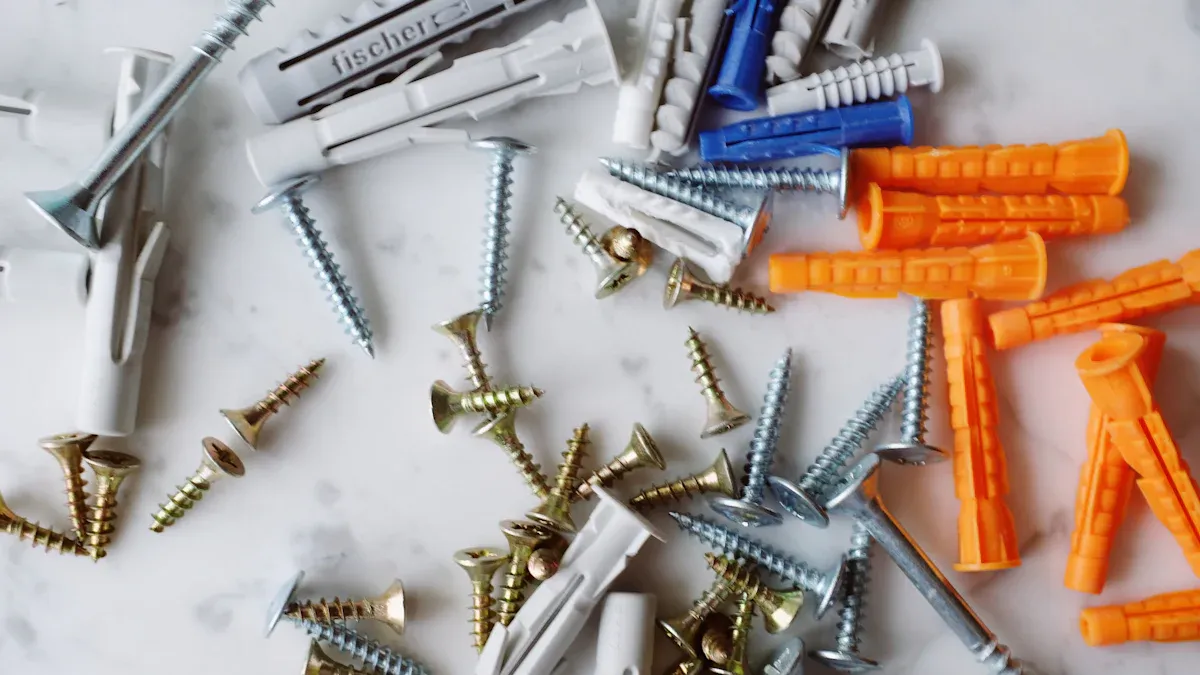
You want to pick the right wood screw anchors for your construction and renovation projects. Start by focusing on three things: the material you’re working with, how much weight you need to support, and the anchor type. Using the correct anchor keeps your project safe and strong. You’ll find the process easy when you follow a few simple steps. Here are some materials and anchor types you might find:
- Steel, stainless steel, brass, aluminum, and copper screws
- Nails, bolts and nuts, dowels, expansion anchors, anchors for hanging, wood anchors for furniture, wood glue
要点
- を選ぶ right wood screw anchor for your material. Wood, drywall, and concrete need different anchors for good support.
- Think about how much weight your anchor will hold. Look at the manufacturer’s rules and add extra safety to keep your project safe for a long time.
- 使用する right anchor size for your wood thickness. The correct size helps the anchor hold better and last longer.
- Do not make mistakes like tightening screws too much or picking the wrong anchor. These mistakes can make your project fail and cause safety problems.
- Look at quick guides and checklists before you start. They help you choose the best anchors and make sure your project is strong and safe.
Choosing Wood Screw Anchors
Material Matters
You need to start by looking at the material you want to fasten. Wood, drywall, concrete, and metal all need different types of screw anchors. Wood screw anchors work best in solid wood or plywood. Drywall and masonry need special wall anchors because they are not as strong as wood. If you use the wrong anchor, your project might not hold up.
ヒント: Always check the material before you buy anchors. This helps you pick the right type and size for your job.
Professional contractors look for durability and load ratings when they choose screw anchors. DIYers often want something easy to use and affordable. Both groups agree that easy installation and less wall damage matter a lot. You can trust brands like Prince Fastener for reliable anchors that work well in many materials.
Load and Size
You should always think about how much weight your anchor needs to hold. Here’s a simple way to figure it out:
- 確認してください maximum weight you want the anchor to support. Think about both steady and moving loads.
- Look at the manufacturer’s guide to see if the anchor can handle that weight.
- Add a safety margin for any changes in weight over time.
- Make sure the material is strong enough for the load.
- For big or important projects, ask an expert for advice.
The size of your anchor matters too. Use the right size for your wood thickness and type. Here’s a quick table to help you match anchor size to wood:
| Anchor Size | Recommended Post Size | 素材 | Weight | 締結部品 | Recommended Wood Species |
|---|---|---|---|---|---|
| 4×4 | 3.5” to 4” | Formed/Welded sheet steel | 1.4 lbs | (4) 3/8”x5 hex head lag screws | Cedar, spruce, redwood, pine, hem-fir |
| 4×6 | 3.5” to 4” | Formed/Welded sheet steel | 2.4 lbs | (4) 3/8”x5 hex head lag screws | Cedar, spruce, redwood, pine, hem-fir |
| 6×6 | 5.5” to 6” | Formed/Welded sheet steel | 2.75 lbs | (6) 1/2”x5 hex head lag screws | Cedar, spruce, redwood, pine, hem-fir |
If you use the right size, your wall anchors will hold better and last longer.
Anchor Types
You will find many types of screw anchors for different jobs. Wood screw anchors, sometimes called lead anchors, are great for light-duty tasks in wood. They work by letting you drive a wood screw into the anchor, which then expands and grips the wood tightly. For drywall, you need special wall anchors that spread out behind the wall for extra hold. Concrete and masonry need heavy-duty anchors that go deep into the material.
Modern screw anchors have new features that make them safer and easier to use. Some have sensors that check for stress and strain, so you know if your anchor is holding up. Others use glue or special tools for faster and more accurate installation. These new designs can save you time and make your project safer.
注記: Always follow the rules for anchor use in your area. Some building codes say how deep anchors must go or where you should place them. This keeps your project safe and up to standard.
When you match the right anchor type to your project, you get better support and safety. Take your time to choose the best screw anchors for your material, load, and job.
Using Screw Anchors by Material
Wood and Plywood
You probably work with wood or plywood for many home projects. Most of the time, you do not need wall anchors in solid wood. Wood holds screws well on its own. If you use plywood, things change a bit. Plywood is softer and thinner than solid wood. Sometimes, you need extra support for hanging heavy objects.
Here’s how to use screw anchors in plywood:
- Drill a hole in the plywood. Make the hole big enough for a drywall anchor to fit through.
- Insert the drywall anchor into the hole.
- Place a spacer into the plywood. You might need a spade bit to make space for the spacer.
- Drive the screw through the spacer and into the anchor.
This method gives you a strong hold for anchor screws in plywood. It works well for mounting shelves or hanging heavy objects. You should always check the thickness of your plywood before you start. Thin plywood may not hold anchors well.
ヒント: If you can, screw directly into a stud or solid wood. This gives you the best support for heavy objects.
乾式壁
Drywall is not strong enough to hold screws by itself. You need wall anchors for almost every application in drywall. If you want to know how to use wall anchors in drywall, follow these steps:
- Choose the right anchor for your job:
- Plastic anchors work for light items like small pictures.
- Metal anchors hold heavier things.
- Toggle anchors are best for hanging heavy objects like shelves.
- Drill a hole in the drywall. Match the hole size to your anchor.
- Insert the anchor into the hole. Tap it gently with a hammer if needed.
- Drive the screw into the anchor until it feels snug.
Wall anchors spread out behind the drywall. This helps them hold more weight. Always check the weight limit for your anchors. If you hang heavy objects, use toggle anchors for the best grip.
Common Pitfall: Do not overtighten the screw. This can break the anchor or damage the drywall.
Concrete and Masonry
Concrete and masonry need special screw anchors. These materials are hard and dense. You need the right tools and anchors for a safe installation.
Here are the most effective anchor types for concrete and masonry:
| Anchor Type | 説明 | Use Cases |
|---|---|---|
| Red Head Wedge Anchor Bolt | Light-to-medium-duty fastener made from corrosion-resistant stainless steel. | Attaching wood furring strips to concrete blocks or wood plates to concrete floors. |
| HILLMAN Drop-in Anchor | Designed for medium to heavy-duty work, expands to secure loads. | Fastening deck ledgers to concrete walls. |
| HILLMAN Spike Concrete Anchor | One-piece design ideal for tough work, made of zinc-plated steel. | Nailing mudsill plates to green concrete. |
| HILLMAN PHP SMS Ribbed Plastic Anchor | For lightweight chores, inexpensive and ideal for minimal weight applications. | Hanging pictures on masonry blocks and signs on concrete walls. |
| HILLMAN Lead Screw Anchor | Small but strong, robust for medium-duty holding power. | Suitable for concrete block, mortar joints, and cast-in-place applications. |
| HILLMAN Toggle Bolt Anchor | Expands inside hollow walls for secure grip. | Supporting weight in thin wall applications. |
| Tapcon® Hex Head Concrete Screw Anchor | Popular for light and medium-duty loads, self-tapping. | Attaching light fixtures to brick mortar joints or shelving brackets. |
| Tapcon® Phillips Concrete Screw Anchor | Similar to hex head but requires Phillips-head drivers, sits flush. | Mounting decorative house numbers or securing gutters and downspouts. |
To install screw anchors in concrete or masonry:
- Use a hammer drill with a carbide-tipped bit. Drill a hole slightly deeper than your anchor.
- Clean the hole with a wire brush and vacuum. Dust can weaken the hold.
- Align the anchor vertically and centered in the hole.
- Tap the anchor gently until it sits flush with the surface.
- Tighten the nut with a torque wrench. Follow the manufacturer’s instructions.
Dos: Pick the right size and type of anchor for your load.
Don’ts: Do not overtighten the nut. This can damage the anchor or the concrete.
Let any adhesive cure fully before you hang heavy objects. You can do a pull-out test to check the anchor’s strength.
メタル
Metal projects need special anchor screws. You often see these in HVAC, electrical, or steel framing work. For metal-to-metal application, use these types:
- Metal to heavy gauge steel screws work for steel up to 1/8 inch thick. Common types include #12-24 Impax 4.5 self driller and #12-24 Impax 5 self driller.
- Self-driving or Tek screws are also called self-drilling screws. These do not need a pilot hole. They cut through metal and hold tight.
To install screw anchors in metal:
- Mark your spot on the metal.
- Use a self-drilling screw or the right anchor screw for your application.
- Drive the screw straight in with a drill. No need to pre-drill for self-drilling types.
- Check that the screw sits flush and holds firm.
ヒント: Always wear safety glasses when drilling into metal. Metal shavings can fly.
You now know how to use wall anchors and screw anchors for every material. Pick the right anchor for your application, and you will get a safe and strong hold every time.
Mistakes to Avoid with Wood Screw Anchors
When you use screw anchors, you want your project to last and stay safe. Many people make simple mistakes that can cause big problems. Let’s look at the most common errors and how you can avoid them.
Over-tightening
You might think tighter is better, but that’s not true for wall anchors. If you turn the screw too much, you can damage the threads or even snap the screw. Over-tightening can also crack the wood or wall, making your anchor useless. Check out this table to see what can happen:
| Effect | 説明 |
|---|---|
| Thread Damage and Stripping | Too much force ruins the threads, so the anchor loses grip. |
| Head Breaking or Screw Snapping | The screw can break, even if it’s strong. |
| Material Getting Bent or Cracked | The wall or wood can crack or bend, making the anchor weak. |
| Shorter Lifespan for Parts | Over-tightened screws wear out faster. |
| Hard to Fix Later | Stuck screws make repairs or changes harder. |
ヒント: Stop turning the screw when you feel resistance. That means the anchor is tight enough.
Wrong Anchor Choice
Picking the wrong anchor for your material or load can lead to disaster. If you use wall anchors meant for drywall in concrete, they won’t hold. If you use anchor screws that are too short or too long, your project can fail. The wrong choice can cause safety risks, extra repairs, and even injuries. Always match your anchors to the job and check the weight they need to support.
Poor Placement
Where you put your screw anchors matters a lot. If you place them in the wrong spot, you can damage your wall or wood. Poor placement can lead to:
- Structural damage that costs a lot to fix
- Safety risks for you and your family
- Delays and extra costs for your project
Always measure and mark before you start installation. This helps you avoid mistakes and keeps your wall anchors strong.
If you avoid these mistakes, your wall anchors will hold better and last longer. Take your time, choose the right anchors, and place them carefully for the best results.
Quick Reference for Screw Anchor Selection
When you pick anchor screws for wall-mounted equipment, a quick guide helps a lot. It saves time and helps you avoid mistakes. You want your equipment to stay safe and not fall. This is true for wood, drywall, concrete, or metal. Quick guides show you the right fit and where to put the anchor. They also help you not damage your wall or other materials. Using these guides means you get the same tightness every time. You will not have to redo your work or fix problems later.
Material Comparison Chart
This chart helps you choose the best expansion anchors for your project. It shows which anchors work best for each material and wall-mounted equipment. You can use it to make sure your anchor holds tight every time.
| 素材 | Best Anchor Type | Typical Use Cases | Secure Hold Level | 注記 |
|---|---|---|---|---|
| Solid Wood | Wood screw anchors | Shelves, racks, wall-mounted equipment | 高 | Direct installation often works best |
| Plywood | Expansion anchors | Cabinets, light fixtures | 中 | Use spacers for extra support |
| 乾式壁 | Expansion anchors, toggle bolts | Pictures, small shelves, wall-mounted equipment | Medium-High | Always use anchors, not just screws |
| Concrete/Masonry | Expansion anchors | Heavy shelves, brackets, wall-mounted equipment | Very High | Pre-drill holes for best results |
| メタル | Self-drilling anchor screws | Electrical boxes, HVAC, wall-mounted equipment | 高 | No pilot hole needed for self-drillers |
ヒント: Always pick the anchor type that matches your material. This gives you the strongest hold.
Anchor Selection Checklist
Before you start, use this checklist. It helps you pick the right expansion anchors. It also keeps your wall-mounted equipment safe and strong.
- Find out how much your wall-mounted equipment weighs.
- Match the anchor size and type to your material.
- Make sure your expansion anchors can hold the weight.
- Check if your wall is solid, hollow, or soft.
- Pick anchors made from strong materials like galvanized steel or stainless steel.
- For extra help, look for expansion anchors that are easy to install or grip better.
- Always follow safety steps when you put up wall-mounted equipment.
If you use this checklist, your anchor will hold tight and you will not make common mistakes.
You can trust this quick guide for any job. It makes using expansion anchors for wall-mounted equipment easy and safe.
You want your project to last and stay safe. Picking the right wood screw anchor for each material makes a big difference. Here’s a quick look at the main steps you should follow:
- Drill the right hole and clean out any dust.
- Set the anchor using the correct method.
- Check the weight your anchor needs to hold.
Use the quick reference guide whenever you start a new job.
Ready to tackle your next DIY project? Choose the right anchor and work with confidence!
よくあるご質問
What size screw anchor should I use for heavy shelves?
You want to use large expansion anchors or toggle bolts for heavy shelves. Check the weight rating on the package. If you’re unsure, go bigger. Bigger anchors hold more weight and keep your shelves safe.
Can I reuse a screw anchor after removing it?
Usually, you should not reuse screw anchors. Once you remove them, they lose grip. For a strong hold, always use a new anchor.
Do I need a drill for installing screw anchors?
You need a drill for most anchors, especially in concrete or masonry. For drywall or wood, you can sometimes use a screwdriver. A drill makes the job faster and easier.
How do I know if my anchor is strong enough?
| Anchor Type | Max Weight (lbs) | 最適 |
|---|---|---|
| Plastic Anchor | Up to 20 | Light items |
| Toggle Bolt | Up to 50 | Shelves, racks |
| Wedge Anchor | 100+ | Concrete, heavy |
Always check the package for weight limits. Test by gently pulling on the mounted item.


 日本語
日本語  English
  Español
  Português do Brasil
  Русский
  العربية