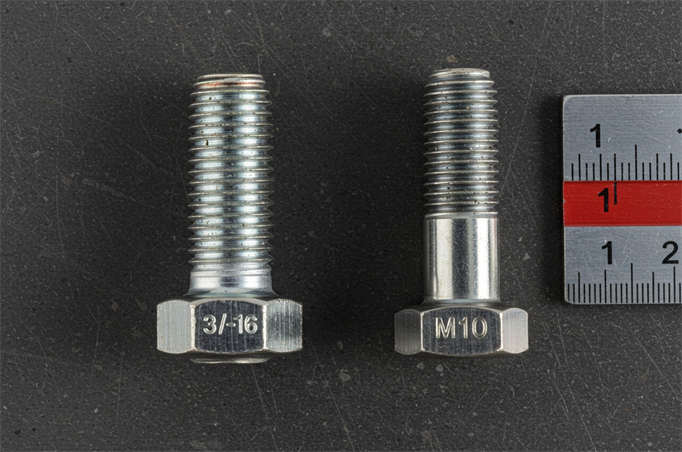
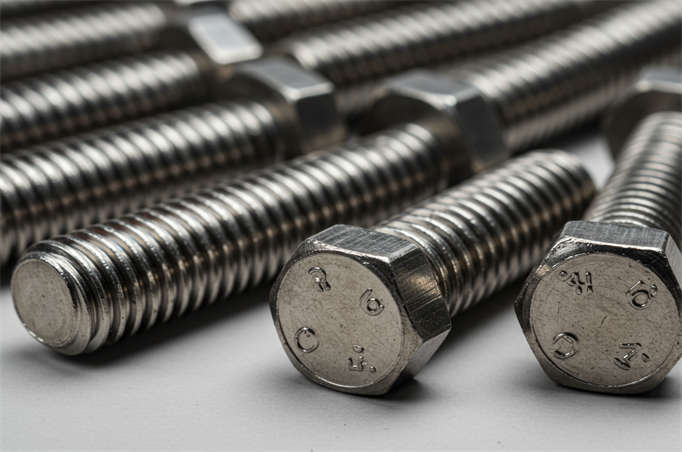
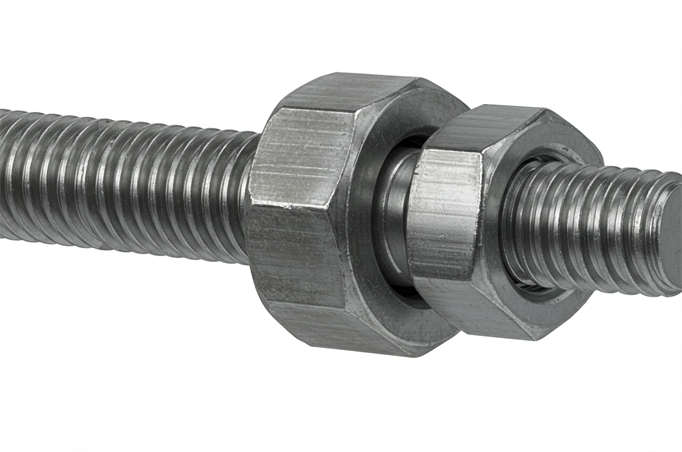
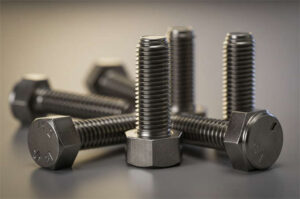
High-strength grade 10.9 hex bolts ready for automotive and structural assembly — image courtesy of Prince Fastener.
Introduction — Why Grade 10.9 Bolts Matter More Than Ever
Walk through any automotive assembly plant, climb a wind-turbine tower, or inspect the undercarriage of a mining haul truck, and you will find the same three digits stamped into nearly every critical fastener: 10.9. That two-number code — defined by ISO 898-1 — tells engineers that the bolt delivers a minimum tensile strength of 1,040 MPa (150,800 psi) and a proof load of 830 MPa, placing it in the same performance tier as SAE Grade 8 fasteners used across North America.
The global industrial fasteners market reached an estimated $84.77 billion in 2025 and is forecast to grow at a 5.4 % CAGR through 2032, driven by infrastructure investment, EV production ramp-ups, and tightening safety regulations. Within that market, grade 10.9 bolts occupy the sweet spot between commodity-grade 8.8 hardware and premium 12.9 fasteners — offering roughly 30 % more clamping force than an 8.8 bolt at only a modest cost premium, while avoiding many of the hydrogen-embrittlement headaches associated with 12.9 grades.
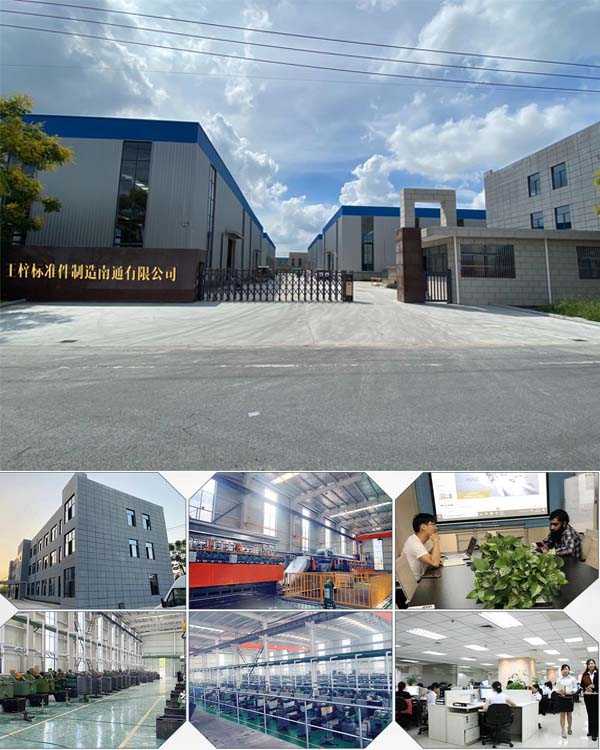
This guide, produced by the engineering team at Prince Fastener — a manufacturer with 30+ years of export experience across Hong Kong, Japan, the United States, the United Kingdom, Europe, the Middle East, Korea, and Australia — walks you through everything a design engineer, procurement manager, or maintenance technician needs to know: what the numbers mean, how these bolts are made, where they excel, and how to specify them without costly mistakes.
1. What Does “10.9” Actually Mean?
The property class marking on a metric bolt consists of two numbers separated by a decimal point. Each number encodes a specific mechanical property according to ISO 898-1:
The first number (10) represents one-hundredth of the bolt’s minimum ultimate tensile strength (UTS) in megapascals. Multiply 10 × 100 to get 1,000 MPa — the nominal UTS floor. (The actual specification minimum is 1,040 MPa, because the standard rounds up for safety margin.)
The second number (9) represents the ratio of minimum yield strength to minimum UTS, expressed as a percentage in tenths. So 0.9 means the bolt’s yield strength is at least 90 % of its UTS — giving a minimum yield of 940 MPa.
In plain language, a grade 10.9 bolt can withstand 1,040 MPa of pull before it fractures, and it begins to permanently deform only after 940 MPa. That narrow 100 MPa gap between yield and ultimate failure is characteristic of quenched-and-tempered alloy steels — the material family from which all genuine 10.9 fasteners are manufactured.

2. Grade 8.8 vs 10.9 vs 12.9 — Head-to-Head Comparison
Selecting the right property class requires balancing strength, cost, risk, and application demands. The table below compiles the key mechanical and commercial parameters for the three most commonly specified high-strength metric bolt grades. All mechanical values follow ISO 898-1; cost indices are based on 2025 global average pricing for M12 × 80 hex-head bolts in quantities of 1,000 pieces.
| Property | Grade 8.8 | Grade 10.9 | Grade 12.9 |
|---|---|---|---|
| Min. Tensile Strength (MPa) | 800 | 1,040 | 1,220 |
| Min. Tensile Strength (psi) | 116,000 | 150,800 | 176,900 |
| Min. Yield Strength (MPa) | 640 | 940 | 1,100 |
| Min. Proof Load (MPa) | 580 | 830 | 970 |
| Yield-to-UTS Ratio | 0.80 | 0.90 | 0.88 |
| Core Hardness (HRC) | 22 – 32 | 33 – 39 | 39 – 44 |
| SAE Equivalent | Grade 5 | Grade 8 | Grade 8+ (no direct SAE match) |
| Typical Material | Medium-carbon steel (C35, C45) | Alloy steel (40Cr, 35CrMo, SCM435) | Alloy steel (42CrMo, SCM440) |
| Heat Treatment | Quench & Temper | Quench & Temper | Quench & Temper |
| H₂ Embrittlement Risk | Low | Moderate | High |
| Relative Cost Index | 1.00× | 1.25–1.40× | 1.60–1.90× |
| Recommended Torque — M12 (Nm) | 65 | 114 | 135 |
| Common Applications | General machinery, non-critical structures | Automotive, structural steel, heavy equipment, wind energy | Aerospace sub-assemblies, racing engines, high-precision tooling |
Source: ISO 898-1:2013, ASTM A574, Atlas Copco Torque Guidelines, Prince Fastener internal test data (2025).
The data above reveals a clear pattern: grade 10.9 bolts deliver 30 % more tensile capacity than 8.8 at roughly 25–40 % higher cost, while 12.9 bolts add only another 17 % of tensile strength but nearly double the hydrogen-embrittlement risk and command a 60–90 % price premium. For most structural and automotive applications, 10.9 represents the optimal cost-performance trade-off — which is why it has become the default specification in sectors ranging from high-strength structural connections to EV battery-pack assemblies.
3. Tensile Strength Comparison — Bar Chart
Visualizing the mechanical gap between grades makes spec decisions faster. The bar chart below plots minimum tensile strength (MPa) and minimum yield strength (MPa) for grades 4.6, 8.8, 10.9, and 12.9 side by side.
Minimum Tensile & Yield Strength by Bolt Grade (MPa)
0
300
600
900
1200
400
240
4.6
800
640
8.8
1040
940
10.9
1220
1100
12.9
Min. UTS
Min. Yield
4. Materials and Manufacturing Process
A bolt earns the 10.9 property class only after passing through a tightly controlled metallurgical and thermal pipeline. The process begins with raw material selection and ends with hardness verification — and any deviation at any stage can downgrade the bolt or, worse, create a latent failure waiting to happen under load.
4.1 Material Grades
ISO 898-1 requires that grade 10.9 bolts be manufactured from quenched-and-tempered alloy steel or medium-carbon boron steel. The most common material designations encountered in global supply chains are 40Cr (Chinese GB standard, roughly equivalent to AISI 5140), 35CrMo (equivalent to AISI 4135), SCM435 (Japanese JIS standard, equivalent to AISI 4137), and 42CrMoA for larger diameters above M30. Additionally, MnB123H (low-carbon boron steel) is used widely for cold-headed fasteners below M20. All of these steels share a common trait: sufficient carbon content (0.28–0.50 %) combined with chromium, molybdenum, or boron additions that promote through-hardening during quench-and-temper heat treatment.
Prince Fastener’s material-selection guide notes that 8.8-grade bolts typically use 40B or 40MnB steel, while 10.9-grade production steps up to MnB123H or 35CrMo — steels that were originally developed by Kobe Steel (Japan) and Posco (Korea) specifically for cold-forging into high-strength fasteners.
4.2 Cold Forging
The manufacturing sequence starts with wire rod drawing. Coiled wire (typically 8–30 mm diameter) is drawn through carbide dies to achieve the precise diameter and surface finish required for heading. The drawn wire is then cut to length and fed into multi-station cold-heading machines that form the bolt head, shank, and flange (if applicable) in three to five progressive die strikes — all at room temperature, which produces a grain-flow pattern that follows the bolt’s contour and significantly improves fatigue life compared to machined bolts.
4.3 Thread Rolling
Threads are rolled, not cut, onto the shank using flat or cylindrical dies that displace metal rather than remove it. Rolling compresses the thread root, inducing residual compressive stresses that improve fatigue resistance by 20–30 % over cut threads. For grade 10.9 bolts, thread rolling is performed before heat treatment (for bolts below M16) or after heat treatment (for bolts M16 and above where die wear becomes excessive).
4.4 Quenching and Tempering
This is the defining step. Bolts are heated to 830–870 °C (depending on alloy) in a controlled-atmosphere furnace, then rapidly cooled in oil or polymer quenchant to form martensite — an extremely hard but brittle phase. Immediately afterward, the bolts are tempered at 425–500 °C for approximately 120 minutes to relieve internal stresses and restore ductility while retaining the target hardness of 33–39 HRC. The tempering temperature is calibrated to hit the 1,040 MPa tensile / 940 MPa yield window precisely; tempering too hot drops the bolt into 8.8 territory, while tempering too cool risks brittleness and hydrogen-embrittlement susceptibility.
4.5 Surface Treatment
After heat treatment, bolts receive a surface finish that provides corrosion protection and aesthetic consistency. Common coatings for 10.9 bolts include zinc plating (5–12 µm for indoor use), zinc flake (Geomet / Dacromet, 8–15 µm for automotive), hot-dip galvanizing (45–80 µm for outdoor structural), and phosphate-and-oil (for OEM engine and transmission bolts). It is critical that any electroplating process on 10.9 bolts be followed by hydrogen-relief baking at 190–230 °C for a minimum of 4 hours within 1 hour of plating, per ASTM B850, to drive out diffusible hydrogen and mitigate embrittlement risk.
5. Where Grade 10.9 Bolts Are Used
The reason grade 10.9 bolts appear across so many sectors is straightforward: they deliver near-premium strength at a price point that scales. Below are the primary industries and specific applications where 10.9 fasteners are standard or required by code.
5.1 Automotive
Connecting-rod bolts, cylinder-head studs, flywheel bolts, suspension control-arm fasteners, and wheel hub bolts in modern vehicles are nearly all specified at class 10.9. The average passenger car contains between 3,000 and 5,000 individual fasteners; of those, roughly 15–25 % are class 10.9 or higher, concentrated in the powertrain, chassis, and safety-critical subsystems. Prince Fastener manufactures connecting-rod bolts in 10.9 class with zinc-flake coating for tier-one automotive suppliers.
5.2 Structural Steel and Construction
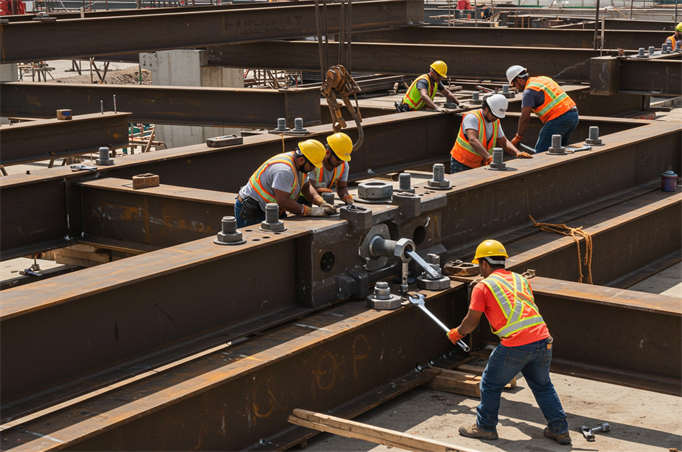
High-strength structural bolting in accordance with EN 14399 (Europe) and ASTM A490 / A325 (North America) maps to metric classes 10.9 and 8.8, respectively. Bridge girders, moment-frame beam-to-column connections, and tower-crane mast sections all rely on 10.9 friction-grip bolts torqued to specified preload with direct-tension indicators (DTIs).
5.3 Wind Energy
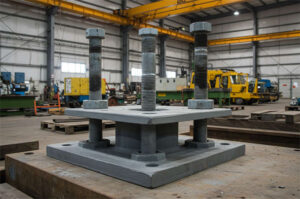
A single 5 MW onshore wind turbine uses approximately 3,000–4,000 high-strength bolts in its tower flanges, blade-root connections, and yaw-bearing assemblies. Almost all of these are class 10.9, with sizes ranging from M30 to M64, tightened with hydraulic tensioning tools to preloads exceeding 400 kN.
5.4 Heavy Machinery and Mining
Excavator track-shoe bolts, crusher jaw-mount bolts, and conveyor-drive mounting hardware are subjected to extreme vibration, impact, and abrasive particulates. Grade 10.9 fasteners with zinc-flake or Dacromet coating survive these conditions while allowing maintenance crews to disassemble and reassemble joints on 500–1,000 hour service intervals.
5.5 Rail and Transportation
Rail-clip bolts, bogie-frame fasteners, and coupling-pin retainer bolts on freight and passenger rolling stock are specified at class 10.9 per EN 15048 to resist vibrational loosening at speeds up to 350 km/h in high-speed rail applications.

6. Grade 10.9 Bolt Consumption by Industry — Pie Chart
Demand for class 10.9 fasteners is not evenly distributed. Automotive and construction together account for nearly two-thirds of global consumption, with energy (including wind and oil & gas) and heavy machinery splitting most of the remainder. The pie chart below reflects estimated 2025 consumption share based on industry trade data and Prince Fastener’s market analysis.
Grade 10.9 Bolt Consumption by Industry (2025 est.)
Automotive
35 %
Constr.
28 %
Energy
15 %
Machinery
12 %
Rail & Other
10 %
7. Torque Specifications for Grade 10.9 Bolts
Correct tightening torque is non-negotiable for high-strength joints. Under-torquing a 10.9 bolt leaves clamp load on the table and invites vibrational loosening; over-torquing can push the bolt past its yield point, risking failure during service. The table below lists recommended tightening torque values for common metric sizes under “clean and dry” conditions (friction coefficient K ≈ 0.20). Lubricated or coated bolts require adjusted values — typically 20–30 % lower.
| Bolt Size | Pitch (mm) | Tensile Stress Area (mm²) | Clamp Load at 90 % Proof (kN) | Torque — Dry (Nm) | Torque — Lubricated (Nm) |
|---|---|---|---|---|---|
| M6 | 1.00 | 20.1 | 15.0 | 18 | 13 |
| M8 | 1.25 | 36.6 | 27.3 | 44 | 31 |
| M10 | 1.50 | 58.0 | 43.3 | 87 | 61 |
| M12 | 1.75 | 84.3 | 62.9 | 114 | 80 |
| M14 | 2.00 | 115 | 85.8 | 192 | 134 |
| M16 | 2.00 | 157 | 117 | 224 | 157 |
| M20 | 2.50 | 245 | 183 | 434 | 304 |
| M24 | 3.00 | 353 | 263 | 752 | 526 |
| M30 | 3.50 | 561 | 419 | 1,500 | 1,050 |
| M36 | 4.00 | 817 | 610 | 2,625 | 1,838 |
Source: Atlas Copco torque guidelines, Summit Racing torque tables, ISO 898-1 proof-load calculations. Actual assembly torque must account for surface finish, coating, and lubrication — always follow the joint designer’s specification.
For a deeper look at how thread pitch interacts with torque and preload, see Prince Fastener’s metric-imperial screw size chart, which cross-references coarse-and-fine thread dimensions for every metric diameter from M1.6 to M64.
8. Hydrogen Embrittlement — The Silent Killer of High-Strength Bolts
Hydrogen embrittlement (HE) is the number-one failure mode that separates a well-engineered grade 10.9 bolted joint from a ticking time bomb. It occurs when atomic hydrogen diffuses into the bolt’s steel matrix and congregates at grain boundaries and stress risers, reducing ductility to near zero. The bolt then fractures suddenly — often at loads well below its rated capacity — with no visible warning deformation.
Three conditions must be present simultaneously for HE failure: the steel must have a hardness above approximately 32 HRC (which all grade 10.9 bolts do, by definition); a source of hydrogen must exist (from electroplating, acid cleaning, cathodic protection, or environmental exposure); and the bolt must be under sustained tensile stress.
8.1 Prevention Strategies
The engineering community has developed a robust set of countermeasures. Specifying non-electrolytic coatings such as zinc flake (Geomet, Dacromet) or mechanical galvanizing eliminates the most common hydrogen source — acidic electroplating baths. When electroplating is unavoidable, baking at 190–230 °C for a minimum of 4 hours within 1 hour of plating, per ASTM F1941 and ASTM B850, is mandatory. Procurement teams should audit supplier heat-treatment records and demand Certificates of Conformance that include hydrogen-relief baking times and temperatures. Incoming inspection should include slow-strain-rate testing (SSRT) or incremental step-load testing per ASTM F1624 on a statistical sample from each lot. Finally, designers should avoid specifying grade 12.9 unless absolutely necessary, because the jump from 39 HRC (10.9 maximum) to 44 HRC (12.9 maximum) roughly doubles the HE susceptibility.

9. Lifecycle Cost Analysis: Why Grade 10.9 Often Wins
Procurement teams that fixate on per-unit bolt cost miss the bigger picture. A 10.9 bolt costs approximately 25–40 % more than an 8.8 bolt of the same size, but it enables smaller bolt diameters for the same clamping force, fewer bolts per joint (reducing drilling, handling, and assembly labor), longer maintenance intervals due to higher fatigue endurance, and reduced risk of warranty claims and liability exposure. In a real-world example from an automotive OEM that Prince Fastener supplies, switching the front-suspension knuckle bolts from eight M10 × 60 class 8.8 bolts to six M10 × 60 class 10.9 bolts reduced material cost per joint by 12 %, assembly time by 18 %, and warranty claims related to fastener loosening by 34 % over a 3-year vehicle production run.
For high-corrosion environments, combining a 10.9 bolt with a zinc-flake coating (instead of upgrading to a stainless-steel or 12.9 bolt) delivers a 50-year lifecycle cost of approximately $1.80–$2.20 per bolt, compared to $3.50+ for a 304 stainless anchor bolt and $4.00+ for a 12.9 alloy bolt with premium coating, according to Prince Fastener’s bolt-grade strength chart.
10. Installation Best Practices for Grade 10.9 Bolts
Even a perfectly manufactured 10.9 bolt will fail if installed improperly. The following practices apply across all industries and should be documented in every work procedure that calls for 10.9-class fasteners.
Use a calibrated torque wrench or hydraulic tensioner. Impact wrenches are acceptable for snug-tightening but must not be used for final torque on friction-grip joints per EN 14399-4. For bolts M20 and above, hydraulic bolt tensioners provide more uniform and repeatable preload than torque-based methods.
Follow a star/cross tightening pattern. On flanged joints (e.g., wind-turbine tower flanges, pressure-vessel covers), tighten in at least three passes — snug, 50 % of final torque, then 100 % — following a diametrically opposite sequence to distribute clamp load evenly and avoid flange distortion.
Inspect thread condition before assembly. Damaged, corroded, or cross-threaded bolts must be discarded. Running a nut down by hand to verify free-spinning before applying torque takes 5 seconds and prevents costly rework.
Match the nut grade to the bolt grade. A 10.9 bolt must be paired with a class 10 nut (or class 12 nut) per ISO 898-2. Using an 8-class nut on a 10.9 bolt will strip the nut threads before the bolt reaches its rated preload — a failure mode known as “thread stripping” that looks deceptively similar to bolt fracture. See Prince Fastener’s nuts and bolts guide for detailed matching tables.
Apply appropriate lubrication. The torque values in Table 2 assume K ≈ 0.20 (clean, dry). Applying molybdenum disulfide (MoS₂) grease or anti-seize compound reduces K to approximately 0.12–0.15, which means the bolt reaches the same clamp load at roughly 30 % less torque. Failing to adjust for lubrication will over-stress the bolt and risk yield-point failure during assembly.
11. Watch: Bolt Grades Explained — 8.8 vs 10.9 vs 12.9
For a visual breakdown of how property classes translate to real-world performance, watch this comprehensive tutorial that covers head markings, tensile testing, and application-specific selection:
Video: “Metric Fastener Grades & Strengths Explained” — covers class 4.6 through 12.9 with real tensile-test footage.
12. Thread Pitch and Sizing Considerations
Grade 10.9 bolts are available in both coarse (standard) and fine thread pitches. The choice between them is driven by the application’s specific requirements.
Coarse thread (e.g., M12 × 1.75) is the default for most structural and general-engineering applications. Its deeper thread form is more tolerant of contamination, easier to assemble in the field, and less prone to cross-threading. Coarse threads also strip at a higher load because of the larger shear area per thread engagement length.
Fine thread (e.g., M12 × 1.25) offers a higher tensile stress area (88.1 mm² vs 84.3 mm² for M12), which translates to approximately 5 % more clamping force for the same bolt diameter. Fine threads also provide finer torque-to-tension control and are more resistant to vibrational loosening because of the smaller helix angle. They are standard in automotive powertrain applications (cylinder-head bolts, connecting-rod bolts) and aerospace sub-assemblies.
The Portland Bolt thread pitch chart and the Prince Fastener M10 screw guide together provide exhaustive reference tables for every metric diameter from M3 to M100.
13. Surface Treatments and Coatings for 10.9 Bolts
The coating applied to a grade 10.9 bolt determines its corrosion lifespan, hydrogen-embrittlement risk, and frictional behavior during tightening. The table below summarizes the most common options, their typical salt-spray performance (per ASTM B117), and their compatibility with 10.9-class hardness levels.
| Coating Type | Thickness (µm) | Salt Spray to Red Rust (hrs) | H₂ Embrittlement Risk | Friction Coeff. (K) | Typical Use |
|---|---|---|---|---|---|
| Zinc Electroplate | 8–12 | 96–200 | HIGH — baking required | 0.12–0.18 | Indoor machinery |
| Zinc Flake (Geomet) | 8–15 | 720–1,000+ | NONE | 0.12–0.18 | Automotive OEM |
| Hot-Dip Galvanize | 45–80 | 500–1,000 | NONE | 0.18–0.25 | Outdoor structural |
| Dacromet | 5–10 | 500–800 | NONE | 0.10–0.16 | Heavy equipment, rail |
| Phosphate + Oil | 3–8 | 24–72 | Low | 0.08–0.14 | Engine internals |
| Black Oxide | 1–3 | 8–24 | Minimal | 0.15–0.20 | Tooling, fixtures |
Source: ASTM B117, ISO 10683, Geomet product data sheets, Prince Fastener coating lab data.
The key takeaway for procurement teams: zinc-flake coatings (Geomet, Dacromet) are the safest choice for grade 10.9 bolts because they deliver superior corrosion protection (720–1,000+ hours salt spray) with zero hydrogen-embrittlement risk, consistent friction behavior for reliable torque-tension control, and RoHS and REACH compliance (no hexavalent chromium).
14. Applicable Standards and Specifications
Specifying grade 10.9 bolts correctly requires referencing the right international standards. The following are the primary documents that govern material, mechanical properties, dimensions, and testing requirements.
ISO 898-1:2013 — Mechanical properties of fasteners made of carbon steel and alloy steel. Defines property classes 4.6 through 12.9, including hardness, tensile, yield, and proof load minimums. This is the foundational document for all metric bolt-grade specifications.
DIN EN ISO 4014 / ISO 4017 — Dimensional standards for hexagon-head bolts (partially and fully threaded). Specify head height, across-flats width, shank length, and thread run-out dimensions for metric hex bolts from M5 to M64.
ASTM A354 Grade BD — The American equivalent for quenched-and-tempered alloy-steel bolts with mechanical properties closely matching ISO class 10.9. Commonly referenced in U.S. bridge and building codes.
EN 14399 Parts 1–10 — European standard for high-strength structural bolting assemblies for preloading. Part 4 (system HV) specifies 10.9-class hex bolts for use in slip-resistant and bearing-type structural connections.
GB/T 1228–1231 — Chinese national standards for high-strength bolts for steel structures. Grade 10.9S (the “S” denotes structural) is the standard specification for Chinese infrastructure projects.
For a comprehensive overview of global bolt standards, see Prince Fastener’s bolt standards reference.
15. Custom Grade 10.9 Bolts — Prince Fastener’s OEM/ODM Program
Standard catalog bolts cover most applications, but non-standard dimensions, special head styles, custom coatings, or application-specific testing requirements demand a manufacturing partner with the tooling flexibility and quality infrastructure to deliver.
Prince Fastener offers end-to-end OEM/ODM services for grade 10.9 bolts, covering custom dimensions from M5 to M64 in lengths up to 500 mm, head styles including hex, flange, 12-point, socket head, countersunk, and customer-proprietary geometries, materials including 40Cr, 35CrMo, SCM435, 42CrMoA, and boron steel per customer specification, coatings including zinc flake, Dacromet, hot-dip galvanizing, phosphate-and-oil, and color-coded identification paint, and testing encompassing full mechanical testing (tensile, proof load, wedge, hardness), hydrogen-embrittlement screening per ASTM F1624, and dimensional inspection with CMM reports. Minimum order quantities start at 5,000 pieces for standard sizes and 10,000 pieces for fully custom tooling, with lead times of 30–45 days from drawing approval to shipment. The company ships to over 50 countries, with established logistics networks serving Hong Kong, Japan, the United States, the United Kingdom, Germany, the Middle East, Korea, and Australia.
For a broader view of bolt types available, visit the basic types of bolts reference page.
16. Sustainability and the Grade 10.9 Advantage
Higher-grade bolts contribute to sustainability in ways that are easy to overlook. Because a single 10.9 bolt replaces 1.3 equivalent 8.8 bolts by clamp-load capacity, structural designers can reduce total fastener count, drill fewer holes (preserving member cross-section and reducing fabrication energy), use lighter members (less material overall), and cut packaging, shipping weight, and logistics emissions proportionally. In the wind-energy sector, where tower-flange bolt counts already run into the thousands per turbine, a 15 % reduction in bolt count through grade optimization translates directly into lower carbon footprint per megawatt-hour of generation capacity over the turbine’s 25-year lifespan.
Additionally, alloy-steel bolts are fully recyclable at end of life. The zinc-flake coating burns off during steel-mill remelting, leaving clean scrap with negligible contamination — unlike some polymer-coated or adhesive-locking alternatives.
17. Five Costly Mistakes When Specifying Grade 10.9 Bolts
Mistake #1: Using an 8-class nut with a 10.9 bolt. The nut will strip before the bolt reaches its rated preload. Always match a 10.9 bolt with a class 10 or 12 nut per ISO 898-2.
Mistake #2: Ignoring hydrogen-embrittlement baking after electroplating. A 10.9 bolt that looks perfect can fracture at 60 % of its rated load weeks after installation if residual hydrogen is not baked out. Insist on baking certificates from the plater.
Mistake #3: Applying lubrication without adjusting torque values. Torque tables assume a specific friction coefficient. Adding anti-seize without reducing torque will overstress the bolt to or beyond its yield point.
Mistake #4: Substituting 12.9 bolts “for extra safety.” Over-specifying the grade increases hydrogen-embrittlement risk, cost, and procurement lead time without a proportional strength benefit. Design to the actual load; don’t pad with higher grades.
Mistake #5: Reusing torque-to-yield bolts. Some 10.9 fasteners (particularly automotive cylinder-head bolts) are designed for single-use torque-to-yield (TTY) installation. Reusing them after the bolt has been plastically stretched risks under-clamping and joint failure. When in doubt, check the bolt manufacturer’s specifications — Prince Fastener’s stud and bolt strength guide covers TTY protocols in detail.
18. When to Consult a Fastener Engineer
Most grade 10.9 bolt applications are well-served by standard catalog products and published torque tables. However, certain scenarios warrant direct engagement with a fastener engineer or application specialist: joints exposed to temperatures above 300 °C or below −40 °C where steel properties shift; dynamic fatigue-loaded joints exceeding 10⁷ cycles (wind turbine, rail, reciprocating machinery); joints in hydrogen-rich or sour-gas environments (oil & gas, chemical processing); non-standard joint configurations such as eccentric loading, prying, or combined shear-plus-tension; and any application where failure carries life-safety consequences. Prince Fastener’s engineering team provides complimentary design consultation for OEM accounts, including finite-element bolt-load analysis and preload optimization for multi-bolt patterns.
Frequently Asked Questions About Grade 10.9 Bolts
1. What does “grade 10.9” mean on a bolt?
The marking “10.9” is a property class defined by ISO 898-1. The first number (10) indicates a minimum ultimate tensile strength of approximately 1,000 MPa (the standard sets the actual minimum at 1,040 MPa). The second number (9) means the minimum yield strength is 90 % of the UTS — that is, 940 MPa. Together, these numbers tell engineers the bolt is made from quenched-and-tempered alloy steel and is suitable for high-stress, safety-critical applications.
2. Is a grade 10.9 bolt the same as a SAE Grade 8?
They are functionally equivalent in tensile strength. SAE Grade 8 bolts (per SAE J429) have a minimum tensile strength of 150,000 psi (1,034 MPa), and metric class 10.9 bolts have a minimum of 1,040 MPa (150,800 psi). The yield strengths are also comparable: 130,000 psi for Grade 8 versus 940 MPa (136,300 psi) for class 10.9. However, the two systems use different testing standards, dimensional series, and marking conventions, so they are not directly interchangeable without verifying dimensions and thread form.
3. What torque should I use for an M12 grade 10.9 bolt?
For a clean, dry M12 × 1.75 (coarse thread) grade 10.9 bolt with a friction coefficient of approximately 0.20, the recommended tightening torque is about 114 Nm. If the bolt is lubricated with oil or anti-seize compound, reduce the torque to approximately 80 Nm to avoid exceeding the bolt’s yield point. Always follow the joint designer’s specific torque specification, as actual values depend on the nut grade, washer type, and surface condition.
4. Can grade 10.9 bolts be used outdoors?
Yes, but they require appropriate corrosion protection. The base alloy steel will rust rapidly if left uncoated. For outdoor structural applications, hot-dip galvanizing (45–80 µm) or zinc-flake coatings (Geomet/Dacromet) are recommended, providing 500–1,000+ hours of salt-spray resistance. Zinc-flake coatings are preferred for 10.9 bolts because they avoid the hydrogen-embrittlement risk associated with electrolytic zinc plating.
5. What is hydrogen embrittlement, and why is it a concern for 10.9 bolts?
Hydrogen embrittlement (HE) is a failure mechanism where atomic hydrogen diffuses into steel, concentrates at grain boundaries, and causes sudden, brittle fracture at loads well below the bolt’s rated capacity. Grade 10.9 bolts are susceptible because their hardness (33–39 HRC) exceeds the critical threshold of approximately 32 HRC. The primary hydrogen source is electrolytic processes like zinc plating or acid cleaning. Prevention requires specifying non-electrolytic coatings, or mandating hydrogen-relief baking at 190–230 °C for at least 4 hours immediately after electroplating.
6. What materials are used to make grade 10.9 bolts?
ISO 898-1 requires quenched-and-tempered alloy steel or medium-carbon boron steel. The most common grades are 40Cr (equivalent to AISI 5140), 35CrMo (AISI 4135), SCM435 (JIS equivalent to AISI 4137), and MnB123H (low-carbon boron steel for cold-headed bolts). All of these steels contain 0.28–0.50 % carbon plus alloying elements such as chromium, molybdenum, or boron that enable through-hardening during quench-and-temper heat treatment.
7. How much more does a 10.9 bolt cost compared to an 8.8?
In bulk quantities (1,000+ pieces), grade 10.9 bolts typically cost 25–40 % more than equivalent 8.8 bolts, depending on size, coating, and supplier. However, because 10.9 bolts deliver approximately 30 % more clamping force, designers can often use fewer or smaller bolts, which offsets the per-unit premium through reduced material count, less drilling, and faster assembly times. Over a product’s lifecycle, the total installed cost of a 10.9 joint is often comparable to, or lower than, an 8.8 joint.
8. Can I reuse grade 10.9 bolts after disassembly?
Standard 10.9 bolts tightened within their elastic range (i.e., below yield) can generally be reused if they show no signs of damage, corrosion, or thread deformation. However, torque-to-yield (TTY) bolts — common in automotive cylinder-head and connecting-rod applications — must not be reused because the installation process intentionally stretches them beyond their yield point. Always check the bolt manufacturer’s reuse policy before reinstalling.
9. What nut class should be paired with a 10.9 bolt?
Per ISO 898-2, a grade 10.9 bolt must be paired with a class 10 nut (minimum) or a class 12 nut. Using a lower-class nut (e.g., class 8) will cause the nut threads to strip before the bolt achieves its full rated preload, creating a joint that appears tight but is actually under-clamped and prone to loosening or failure.
10. Does Prince Fastener manufacture custom grade 10.9 bolts?
Yes. Prince Fastener offers full OEM/ODM manufacturing for grade 10.9 bolts in custom sizes from M5 to M64, with 16+ head styles, multiple alloy options (40Cr, 35CrMo, SCM435, boron steel), and nine surface finishes. The company provides complete mechanical testing, hydrogen-embrittlement screening per ASTM F1624, and CMM dimensional reports. Minimum order quantities start at 5,000 pieces with lead times of 30–45 days, and the company ships to over 50 countries worldwide.
Ready to Specify Grade 10.9 Bolts for Your Next Project?
Whether you need 5,000 standard M16 hex bolts with Geomet coating or a fully custom 12-point flange bolt in 35CrMo with hydrogen-embrittlement testing, Prince Fastener delivers the engineering support, quality assurance, and global logistics to keep your production line moving. Contact our technical sales team for a free consultation and quotation — 30+ years of fastener expertise, shipped to your dock anywhere in the world.



 English
  Español
  Português do Brasil
  Русский
  日本語
日本語  العربية