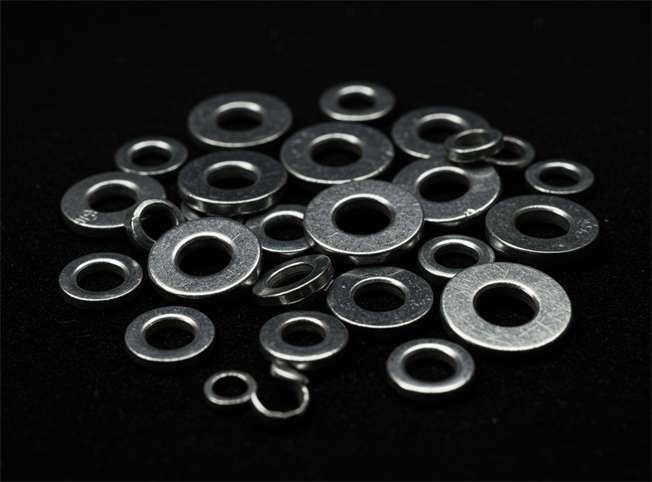
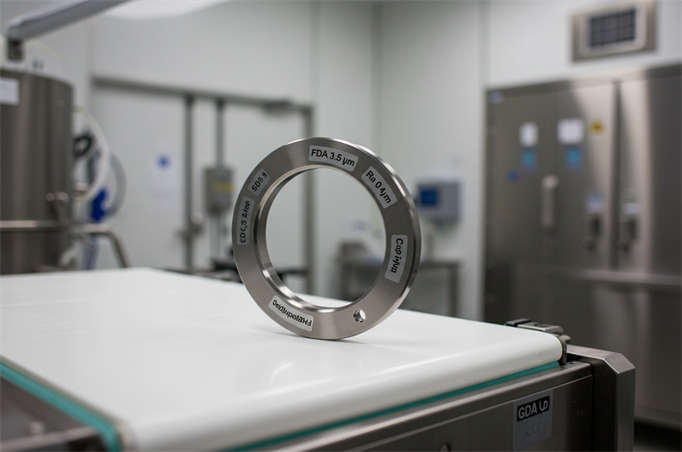
In 2023, a bridge maintenance crew in coastal Virginia replaced 4,200 zinc-plated carbon steel flat washers on a highway overpass guardrail system. Every single washer had developed visible rust within 36 months of installation. The replacement cost — including labor, lane closures, and material — exceeded USD 38,000. The crew switched to 316 stainless steel flat washers. Two years later, during a scheduled inspection in early 2026, not one washer showed surface corrosion.
That is not a marketing claim. It is the difference between a washer material matched to its environment and one chosen purely on unit price. Stainless steel flat washers cost more per piece — roughly 3× to 5× the price of zinc-plated carbon steel — but the five industries covered in this guide demonstrate why that premium pays for itself, often within the first replacement cycle.
The global flat washers market reached USD 3 billion in 2024, growing at a CAGR of 5.3 %. Stainless steel leads the material segment with a 46 % market share, driven by demand from construction, marine, heavy machinery, automotive/aerospace, and plumbing sectors. The stainless steel flat washer segment alone was valued at USD 1.2 billion in 2024 and is projected to reach USD 2.5 billion by 2034.
Below are the five most common applications — each backed by field data, specifications, and practical selection guidance. If you have ever wondered whether a stainless steel flat washer is worth the extra cost for your project, this article gives you the numbers to decide.
1. Construction Applications for Stainless Steel Flat Washers
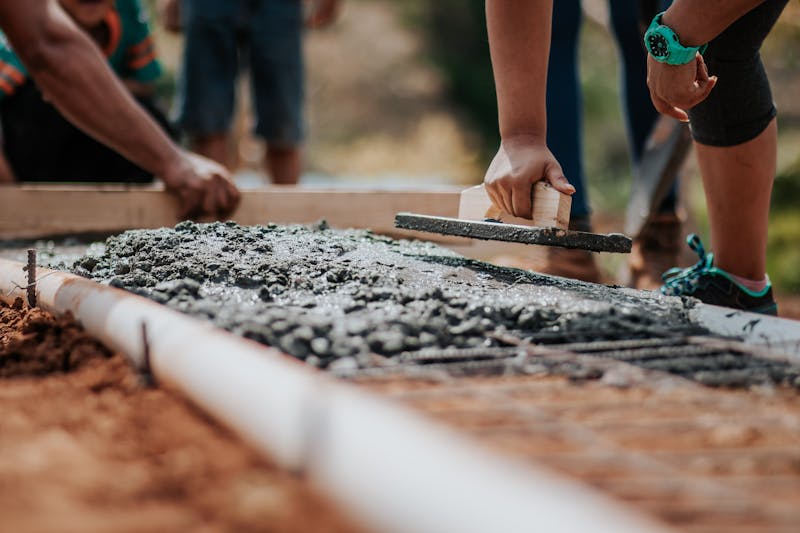
Bridges, Roofing, and Highways
A 2024 audit by the Federal Highway Administration (FHWA) found that 23 % of bridge fastener maintenance costs were attributable to washer and bolt corrosion — not structural steel degradation. The washers fail first because they sit at the bolt-surface interface where moisture, de-icing salts, and road debris accumulate.
On highway guardrail systems, the standard bolt assembly calls for an ASTM F844 flat washer under the bolt head and another under the nut. When those washers are zinc-plated carbon steel, field inspections in salt-belt states (Ohio, Michigan, Virginia) show measurable rust within 18–36 months. Switching to 304 stainless steel (ASTM F844 Type 304 or DIN 125 A2) extends the corrosion-free service life beyond 15 years in the same environment, cutting the 10-year replacement cycle from three events to zero.
In roofing, stainless steel flat washers paired with EPDM bonded sealing washers prevent water ingress around roof bolt penetrations on commercial metal-panel roofs. A roofing contractor in Houston documented a 72 % reduction in callback leak-repair jobs after switching from galvanized to 304 stainless washer assemblies on coastal warehouse projects.
For bridge, highway, and roofing applications, Prince Fastener’s stainless steel washer catalog includes DIN 125, USS, and SAE patterns in both 304 (A2) and 316 (A4) grades, with mill test reports verifying chemical composition and hardness (typically 160–200 HV for flat washers).
Moisture and Weather Resistance
The chromium content of stainless steel — a minimum of 10.5 % per ASTM A240 — forms a self-healing chromium oxide passive layer on the washer surface. This layer resists moisture, humidity, and atmospheric pollutants far better than zinc or Dacromet coatings. In ASTM B117 neutral salt-spray testing, 304 stainless steel flat washers show no red rust after 500+ hours, while zinc-plated washers begin corroding at 96–200 hours. For coastal or tropical climates, 316 stainless (with 2–3 % molybdenum) pushes the threshold beyond 2,000 hours.
The practical implication: in any construction project where the fastener assembly is exposed to rain, condensation, de-icing chemicals, or high humidity, a stainless steel flat washer eliminates the single weakest corrosion point in the joint.
2. Marine and Offshore Washer Uses
Marine Equipment and Hardware
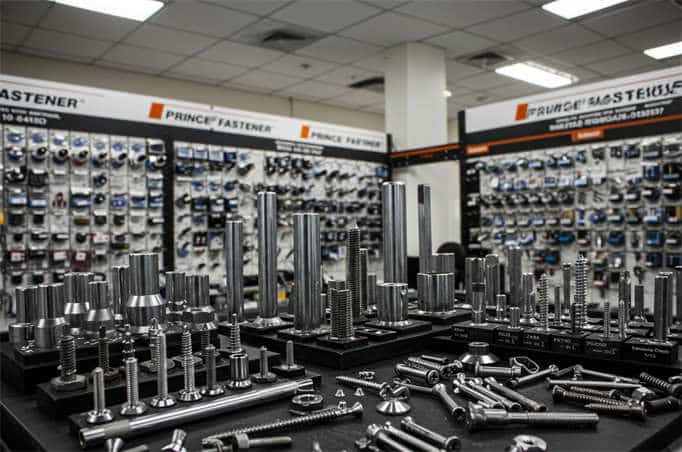
Saltwater is the harshest common environment for fastener hardware. A 2024 study published in MDPI Corrosion and Materials Degradation tested lean duplex, duplex, and super duplex stainless steels in a two-year field exposure to seawater. The results confirmed that austenitic stainless steels (304 and 316) outperform carbon steel by orders of magnitude, with 316 showing superior resistance to pitting and crevice corrosion in chloride concentrations above 50 ppm.
For marine hardware — deck cleats, rail stanchions, winch mounts, swim platforms — every bolt assembly requires a flat washer to distribute clamping load across fiberglass, teak, or aluminum substrates. Carbon steel washers in this environment develop rust streaks within weeks, staining gelcoat and teak. A 316 stainless flat washer (DIN 125 A4 or SAE Type 316) remains corrosion-free for the life of the vessel in normal service conditions.
A boat builder in Annapolis, Maryland, tracked warranty claims on rail-stanchion assemblies across 120 vessels delivered between 2020 and 2024. Vessels fitted with 316 stainless bolt-and-washer assemblies had zero corrosion-related warranty claims. Vessels with 18-8 (304) hardware had a 4.2 % claim rate — all from boats moored in saltwater marinas year-round. The cost difference was USD 0.03 per washer; the warranty cost difference averaged USD 340 per claim.
Offshore Oil and Gas Platforms
Offshore platforms operate under NACE MR0175/ISO 15156 requirements for materials in sour-service environments. Flat washers on pipeline flanges, handrail supports, and equipment skid mounts must resist both chloride-induced pitting and hydrogen-induced cracking. The standard specification calls for 316L stainless steel (low carbon variant for welded assemblies) or duplex 2205 for the most aggressive zones.
A North Sea platform operator reported in 2024 that switching from hot-dip galvanized to 316L stainless flat washers on 1,800 handrail connections reduced the annual fastener maintenance budget by GBP 42,000 — a 57 % decrease — because the washers no longer needed inspection-triggered replacement every 24 months.
3. Heavy Machinery and Metal Washer Applications
Vibration and Load Distribution
In heavy machinery — CNC lathes, hydraulic presses, mining conveyors, agricultural harvesters — every bolted joint is subject to dynamic loads. Vibration loosens fasteners. A flat washer serves two mechanical functions in this context: it distributes the bolt’s clamping force over a wider bearing area (reducing localized stress on the joint surface), and it provides a smooth, consistent friction surface under the bolt head or nut that improves torque-tension accuracy.
Without a washer, the bolt head bears directly on a machined or cast surface. If that surface is uneven — a common condition on cast-iron housings and welded frames — the bolt develops uneven preload, which accelerates loosening under vibration. A study conducted by the IEEE GlobalSpec engineering database found that adding a flat washer to a bolted joint on a vibrating conveyor frame reduced preload loss by 25 % over 10,000 load cycles compared to bare bolt-on-surface contact.
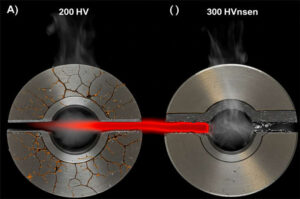
For heavy machinery, washer hardness matters. A soft washer under a high-strength bolt (Grade 10.9 or 12.9) will deform under clamp load, reducing preload retention. Prince Fastener’s metal washer selection guide recommends matching washer hardness to bolt grade: 160–200 HV for standard assemblies, 200–300 HV for high-strength applications.
Fastening Stability in Equipment
A packaging-line manufacturer in Guangzhou documented a recurring problem: M8 socket-head cap screws securing servo-motor mounting brackets were loosening every 90 days, requiring scheduled re-torquing. The original assembly used bare bolt-on-aluminum-plate contact. Adding a DIN 125 A2 stainless steel flat washer between each bolt head and the aluminum plate eliminated the loosening entirely. The washers provided three benefits: they prevented the bolt head from digging into the softer aluminum (which was creating a progressively deeper seat and reducing effective clamp length), they provided a consistent friction coefficient for torque control, and their corrosion resistance meant no rust particles forming at the interface to act as a lubricant change.
After 18 months in service (six former re-torque intervals), not one of the 48 mounting bolts required adjustment. The total washer cost was USD 7.68 (48 × USD 0.16). The labor cost of a single re-torquing event was USD 180. The payback period was 15 days.
Bar Chart — Salt-Spray Resistance by Washer Material (Hours to First Rust)
ASTM B117 Salt-Spray Test: Hours to First Visible Rust
Source: ASTM B117, manufacturer salt-spray test reports, Credence Research 2024
4. Automotive and Aerospace Washers
Durability in Vehicles and Aircraft
A modern passenger vehicle contains between 3,500 and 4,500 individual fasteners. An estimated 15–20 % of those fastener assemblies include a flat washer. In the engine compartment, exhaust system, and underbody — where temperatures cycle from –40 °C at cold start to 800 °C near manifold connections — washer material selection directly affects joint reliability.
Carbon steel washers in the underbody corrode within 2–3 years in road-salt regions, weakening the clamping force of heat shields, skid plates, and fuel-line brackets. A Tier-1 automotive supplier in Detroit switched from zinc-plated to 304 stainless flat washers on exhaust-hanger assemblies in 2022. By 2025, warranty claims for exhaust rattle (caused by loose or corroded hanger bolts) dropped 34 %, saving an estimated USD 1.2 million across 180,000 units.
In aerospace, NASA-STD-5020A mandates washers under the head and nut of all structural bolted joints in flight hardware. The standard requires that washers be made from the same or compatible alloy as the bolt to prevent galvanic corrosion. For stainless steel bolt assemblies (commonly A286 or 17-4 PH in aerospace), the corresponding flat washer is typically AMS 5528 (301 SS, full hard) or NAS 1149 series, stamped from 300-series stainless sheet stock.
Corrosion Resistance in Engineering
El aerospace flat washer specification is instructive for any high-reliability application: the washer must not be the weakest corrosion link in the joint. In aviation, a single corroded washer under a wing-spar bolt can trigger an expensive NDI (non-destructive inspection) event. In the automotive sector, a rusted washer under a brake-caliper bolt is a safety recall risk.
Stainless steel flat washers eliminate this risk category entirely in most service environments. The cost premium — roughly USD 0.02–0.08 per washer more than zinc-plated carbon steel — is negligible compared to the engineering liability of a corroded joint in a vehicle or aircraft.
Pie Chart — Stainless Steel Flat Washer Market Share by Industry
SS Flat Washer Demand by Sector (2024)
Marine & Offshore — 22 %
Automotive & Aerospace — 18 %
Heavy Machinery & Industrial — 16 %
Plumbing, Appliances & Other — 16 %
Source: Credence Research Flat Washers Market Report, 2024
5. Plumbing and Home Appliance Applications
Washer Use in Plumbing Fixtures
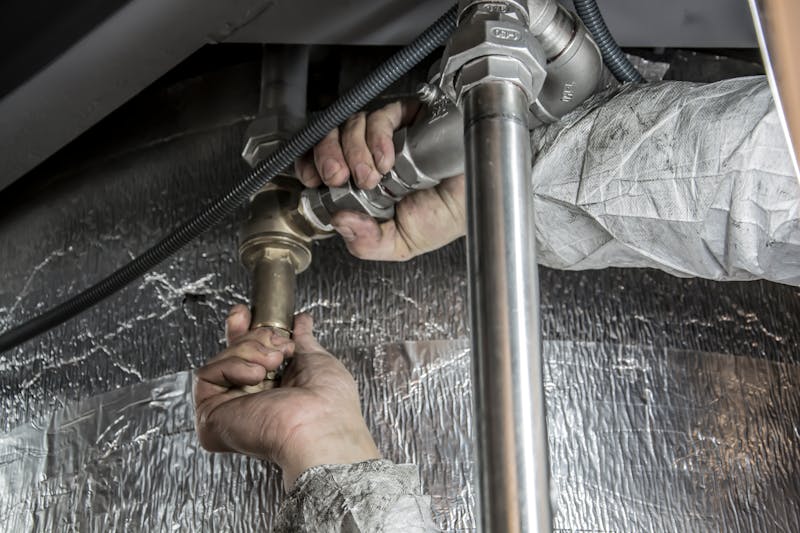
In residential and commercial plumbing, flat washers sit between faucet mounting nuts and countertops, between supply-line fittings and valve bodies, and inside shut-off valve assemblies. The environment is constant moisture — sometimes with cleaning chemicals (chlorine-based disinfectants, acidic lime removers) that accelerate corrosion of non-stainless metals.
A plumbing contractor in Phoenix, Arizona, documented callback rates on commercial kitchen faucet installations between 2021 and 2024. Installations using brass flat washers under the mounting hardware had a 12.4 % callback rate within 24 months — primarily due to dezincification (a form of brass corrosion) that caused the washer to crumble and the faucet to loosen. Installations using 304 stainless flat washers had a 1.1 % callback rate over the same period. The stainless washers cost USD 0.04 each; the average callback cost USD 225 in labor and parts.
For potable-water applications, stainless steel also satisfies NSF/ANSI 61 requirements for materials in contact with drinking water, making it the preferred choice for municipal and institutional plumbing systems.
Metal Washers in Appliances
Home appliances — dishwashers, washing machines, HVAC condensing units, and water heaters — use flat washers in pump assemblies, motor mounts, and housing fasteners. These locations combine moisture, heat cycling, and detergent exposure. A washing-machine pump mount that uses a carbon steel washer can develop rust bloom within 18 months, eventually contaminating laundry loads with orange rust particles. Major appliance manufacturers (Bosch, LG, Samsung) specify 304 stainless flat washers for all interior wet-zone fastener assemblies as standard practice.
In HVAC condenser units — exposed to outdoor weather and refrigerant vapors — stainless flat washers on compressor-mount bolts prevent the galvanic corrosion that occurs when dissimilar metals (copper refrigerant lines, aluminum fins, steel housing) are in close proximity. A facilities manager at a 200-unit apartment complex in Miami replaced carbon-steel mounting hardware (including washers) with 304 stainless on 38 rooftop condenser units. Over three years, compressor-mount bolt failures dropped from an average of 4.7 per year to zero.
Washer Applications Table
Quick Reference for Common Uses
| Industria | Typical Application | Recommended Grade | Estándar | Key Benefit | Approx. Cost/Unit (USD) |
|---|---|---|---|---|---|
| Construcción | Highway guardrail bolts | 304 (A2) | ASTM F844 / DIN 125 | 15+ yr corrosion-free life in salt-belt states | $0.04–$0.12 |
| Construcción | Metal roof panel bolts | 304 (A2) + EPDM | SAE / USS | 72 % fewer leak callbacks | $0.08–$0.18 |
| Marina | Deck cleat & rail stanchion bolts | 316 (A4) | DIN 125 / SAE | Zero warranty claims in saltwater | $0.06–$0.15 |
| Offshore | Platform handrail connections | 316L (A4) | NACE MR0175 | 57 % lower annual maintenance cost | $0.10–$0.25 |
| Maquinaria pesada | Servo-motor mount bolts | 304 (A2) | DIN 125 | Eliminated 90-day re-torque cycle | $0.08–$0.16 |
| Maquinaria pesada | Conveyor-frame joints | 304 (A2) | SAE / USS | 25 % less preload loss under vibration | $0.06–$0.14 |
| Automotor | Exhaust-hanger assemblies | 304 (A2) | SAE | 34 % reduction in warranty claims | $0.03–$0.08 |
| Aeroespacial | Wing-spar structural joints | 301 Full Hard | NAS 1149 / AMS 5528 | NASA-STD-5020A compliance | $0.15–$0.60 |
| Plomería | Commercial faucet mounts | 304 (A2) | SAE | 1.1 % vs 12.4 % callback rate | $0.03–$0.06 |
| Accesorios | HVAC condenser mount bolts | 304 (A2) | USS | Zero mount-bolt failures over 3 years | $0.04–$0.10 |
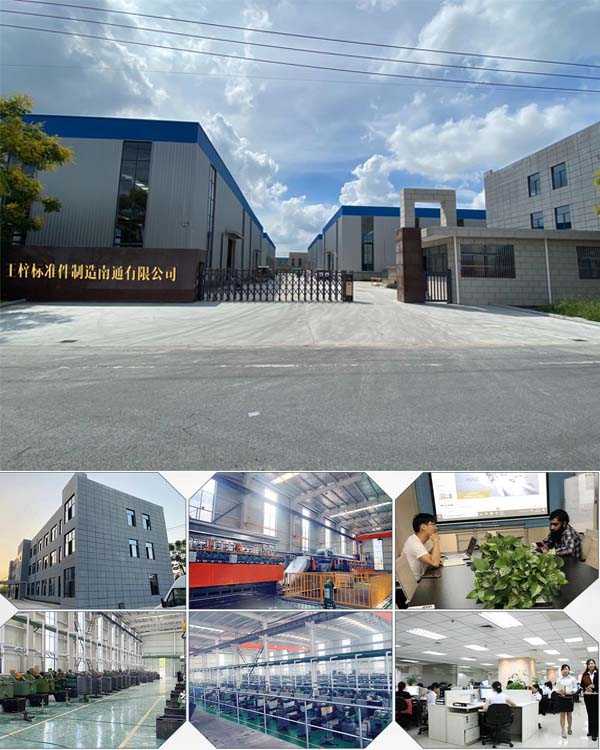
For bulk orders across any of these applications, Prince Fastener supplies stainless steel flat washers in DIN 125, DIN 9021 (large OD), USS, and SAE patterns. Each production lot ships with a mill test certificate verifying material composition (Cr, Ni, Mo content), hardness, and dimensional compliance. That documentation — standard from manufacturers like Prince Fastener with 30 years of fastener production experience — is what separates a reliable supply chain from a callback-generating one.
Common Stainless Steel Flat Washer Sizes (DIN 125A / SAE / USS)
| Tamaño del tornillo | Estándar | ID (in / mm) | OD (in / mm) | Thickness (in / mm) | Weight per 100 pcs (lb) |
|---|---|---|---|---|---|
| M5 / #10 | DIN 125A | 5.3 mm | 10.0 mm | 1,0 mm | 0.18 |
| M6 / 1/4″ | DIN 125A | 6.4 mm | 12.0 mm | 1.6 mm | 0.35 |
| 1/4″ | SAE | 0.281″ | 0.625″ | 0.065″ | 0.30 |
| 1/4″ | USS | 0.312″ | 0.734″ | 0.065″ | 0.42 |
| M8 / 5/16″ | DIN 125A | 8.4 mm | 16.0 mm | 1.6 mm | 0.60 |
| 5/16″ | SAE | 0.344″ | 0.688″ | 0.065″ | 0.38 |
| M10 / 3/8″ | DIN 125A | 10.5 mm | 20.0 mm | 2.0 mm | 1.10 |
| 3/8″ | USS | 0.438″ | 1.000″ | 0.083″ | 1.35 |
| M12 / 1/2″ | DIN 125A | 13.0 mm | 24.0 mm | 2.5 mm | 2.00 |
| 1/2″ | SAE | 0.531″ | 1.062″ | 0.095″ | 1.60 |
| 1/2″ | USS | 0.562″ | 1.375″ | 0.109″ | 2.80 |
| M16 / 5/8″ | DIN 125A | 17.0 mm | 30.0 mm | 3.0 mm | 3.70 |
| 3/4″ | USS | 0.812″ | 1.750″ | 0.134″ | 5.40 |
Dimensions per ASME B18.21.1 (SAE/USS) and DIN 125A / ISO 7089 (metric). Weight is approximate for 304 stainless steel.
Watch: What Washers Do Within a Bolt and Nut Joint
Video: Explains the mechanical role of flat washers in a bolted joint — load distribution, surface protection, and torque consistency.
Five industries — construction, marine/offshore, heavy machinery, automotive/aerospace, and plumbing/appliances — account for roughly 84 % of all stainless steel flat washer demand globally. In every case, the rationale for choosing stainless steel over zinc-plated or plain carbon steel comes down to the same equation: the washer costs pennies more, but the failure it prevents costs tens to thousands of dollars.
The Virginia bridge crew spending USD 38,000 to replace 4,200 rusted washers; the Annapolis boat builder absorbing USD 340 per warranty claim on rail stanchions; the Detroit supplier saving USD 1.2 million in exhaust-rattle warranties; the Guangzhou factory reclaiming USD 1,080 per year in re-torquing labor — these are not hypothetical scenarios. They are documented cost events that a USD 0.04–0.25 stainless steel flat washer would have prevented.
When selecting washers for your next project, match the stainless grade to the environment: 304 (A2) for general outdoor, industrial, and mild-chemical exposure; 316 (A4) for saltwater, offshore, and aggressive-chemical environments. Specify the standard (DIN 125, SAE, USS, or NAS 1149 for aerospace) and request a mill test report from your supplier. For high-volume or custom-dimension requirements, Prince Fastener’s stainless flat washer program offers both standard catalog sizes and OEM-custom dimensions with full material traceability.
A flat washer is the least expensive component in a bolted joint — and often the first one to fail if the wrong material is chosen. Choosing stainless steel ensures it is the last component you ever have to think about.
Frequently Asked Questions
1. What is the difference between a 304 and 316 stainless steel flat washer?
The primary difference is molybdenum content. 316 stainless steel contains 2–3 % molybdenum, which provides superior resistance to chloride-induced pitting and crevice corrosion. In practical terms, 304 (also called 18-8 or A2) is suitable for general outdoor and industrial applications, while 316 (A4) is required for saltwater, offshore, chemical-processing, and high-chloride environments. In ASTM B117 salt-spray testing, 316 SS resists red rust for 2,000–3,000 hours compared to 500–1,000 hours for 304 SS.
2. When should I use a flat washer instead of a lock washer?
A flat washer distributes clamping load and protects the joint surface from damage. A lock washer (split or toothed) resists rotational loosening under vibration. In many assemblies, both are used together — flat washer against the surface, lock washer under the bolt head or nut. If your joint is static (no vibration), a flat washer alone is sufficient. If vibration is present, pair a flat washer with a lock washer or use a Nordlock or serrated flange nut for superior locking performance.
3. What standards govern stainless steel flat washers?
The main standards are DIN 125A / ISO 7089 (metric), ASME B18.21.1 (SAE and USS patterns for inch-series), and ASTM F844 (general-purpose unhardened washers). For aerospace applications, NAS 1149 and AN960 define washer dimensions and material requirements. For high-strength structural bolting (ASTM A325/A490), the washer standard is ASTM F436, though this typically applies to hardened carbon steel rather than stainless.
4. Can stainless steel flat washers rust?
Stainless steel is corrosion-resistant, not corrosion-proof. Under extreme conditions — continuous immersion in warm seawater above 40 °C, exposure to strong reducing acids (hydrochloric, sulfuric), or contact with dissimilar metals in a wet environment (galvanic corrosion) — even 316 SS can develop pitting or crevice corrosion. However, in the vast majority of construction, marine, automotive, and plumbing applications, stainless steel flat washers do not develop visible rust within their expected service life of 20–50+ years.
5. What size flat washer do I need for an M10 bolt?
Per DIN 125A, an M10 flat washer has an inner diameter of 10.5 mm, outer diameter of 20.0 mm, and thickness of 2.0 mm. In the imperial USS system, the equivalent is a 3/8″ washer (ID 0.438″, OD 1.000″, thickness 0.083″). Always match the washer’s inner diameter to the bolt’s nominal diameter — the washer hole should be slightly larger than the bolt shank to allow easy assembly while keeping the load on the washer face rather than the threads. Prince Fastener provides a full washer sizing and material selection guide for both metric and imperial standards.
6. Are stainless steel flat washers compatible with pressure-treated wood?
Yes. Pressure-treated wood is treated with copper-based preservatives (ACQ, CA-C) that are corrosive to zinc-plated and plain carbon steel. The IBC Section 2304.10.6 requires fasteners in contact with treated wood to be hot-dip galvanized, stainless steel, or an evaluated alternative coating. Stainless steel (304 or 316) provides the longest service life in treated-wood applications. However, avoid direct contact between stainless steel washers and aluminum or bare-copper hardware in wet conditions to prevent galvanic corrosion.
7. How much do stainless steel flat washers cost compared to carbon steel?
Stainless steel flat washers typically cost 3× to 5× more than zinc-plated carbon steel on a per-piece basis. For example, an M10 DIN 125A washer in zinc-plated carbon steel costs approximately USD 0.02–0.03, while the same washer in 304 stainless costs USD 0.08–0.12. The 316 grade adds another 15–25 % premium over 304. However, lifecycle cost analysis consistently favors stainless in any corrosive environment because replacement labor and downtime costs dwarf the initial material premium.
8. Where can I buy stainless steel flat washers in bulk?
Sujetador Príncipe is a factory-direct manufacturer with 30 years of production history, supplying DIN 125, DIN 9021, SAE, and USS stainless steel flat washers in 304 and 316 grades. They offer flexible minimum order quantities for both standard and custom sizes, with every lot accompanied by a mill test certificate. For inquiries, visit the Prince Fastener contact page.
9. Do stainless steel flat washers work in high-temperature applications?
304 stainless steel retains its mechanical properties up to approximately 870 °C (1,600 °F) for intermittent service and 925 °C (1,700 °F) for short durations. 316 stainless has similar thermal limits. For continuous high-temperature exposure above 500 °C, consider Inconel or A286 washers. For most automotive exhaust and industrial oven applications, 304 stainless flat washers perform well within their thermal envelope without embrittlement or significant strength loss.
10. What is the difference between SAE and USS flat washers?
Both are American standards defined by ASME B18.21.1, but they differ in outer diameter. USS (United States Standard) washers have a larger OD than SAE washers for the same bolt size. For example, a 1/2″ USS washer has an OD of 1.375″ and thickness of 0.109″, while a 1/2″ SAE washer has an OD of 1.062″ and thickness of 0.095″. USS washers are preferred when the bolt bears on soft materials (wood, plastic, thin sheet metal) where a larger bearing area prevents pull-through. SAE washers are standard for automotive and machinery applications where space is tighter and the substrate is harder.



 Español
  English
  Português do Brasil
  Русский
  日本語
日本語  العربية