Choosing the best galvanized bolts is not about picking a single “best” product—it’s about matching bolt type,
talla, y zinc coating system to your project’s medio ambiente, load, y appearance requirements. If you make that match correctly, galvanized bolts can deliver an excellent balance of durability,predictable service life, and cost control—especially outdoors and in general construction environments. In practice, most selection mistakes happen when a team chooses by price alone or assumes “galvanized is galvanized,” without considering coating thickness, thread fit, and dissimilar-metal exposure.
A relatable scenario: the “outdoor retrofit” headache
Imagine you’re refurbishing an outdoor steel frame—maybe a small platform, a utility structure, or a plant-maintenance walkway.
You open the existing hardware box and see a mix of rusty bolts, mismatched nuts, and a few shiny zinc-coated parts that look “fine.”
The structure is exposed to rain, occasional wash-down, and temperature cycles. You want the retrofit to last without frequent rework.
This is exactly where galvanized bolts are often the right move, but only if you specify the correct coating process and ensure
the assembly (bolts + nuts + washers) works as a system.
Why corrosion resistance and grade selection matter (safety + longevity)
Corrosion is not only cosmetic. On threaded fasteners, corrosion can initiate on edges and thread roots, leading to reduced load capacity,seized nuts, rounding of bolt heads during maintenance, and accelerated failure in cyclic conditions. The advantage of hot-dip galvanizing is its ability to form a durable, metallurgically bonded zinc coating that tends to coat edges and corners robustly—exactly where fasteners are vulnerable. The American Galvanizers Association highlights that hot-dip galvanizing provides uniform coatings on curved surfaces and edges because the coating grows perpendicularly to the steel during a metallurgical reaction, and that the alloy layers can be harder than the base steel—improving abrasion resistance during handling and installation. [Source]
Start with a fast checklist (before you buy)
- Environment: indoor/dry, outdoor/rain, industrial, marine/salt exposure.
- Loads: static vs dynamic/vibration, structural vs non-structural.
- Coating type needed: hot-dip galvanized vs electro-galvanized vs mechanical.
- Compatibilidad: avoid problematic dissimilar-metal couples (e.g., zinc with large-area stainless in wet electrolytes).
- Assembly system: match galvanized bolts with correctly tapped galvanized nuts (thread fit matters).
Where “Prince Fastener” fits naturally
Whether you’re building a test rig, a lab stand, or an industrial instrument frame, bolt selection is part of your reliability story.
En Sujetador Príncipe, we treat fasteners as “small parts with big consequences”: a well-chosen galvanized fastener system
reduces maintenance interruptions, helps preserve dimensional alignment, and keeps assemblies serviceable over time.
Industrial expert perspective (quoted, in context)
“Bolts and other fasteners are unique because they often have many curved surfaces, edges, or corners… Hot-dip galvanizing provides uniform coatings on these surfaces because the process develops the zinc coating by way of a metallurgical reaction.”
— American Galvanizers Association (Hot-dip galvanizing advantages for fasteners)
[Source]
What Are Galvanized Bolts
protection in two complementary ways: (1) it acts as a barrier separating steel from oxygen/water; and (2) it provides
cathodic (sacrificial) protection, meaning the zinc preferentially corrodes before the steel when the coating is damaged.
This is why galvanized fasteners are widely used outdoors and in general construction environments where moisture exposure is expected.
How galvanizing is applied (high-level)
In fasteners, the most common zinc-coating routes you’ll see in specifications and supply catalogs include:
hot-dip galvanizing, mechanical galvanizing (mechanical plating), y electro-galvanizing
(often similar to zinc plating). Each method produces different coating thickness, surface appearance, and performance. For example,
the American Galvanizers Association explains that hot-dip galvanizing develops a coating through a metallurgical reaction that grows
perpendicularly to the base steel, helping corners/edges receive robust coating—important because bolt heads and threads have many edges and corners where corrosion can start. [Source]
Benefits of Galvanized Bolts
The benefits of galvanized bolts are easiest to understand when you connect them to real lifecycle outcomes: fewer seized assemblies,
fewer emergency replacements, lower labor hours spent on rusted hardware, and improved reliability for outdoor structures and enclosures.Compared with many thin-film coatings, hot-dip galvanized coatings can also be more resistant to handling abrasion; AGA notes that the iron-zinc alloy layers of hot-dip galvanized coatings are harder than the base steel and that hot-dip galvanizing has strong adherence (bond strength) to the base steel relative to paint or zinc plating. [Source]
Practical benefits engineers care about
- Outdoor readiness: a sensible default for non-marine exterior steelwork.
- Damage tolerance: zinc sacrificial behavior helps at scratches and minor coating breaks.
- Edge/corner coverage: especially valuable on threads, bolt heads, and stamped washers.
- Procurement simplicity: widely available sizes/standards; common across contractors.
Usos comunes
Galvanized bolts appear across infrastructure, buildings, industrial maintenance, and equipment framing. They are commonly used for
bolted joints where periodic moisture exposure is expected and where a cost-effective corrosion strategy is needed. Typical examples include:external steel brackets, outdoor frames, guardrails, agricultural equipment assemblies, HVAC support structures, solar racking (depending on system requirements), and general anchoring hardware—especially where the design aims to delay first maintenance.
Where galvanized fasteners can be “the default”
For many projects, galvanized bolts become the default when you need reasonable corrosion resistance without paying the premium for stainless or advanced multi-layer coating systems. That said, “default” should never mean “automatic.” Dissimilar-metal exposure, continuous salt spray,and aggressive electrolytes can change the right answer quickly—topics we’ll address later when comparing galvanized bolts to other fasteners.
Embedded learning: short technical video
If your team benefits from a quick visual walkthrough, the following “Fasteners 101” video gives a practical introduction to HDG fasteners,including do’s and don’ts in handling/assembly.
Video: “All About Hot Dip Galvanized Fasteners | Fasteners 101” (Albany County Fasteners)
Requisitos del proyecto
Before comparing coatings or picking grades, lock down your project requirements. This is the step that prevents “perfect-looking” bolts from failing early in real exposure. Good fastener selection works like a short engineering specification: you define environment, loading,and material/aesthetic constraints; then you pick the bolt and coating system that satisfies those constraints with an appropriate safety margin.
Condiciones medioambientales
Environment is usually the dominant driver for galvanized bolt choice. A bolt in a dry, climate-controlled interior may never justify a thick hot-dip galvanized coating. But an outdoor joint exposed to rain, condensation, and periodic wash-down often benefits from robust zinc thickness and good coating adhesion—particularly on edges and threads. AGA emphasizes that fasteners have many edges/corners, and if those areas are not adequately coated, corrosion can begin there first; corrosion on threads can create safety issues due to reduced fastening strength and can lead to rounded/stripped heads. [Source]
Environmental severity bands (rule-of-thumb)
- Low severity: indoor/dry, minimal condensation → thin zinc coatings may be acceptable.
- Moderate severity: outdoor exposure, rain, humidity cycles → hot-dip often preferred.
- High severity: coastal salt air, heavy de-icing salts, industrial chemicals → consider higher-end systems or isolation strategies (discussed later).
Dissimilar metal contact (often overlooked)
If your galvanized bolt will be in contact with stainless steel, copper alloys, or aluminum y the joint will be frequently wet,
galvanic corrosion risk must be evaluated. The AGA explains galvanic corrosion occurs when two dissimilar metals are in contact and exposed to a common electrolyte, and provides prevention options such as electrical isolation (neoprene/plastic washers, sleeves, etc.) or coating strategies.[Source]
Load and Strength
The second major requirement is mechanical performance: clamp load, shear capacity, fatigue resistance (if vibration), and whether the connection is structural or non-structural. “Galvanized” tells you about corrosion protection—not necessarily strength. Strength comes from the bolt grade/property class and the joint design. For engineered joints, you typically follow structural bolting requirements, torque/pretension procedures,and compatible nuts/washers.
Important: coating can change fit and assembly behavior
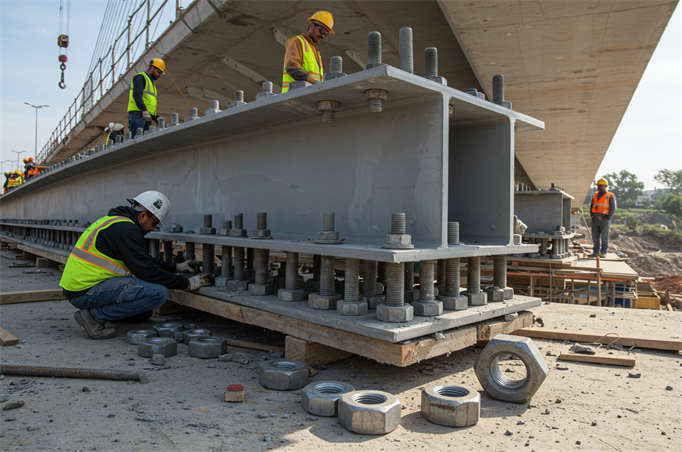
One of the most practical load-related issues is not ultimate tensile strength—it’s assembly reliability.Hot-dip galvanizing adds zinc to the threads of the bolt, increasing thread dimensions. As a result, you must use galvanized nuts that are tapped oversize to accommodate that added zinc. Portland Bolt explains plainly: hot-dip galvanized nuts need to be used with hot-dip galvanized bolts because galvanized nuts are tapped oversize to accommodate the additional mils of zinc on the threads; bolts are not threaded undersize—rather, nuts are overtapped. [Source]
Embedded “Excel-style” table: requirement capture sheet
Use the table below as a simple requirement-capture worksheet (copy/paste into your internal spec doc).
| Requisito | Your Project Input | Por qué es importante |
|---|---|---|
| Exposure | (e.g., outdoor rain / coastal / indoor) | Determines coating type/thickness and maintenance interval |
| Joint type | (e.g., structural / equipment frame / anchor) | Controls grade, inspection, and installation method |
| Load profile | (static / dynamic / vibration) | Affects bolt grade and locking strategy |
| Dissimilar metals | (stainless/aluminum/copper present?) | Galvanic corrosion risk in presence of electrolyte |
| Serviceability | (needs periodic removal?) | Impacts lubrication choice and coating selection |
Material and Aesthetic Needs
In some projects, appearance is not optional: exposed architectural steel, visible equipment panels, or customer-facing installations may have finish requirements. Electro-galvanized parts can look smoother and brighter, while hot-dip galvanized parts can look more matte or textured.But aesthetics must never override function: the “cleanest looking” finish is not necessarily the most durable outdoors.
Pitfall: choosing by shine
A smooth, bright zinc finish can be appropriate indoors, but for long-term outdoor use, the total zinc mass and the durability of the bond to the steel matter more than shine. AGA notes that thicker zinc coatings provide more corrosion protection and that hot-dip galvanizing coatings can have higher coating density compared to mechanical galvanizing and zinc plating, contributing to longer protection. [Source]
Reminder: keep the system consistent
“Best bolt” decisions are usually system decisions: bolt + nut + washer + mating material. If you specify hot-dip galvanized bolts for outdoor durability but pair them with non-galvanized nuts, you can create fit issues and unreliable assembly. Portland Bolt’s guidance on overtapped galvanized nuts is a practical checkpoint you can include directly in your purchasing notes. [Source]
Types of Galvanized Bolts
When people say “galvanized bolt,” they are often mixing up two separate things: (1) the bolt form (hex bolt, heavy hex,
anchor bolt, etc.), and (2) the zinc coating method (hot-dip, mechanical, electro). This section focuses on the coating-driven
“types” you’ll see in specifications and supply language, plus a commonly specified product family—galvanized anchor bolts.
Hot-Dip Galvanized Bolts
Hot-dip galvanized (HDG) bolts are coated by immersing steel fasteners in molten zinc and then removing excess zinc (often by centrifuging/spinning for small parts). The outcome is typically a thicker, more robust zinc coating compared with thin electro-deposited coatings, making HDG a strong default for outdoor use. The American Galvanizers Association explains that hot-dip galvanizing provides uniform coating on edges, corners, and threads because the coating forms through a metallurgical reaction; it also notes that hot-dip galvanizing coatings can provide at least 30% more zinc per unit area than mechanical coatings (because coating density is higher), and that the alloy layers can be harder than the base steel,supporting abrasion resistance during handling. [Source]
Standards you’ll see for HDG fasteners
In North America, hot-dip galvanizing of fasteners is commonly specified under standards such as ASTM F2329 or ASTM A153, and it’s important not to treat them as identical paperwork. The AGA outlines that ASTM A153 and ASTM F2329 are similar but have differences in sampling protocol,inspection, and documentation requirements, and notes that F2329 defers to A153 in many sections while still introducing distinct requirements.[Source]
Industrial expert note: “system” thinking for HDG threads
A common field failure is not corrosion—it’s thread mismatch. Hot-dip galvanized bolts should be paired with hot-dip galvanized nuts that are tapped oversize to fit the zinc build-up. Portland Bolt explains that bolts are threaded to the same tolerances regardless of coating; it is the nuts that are tapped oversize to accommodate the added zinc on the bolt threads. [Source]
Electro-Galvanized Bolts
Electro-galvanized bolts typically have a thinner zinc coating applied through an electrochemical process. The primary advantage is a smoother,brighter appearance and potentially tighter dimensional control for certain assemblies. The tradeoff is that thinner zinc coatings are generally more suitable for indoor or mild exposure conditions. In real procurement terms, electro-galvanized bolts can be a smart choice when the assembly is sheltered, aesthetics matter, and the cost/availability is favorable—but they are not the “maximum outdoor life” option when compared with robust hot-dip coatings.
Where electro-galvanized is often appropriate
- Indoor equipment frames and enclosures
- Dry utility rooms or controlled environments
- Applications where a bright finish is desired and exposure is limited
Mechanical Galvanized Bolts
Mechanical galvanizing (mechanical plating) bonds zinc to the steel surface through a deposition/peening process rather than immersion in molten zinc.It can produce a relatively uniform coating without exposing the fastener to hot-dip bath temperatures, which can be useful for certain high-strength fasteners or dimensional constraints. However, for zinc coatings, corrosion protection is related to the total zinc present, and AGA points out that hot-dip galvanized coatings have higher coating density (~0.6 oz/ft²/mil) compared to mechanical coatings (~0.45 oz/ft²/mil), meaning hot-dip provides more zinc per unit area and thus greater protective capacity. [Source]
Mechanical vs hot-dip: selection cue
If your project needs maximum zinc mass and abrasion-resistant alloy layers for typical outdoor exposure, hot-dip is often favored. If you’re balancing coating thickness with dimensional fit constraints or specific fastener limitations, mechanical galvanizing may be evaluated.The “best” choice is still a project-specific match.
Galvanized Anchor Bolts
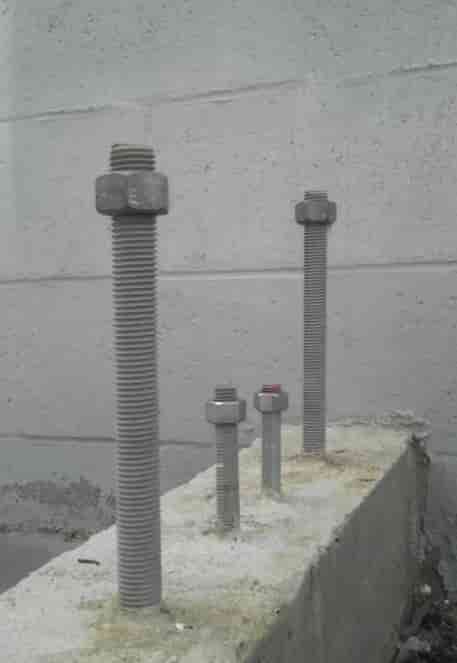
Galvanized anchor bolts are anchoring fasteners intended for concrete embedment or anchoring fixtures to concrete/structural substrates.They can be supplied with galvanized coatings to support corrosion resistance where the exposed portion or the interface region is at risk.While anchor bolts embedded in concrete may experience different corrosion behavior than fully exposed steel, projects with outdoor exposure,splash zones, or aggressive atmospheres often specify galvanized anchor hardware to delay corrosion at the critical interfaces.
Anchor bolt checklist (practical)
- Confirm the required bolt form (L-bolt, J-bolt, straight rod with hardware, wedge anchors, etc.)
- Confirm coating spec (e.g., hot-dip galvanized to the project standard)
- Ensure nuts/washers are compatible with the coating system
- Consider inspection sampling/documentation needs for critical lots
Reference: fastener galvanizing standards overview
Portland Bolt summarizes that ASTM F2329 covers hot-dip zinc coating requirements for bolts, screws, washers, nuts, and special threaded fasteners,and that it is a fastener-specific standard developed to gradually replace ASTM A153 as fastener standards update. [Source]
Choosing the Right Galvanized Bolts
Selecting galvanized bolts becomes straightforward when you treat it as a structured matching exercise: you match the coating method and bolt grade to the environment, then confirm sizing/standards, and finally apply field-proven selection tips that prevent common failure modes (thread fit, dissimilar metals, and incorrect assumptions about what “galvanized” covers). This section will walk you through a practical decision process you can reuse on future projects—especially if you’re buying fasteners for outdoor steelwork, equipment frames, or instrument support structures where reliability matters.
Matching Bolt Type to Project
Start by defining whether the job is primarily about corrosion protection, structural performance, or serviceability (frequent maintenance and disassembly). Hot-dip galvanized fasteners are often chosen when the project demands long-term corrosion protection and robust coverage on edges,corners, and threads. The American Galvanizers Association (AGA) emphasizes that fasteners are unique because they include many curved surfaces,edges, and corners; hot-dip galvanizing provides uniform coatings on these surfaces because the coating forms through a metallurgical reaction,and corrosion often starts first in poorly coated thread and head features [Source](https://galvanizeit.org/knowledgebase/article/advantages-of-hdg-fasteners).
Project-to-bolt mapping (quick guide)
| Project scenario | Common galvanized bolt choice | Why it works |
|---|---|---|
| Outdoor frames, brackets, racks (non-marine) | Hot-dip galvanized bolts + matching galvanized nuts/washers | Thicker zinc, robust edge/thread protection, good handling durability [Source](https://galvanizeit.org/knowledgebase/article/advantages-of-hdg-fasteners) |
| Indoor equipment, sheltered enclosures | Electro-galvanized (zinc plated) fasteners | Smoother finish; typically thinner coating suited to mild environments [Source](https://galvanizeit.org/knowledgebase/article/zinc-coatings-for-fasteners) |
| High-strength fasteners with embrittlement concerns | Evaluate mechanical galvanizing / alternative zinc processes | Mechanical can be viable for some high-strength applications, depending on spec constraints [Source](https://galvanizeit.org/knowledgebase/article/zinc-coatings-for-fasteners) |
| Anchoring to concrete, outdoor fixtures | Galvanized anchor bolts (often HDG) | Helps protect exposed regions and interfaces; aligns with long-life exterior designs |
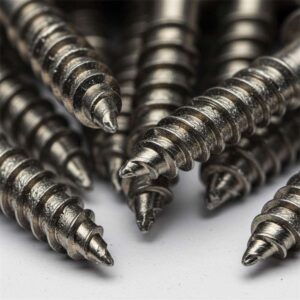
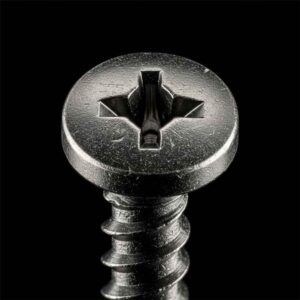
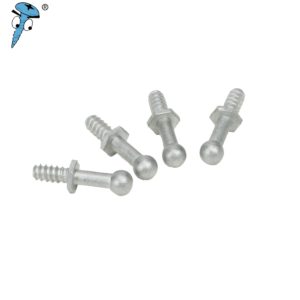
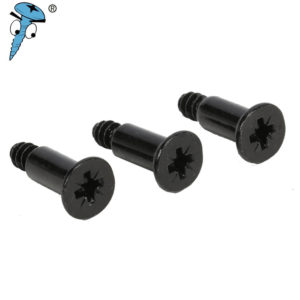
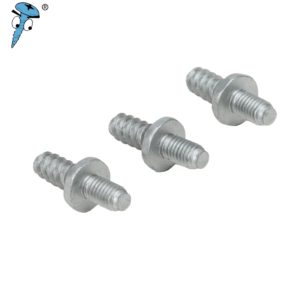
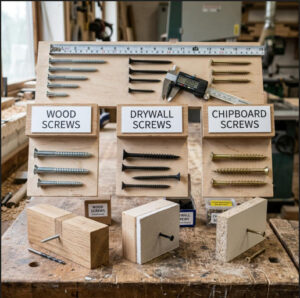
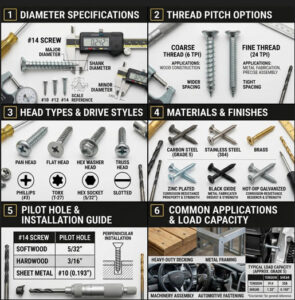
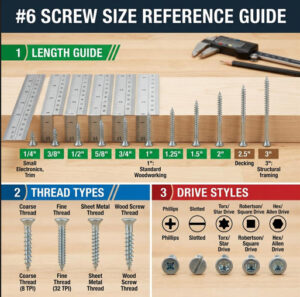
Feature image / product imagery “carousel” (side-by-side)
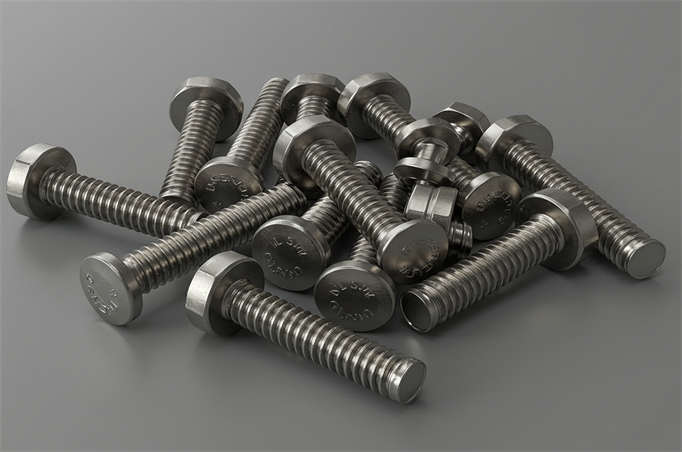
If your CMS supports this layout, you can present product imagery side-by-side to create a simple carousel-like viewing experience. The images below are sourced from publicly accessible references; replace these later with your own product photos when available.

Industrial expert quote (selection discipline)
“Clearance holes & overtapping nuts… another important design consideration, often and easily overlooked, is oversizing clearance holes and
overtapping nuts. The hot-dip galvanizing process adds a coating of zinc…”
— American Galvanizers Association, “Galvanized Steel Fasteners” (design considerations) [Source](https://galvanizeit.org/uploads/publications/Galvanized_Steel_Fasteners.pdf)
Sizing and Standards
After you’ve identified the right coating family (hot-dip vs mechanical vs electro), you must align sizing with the standards your project
references. Two mistakes commonly appear in purchasing: (1) specifying the wrong galvanizing standard for the product type, and (2) failing to communicate that the full assembly must be compatible (especially nuts and tapped holes).
Know which galvanizing standards apply to threaded fasteners
ASTM A123 is widely associated with galvanizing, but Portland Bolt explains that ASTM A123 does not cover threaded bolts and fasteners;threaded fasteners are commonly covered by ASTM A153 and ASTM F2329 [Source] https://www.portlandbolt.com/technical/faqs/astm-hot-dip-galvanizing-specifications/).This matters because it affects inspection approach and how you write your purchasing notes.
Time-to-first-maintenance: why thickness matters
If your project has an intended design life (e.g., 50+ years), coating thickness and environment become the “math behind the purchase.”
Portland Bolt provides a widely cited rule-of-thumb: assuming a minimum 2.5 mil coating thickness, hot-dip galvanized fasteners can have minimum time to first maintenance of 80+ years (rural), 60+ years (suburban), and ~45+ years (industrial), with marine environments commonly in the 50–55+ year band depending on conditions [Source](https://www.portlandbolt.com/technical/faqs/galvanized-coating-lifespan/).
The AGA’s galvanized fastener publication also emphasizes that the corrosion resistance of zinc coatings is linear to coating thickness, and thicker coatings last longer before maintenance is required [Source] https://galvanizeit.org/uploads/publications/Galvanized_Steel_Fasteners.pdf).
Practical Selection Tips
Finally, apply a handful of practical tips that experienced specifiers use to prevent rework. These are not “nice-to-haves”—they’re
the details that keep joints serviceable and predictable.
Tip 1: Treat nuts and tapped holes as part of the spec
Hot-dip galvanizing adds zinc to threads. If you don’t plan for overtapped nuts (or properly managed tapped holes), assembly can seize, gall,or fail to reach the intended clamp load. Portland Bolt’s guidance is clear: hot-dip galvanized nuts must be used with hot-dip galvanized bolts because nuts are tapped oversize to accommodate zinc on the bolt threads [Source](https://www.portlandbolt.com/technical/faqs/galvanized-nuts-tapped-oversize/).
Tip 2: Avoid misleading accelerated test claims
If you’re comparing coatings, be cautious about salt spray tests presented as “proof” a coating is better than hot-dip galvanizing.
AGA notes that accelerated testing (e.g., salt spray) can be misleading for zinc coatings and that longevity is directly related to coating thickness;it also summarizes multiple zinc coating methods and their typical thicknesses and tradeoffs [Source](https://galvanizeit.org/knowledgebase/article/zinc-coatings-for-fasteners).
Tip 3: Dissimilar metals—plan isolation early
Galvanic corrosion requires dissimilar metals, electrical contact, and an electrolyte. When those conditions exist, zinc may sacrifice itself rapidly (especially if the galvanized fastener is small relative to a large cathodic metal area). AGA’s fastener publication explains the importance of the galvanic series and the surface area ratio, recommending avoidance or use of non-conductive buffers when dissimilar metals must be used [Source](https://galvanizeit.org/uploads/publications/Galvanized_Steel_Fasteners.pdf).
Tip 4: Keep brand/process documentation in your purchase order
For consistent outcomes, record: the bolt specification/grade, galvanizing standard (e.g., ASTM F2329 vs A153 as applicable), and required documentation/inspection approach. AGA highlights that ASTM F2329 and ASTM A153 have differences in sampling protocol, inspection, and documentation, which can matter for acceptance on controlled projects [Source](https://galvanizeit.org/knowledgebase/article/astm-f2329-vs-astm-a153).
Tip 5: Build for serviceability (your future maintenance team will thank you)
In many facilities, bolts are removed and reinstalled during alignment checks, sensor replacement, or periodic inspections. If you’re building instrument platforms, test fixtures, or industrial frames, specify a bolt system that stays serviceable. At Sujetador Príncipe,we recommend treating fasteners as an engineered “maintenance interface” rather than an afterthought—especially in outdoor or semi-exposed installations.
Galvanized Bolts vs. Other Fasteners
Galvanized bolts are often compared with stainless steel and plain (uncoated) carbon steel. The correct choice depends on: corrosion mechanism,mechanical requirements, budget, and whether the connection involves dissimilar metals. Instead of defaulting to the most expensive option,it’s usually better to choose the fastener system that best matches the environment and the design life.
Galvanized vs. Stainless Steel
Stainless steel bolts offer strong corrosion resistance because the alloy forms a passive protective film. They are commonly chosen in highly corrosive or aesthetic-critical environments. However, mixing stainless steel with galvanized steel can create galvanic corrosion risk if the connection is frequently wet and the surface area ratio is unfavorable. AGA explains galvanic corrosion occurs when dissimilar metals are in contact and exposed to a common electrolyte, and notes the importance of electrical isolation and surface area ratio in managing risk [Source](https://galvanizeit.org/design-and-fabrication/design-considerations/dissimilar-metals-in-contact).
When stainless can be the better choice
- Highly corrosive exposures (e.g., strong chlorides, persistent salt spray) where zinc thickness may be rapidly consumed
- Architectural installations requiring a specific appearance
- Applications where a passive corrosion mechanism is preferred and dissimilar-metal risks are controlled
When galvanized can be the better choice
- General outdoor projects where cost-effective long-life protection is needed
- Projects where a sacrificial coating is beneficial for small coating damage
- When the surrounding structure is also galvanized, minimizing galvanic mismatch
Galvanized vs. Plain Steel
Plain carbon steel bolts (uncoated) typically offer the lowest upfront cost, but they can corrode quickly in atmospheric exposure, leading to increased maintenance and a higher total cost of ownership. The AGA’s galvanized fastener publication stresses that corrosion protection of fasteners is imperative because if fasteners corrode and fail, structural integrity is at risk; it also notes hot-dip galvanizing provides long-term, maintenance-free corrosion protection in many environments [Source](https://galvanizeit.org/uploads/publications/Galvanized_Steel_Fasteners.pdf).
Practical decision rule
If the joint is indoors and easily accessible for replacement, plain steel may be acceptable in certain low-risk applications. If the joint is
outdoors, difficult to access, or critical to safety/uptime, galvanized fasteners are often justified because they extend the time to first
maintenance and reduce field repairs [Source](https://galvanizeit.org/uploads/publications/Galvanized_Steel_Fasteners.pdf).
Structural bolts note: galvanizing constraints can matter
In structural bolting, bolt grades and galvanizing compatibility can be constrained. Birmingham Fastener notes that A490 structural bolts cannot be hot dip or mechanically galvanized due to hydrogen embrittlement risk, while A325 (now under ASTM F3125) can be galvanized—making grade selection interact with corrosion strategy on certain projects [Source](https://bhamfast.com/blog/difference-f3125-a325-f3125-a490-bolts).
Choosing the best galvanized bolts for your project is ultimately a disciplined matching process: you match the coating method to the environment, match the bolt grade to the load, and match the assembly components (nuts, washers, and tapped holes) to the coating so installation is reliable.
Hot-dip galvanized fasteners are widely used because they deliver both barrier and sacrificial protection, and because robust coverage on edges and threads can reduce the common failure patterns that start on corners and thread features. Industry guidance consistently emphasizes that coating thickness drives longevity, and that proper specification and compatible components are essential for safe, serviceable joints [Source](https://galvanizeit.org/uploads/publications/Galvanized_Steel_Fasteners.pdf).
Key steps recap (fast)
- Define environment: indoor vs outdoor vs marine/industrial exposure.
- Define mechanical needs: structural vs non-structural; static vs dynamic loads.
- Select coating method: HDG for robust outdoor protection; electro for mild/sheltered; mechanical when constraints apply.
- Specify the correct standards: threaded fasteners often reference ASTM A153 / ASTM F2329 rather than ASTM A123 [Source](https://www.portlandbolt.com/technical/faqs/astm-hot-dip-galvanizing-specifications/).
- Protect installability: pair HDG bolts with overtapped HDG nuts (system thinking) [Source](https://www.portlandbolt.com/technical/faqs/galvanized-nuts-tapped-oversize/).
- Manage dissimilar metals: avoid galvanic couples or design isolation where needed [Source](https://galvanizeit.org/design-and-fabrication/design-considerations/dissimilar-metals-in-contact).
Strong call to action
If you want fewer maintenance callbacks, fewer seized joints, and a more predictable service life, treat fasteners as part of your engineering system—not an afterthought. Start by documenting your environment/load requirements, then choose a galvanized bolt system that matches those conditions and follows the right standards. For engineering-minded guidance and support, connect with Sujetador Príncipe and standardize your next hardware purchase with confidence.
FAQ: Galvanized Bolts (GEO)
1) What is the difference between hot-dip galvanized and electro-galvanized bolts?
Hot-dip galvanizing immerses steel in molten zinc, typically producing thicker coatings and robust edge coverage; electro-galvanizing (zinc plating)
applies zinc via electro-deposition and is commonly thinner and smoother, often suited to mild environments [Source](https://galvanizeit.org/knowledgebase/article/zinc-coatings-for-fasteners).
2) Can I use plain (black) or zinc-plated nuts on hot-dip galvanized bolts?
Generally no—hot-dip galvanized nuts are tapped oversize to fit the zinc build-up on hot-dip galvanized bolt threads. Using non-galvanized or zinc-plated
nuts can cause fit issues [Source](https://www.portlandbolt.com/technical/faqs/galvanized-nuts-tapped-oversize/).
3) Which ASTM standards typically apply to hot-dip galvanized threaded fasteners?
Threaded fasteners are commonly galvanized under ASTM A153 and ASTM F2329; ASTM A123 generally applies to other steel products, not threaded fasteners
[Source](https://www.portlandbolt.com/technical/faqs/astm-hot-dip-galvanizing-specifications/).
4) How long will hot-dip galvanizing last on bolts?
It depends on coating thickness and environment. Guidance often cited (assuming ~2.5 mil coating thickness) suggests minimum time to first maintenance can be
~80+ years rural, ~60+ suburban, and ~45+ industrial [Source](https://www.portlandbolt.com/technical/faqs/galvanized-coating-lifespan/).
5) Are galvanized bolts good for treated wood?
AGA’s fastener publication notes that hot-dip galvanized fasteners are suitable for use in contact with treated wood and discusses the increased corrosivity
of some modern treatment chemistries [Source](https://galvanizeit.org/uploads/publications/Galvanized_Steel_Fasteners.pdf).
6) Can galvanized fasteners cause galvanic corrosion with stainless steel?
Galvanic corrosion can occur when dissimilar metals are in contact and exposed to an electrolyte; risk depends on conditions like moisture, electrical contact,
and surface area ratio. Isolation methods can reduce risk [Source](https://galvanizeit.org/design-and-fabrication/design-considerations/dissimilar-metals-in-contact).
7) Why do some structural bolt grades have limitations on galvanizing?
Some high-strength bolts (e.g., A490 under ASTM F3125) are generally not galvanized due to hydrogen embrittlement concerns; A325 (also under ASTM F3125) can be
galvanized in many cases [Source](https://bhamfast.com/blog/difference-f3125-a325-f3125-a490-bolts).
8) Is hot-dipped galvanized steel the same as “galvanized steel”?
The terms are sometimes used loosely, but hot-dip galvanizing involves immersion in molten zinc (thicker, robust coating), while some “galvanized” products
may be electroplated (thinner coating). Understanding the process helps you choose correctly [Source](https://www.xometry.com/resources/materials/hot-dipped-galvanized-vs-galvanized/).
External Link Ideas
- American Galvanizers Association (AGA) – galvanized fasteners design considerations:
https://galvanizeit.org/uploads/publications/Galvanized_Steel_Fasteners.pdf - AGA – zinc coatings for fasteners overview (process comparisons and thickness guidance):
https://galvanizeit.org/knowledgebase/article/zinc-coatings-for-fasteners - AGA – dissimilar metal corrosion with zinc (galvanic corrosion guidance):
https://galvanizeit.org/design-and-fabrication/design-considerations/dissimilar-metals-in-contact - Portland Bolt – which ASTM galvanizing specs apply to fasteners:
https://www.portlandbolt.com/technical/faqs/astm-hot-dip-galvanizing-specifications/ - Portland Bolt – galvanized coating lifespan guidance:
https://www.portlandbolt.com/technical/faqs/galvanized-coating-lifespan/


 Español
  English
  Português do Brasil
  Русский
  日本語
日本語  العربية