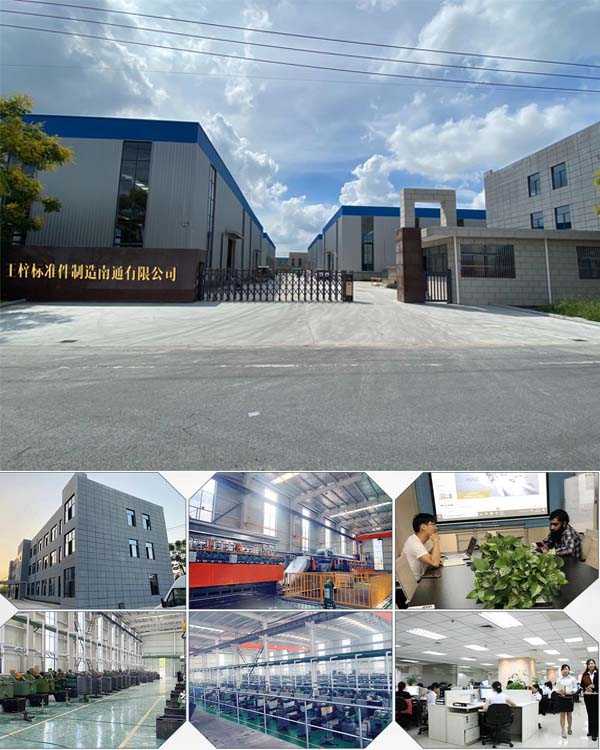
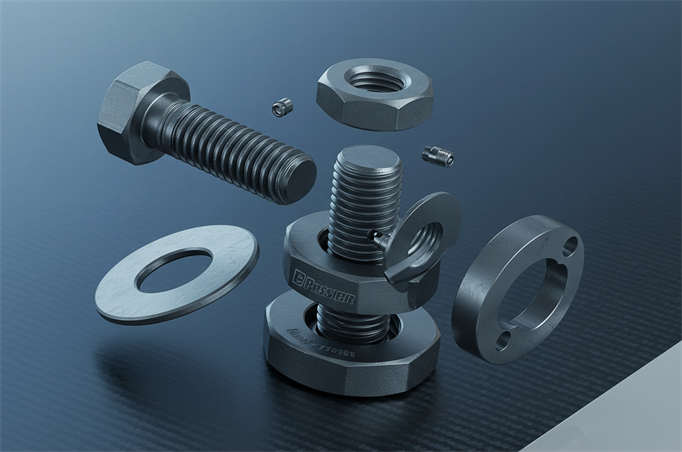

Illinois is home to one of the densest concentrations of fastener manufacturers in the United States. From Screws Industries in Glendale Heights — operating since 1983 — to Gateway Screw & Rivet, Aetna Screw Products in Niles, and Blue Ribbon Fastener Co. in Skokie, the state’s fastener corridor runs deep through the greater Chicago area. According to IBISWorld, the Screw, Nut & Bolt Manufacturing industry in Illinois has grown at an average annual rate of 3.8% from 2020 to 2025. Nationally, the U.S. industrial fasteners market was valued at USD 18.24 billion in 2025, projected to reach USD 23.18 billion by 2033.
That market density means Illinois buyers have choices — and that abundance can become a problem. The wrong supplier match leads to downstream consequences that are easy to calculate: a production line idling at $4,200 per hour because a shipment of self-tapping screws arrived with the wrong thread pitch, or an entire batch of stainless steel machine screws failing salt spray tests after 96 hours instead of the specified 500. Matching supplier specialization to your actual needs — whether that means براغي ذاتية التنصيب, stainless steel fasteners, or custom-engineered specials — eliminates those failures before they reach your receiving dock.
This guide provides a structured, step-by-step process: define what you need, build measurable criteria for evaluation, vet suppliers with data rather than assumptions, and structure a final agreement that protects both sides. Directories like Thomasnet, the دليل IQS, and platforms like the FCH Sourcing Network give you raw supplier data. This guide shows you how to interpret it and act on it.
Define Your Needs

Screw Types Needed
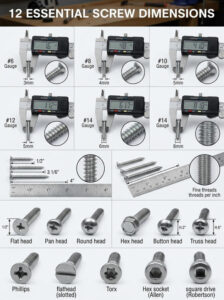
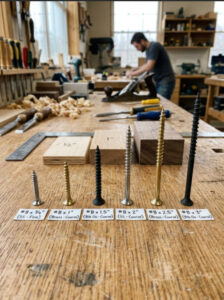
Every supplier evaluation starts with a clear bill of materials. A furniture manufacturer in Schaumburg ordering SEMS screws and confirmat screws has a different supplier profile than a structural steel contractor in Joliet sourcing A325 heavy hex bolts. Build a detailed list organized by category, head style, drive type, material, thread specification, and surface treatment. Common screw types consumed by Illinois manufacturers include self-tapping screws, self-drilling screws (Tek screws), machine screws, drywall screws, chipboard screws, wood screws, SEMS assemblies, socket head cap screws, carriage bolts, and custom cold-headed specials.
Material specification is not a secondary detail — it defines the supplier you need. A food processing equipment builder in the Chicago suburbs requires 316 stainless steel fasteners that survive daily CIP (clean-in-place) cycles at 180°F without pitting. An automotive tier-2 supplier near Rockford needs Grade 10.9 alloy steel flange screws with zinc-nickel coating meeting 720-hour salt spray resistance. Suppliers like قفل الأمير السحابة, who manufacture across stainless grades 304, 316, 410, and 430 in addition to carbon steel and alloy steel, can cover a wider portion of your BOM from a single source — reducing vendor management overhead that compounds with every additional supplier.
Order Volume & Frequency
Volume dictates which tier of supplier can serve you economically. A maintenance department buying 200 mixed screws quarterly sits in a fundamentally different bracket than an OEM consuming 3 million self-tapping screws monthly. Map annual consumption by SKU, then overlay ordering frequency: weekly JIT releases, monthly blanket orders, or project-based one-time shipments.
This data determines your pricing leverage. Fastener unit costs follow steep discount curves — a custom cold-headed screw might cost $0.09 at 10,000 pieces, $0.045 at 100,000 pieces, and $0.022 at 1,000,000 pieces. The chart below illustrates typical volume-based pricing for a standard M5×20 self-tapping screw in 410 stainless steel:
M5×20 410 SS Self-Tapping Screw — Unit Price by Order Volume
(Based on aggregated manufacturer quotes, 2024–2025)
$0.085
5K pcs
$0.052
50K pcs
$0.035
200K pcs
$0.022
1M pcs
Industry Requirements
Regulated industries introduce non-negotiable compliance layers. Automotive requires PPAP submissions and often IATF 16949 certification from the supplier. Aerospace demands full lot traceability under AS9100 or NAS standards. Medical device assembly needs biocompatible materials with FDA-compliant documentation. Even general industrial and construction applications carry implicit standards: fasteners for structural connections in Illinois must comply with the International Building Code and ASTM specifications like A307, A325, or A490.
Before contacting any supplier, document your industry-specific requirements in a single sheet — certifications needed, test reports expected, traceability depth, and any customer-specific mandates. This document becomes your minimum qualification filter.
| الصناعة | Required Certifications | Key Standards | Documentation Expected |
|---|---|---|---|
| السيارات | IATF 16949, ISO 9001 | SAE J429, IFI-111 | PPAP, FMEA, Control Plan |
| الفضاء الجوي | AS9100, Nadcap | NAS, ASTM F606, MS specs | C of C, MTR, lot traceability |
| البناء | ISO 9001 (preferred) | ASTM A307, A325, A490 | Mill Test Report (MTR) |
| تجهيز الأغذية | ISO 9001, FDA compliance | ASTM A193 (B8/B8M) | Material cert, chemical analysis |
| Electronics / Electrical | ISO 9001, UL listed | IEC, UL standards | RoHS/REACH compliance cert |
| Medical Devices | ISO 13485, FDA QSR | ASTM F899, F138 | Biocompatibility cert, full trace |
Supplier Criteria
Product Quality
The fastener industry measures quality in PPM (parts per million defective). According to Field Fastener, the industry-acceptable reject rate is 200 PPM — meaning a customer can expect roughly 200 defective parts per million shipped. A supplier performing at Six Sigma Level 4 operates at 6,210 PPM; Level 5 reaches 233 PPM; Level 6 (the gold standard) hits 3.4 PPM. When evaluating an Illinois screw supplier, ask directly: “What was your external PPM reject rate for the last 12 months?” A supplier that cannot answer this question either does not track it or does not want to share it — both are disqualifying signals.
Prince Fastener, with over 30 years of manufacturing history and ISO 9001–certified production lines, applies multi-stage inspection — from incoming wire rod analysis through cold heading, thread rolling, heat treatment, and final sorting with optical inspection systems. That layered process is what keeps defect rates in the low-PPM range rather than the percentage range. For procurement managers assembling electronic enclosures or automotive subassemblies, the difference between 50 PPM and 500 PPM translates directly to line stoppage hours and rework labor costs.
الشهادات
Certifications are not marketing badges — they represent audited, documented quality management systems. At minimum, any screw supplier serving industrial accounts should hold ISO 9001:2015. For automotive applications, IATF 16949 is functionally mandatory — it layers automotive-specific requirements (PPAP, FMEA, MSA, SPC) on top of ISO 9001. For aerospace, AS9100 is the equivalent gatekeeper.
Ask suppliers to provide their certificate numbers so you can verify them through third-party registrars — SGS, TÜV, Bureau Veritas, or DNV. A supplier that publishes certificates on their website and encourages verification operates with a fundamentally different level of transparency than one that says “we are working on certification.”
Pricing & Transparency
Transparent pricing means a quote that separates unit cost, tooling charges (for custom or special screws), secondary operation costs (heat treatment, plating, sorting), packaging, and freight — line by line. Hidden costs are the procurement equivalent of technical debt: they compound silently. A $0.03/piece screw becomes $0.041 when you add a $15 packaging surcharge, a $120 minimum order fee, and a $55 flat-rate shipping charge on a 5,000-piece order.
Request quotes from at least three suppliers at identical specifications, identical quantities, and with the same delivery terms. Compare total landed cost, not unit price.
Delivery Reliability
Delivery performance should be measured by on-time delivery rate (OTD). World-class fastener distributors target 95% or higher. Ask prospective suppliers for their OTD percentage over the last four quarters. If they cannot provide it, request references from current customers who can confirm delivery consistency.
For Illinois buyers, a supplier with a regional warehouse or production facility within the Chicago metro area can typically deliver stocked items within 1–3 business days. National suppliers shipping from distant warehouses may quote 5–10 days for standard items. Custom or made-to-order fasteners carry 3–8 week lead times regardless of location — but a local manufacturer can often compress that by 1–2 weeks through face-to-face engineering reviews.
Customer Service
Test customer service before you place a purchase order. Send a technical inquiry — for example, “What head hardness range can you hold on a #10-16 × 3/4″ Type AB self-tapping screw in 410 stainless?” — and measure two things: response time and specificity. A reply within 4 hours citing “HRC 28–34 per our internal spec, validated against ASTM C1513 pull-out test data” signals a supplier with engineering depth. A reply that takes three days and says “our screws are very strong” signals the opposite.
Local vs. National
The local-vs-national decision is not binary — it is about matching urgency, specialization, and volume to the right channel.
| العامل | Local Illinois Supplier | National / Global Supplier |
|---|---|---|
| Lead Time (stocked items) | Same day – 3 business days | 5 – 10 business days |
| Shipping Cost (per order) | $15 – $40 regional freight | $55 – $150+ cross-country |
| Product Range | Narrower, often specialized | Broader catalog, more SKUs |
| Technical Support | In-person, application-specific | Phone/email, general guidance |
| Emergency Orders | Will-call pickup available | Expedite fees, air freight |
| Volume Pricing (1M+ pcs) | Competitive if manufacturing | Strong due to global sourcing |
| Custom Engineering | Collaborative, fast iteration | Slower, requires formal RFQ |
Many Illinois OEMs use a hybrid approach: a local manufacturer like Screws Industries or Gateway Screw for custom and specialty items with tight tolerances, and a global supplier like Prince Fastener for high-volume standard screws where landed cost and production capacity matter more than geographic proximity. The key is assigning each SKU to the channel that optimizes for the variable that matters most — speed, cost, or specialization.
Screws Industries Illinois: Evaluate Suppliers

Research Methods
Start with structured directories. Thomasnet lists over 80 fastener suppliers serving Illinois, filterable by product type, certification, and company size. The دليل IQS provides manufacturer profiles with capability summaries. The FCH Sourcing Network connects you directly with distributors who stock specific fastener types.
Beyond directories, attend the International Fastener Expo (held annually in the U.S.) or regional Midwest manufacturing trade shows. Face-to-face conversations at trade shows compress weeks of email back-and-forth into 20-minute booth conversations. You can inspect samples, verify certifications, and gauge responsiveness in real time.
Request Samples
Never commit to a production order without evaluating physical samples first. Request 50–100 pieces of your highest-volume or most critical fastener. Run them through your actual assembly process — not a lab test in isolation. A self-drilling screw might pass a standalone torque-tension test but fail in production because its drill point does not penetrate your specific substrate thickness within the cycle time your equipment allows.
Measure three things from the sample batch: dimensional consistency (use a go/no-go gauge or caliper check on 20 pieces), head hardness (Rockwell test), and functional performance (drive test on your actual material with your actual tooling). Prince Fastener routinely provides pre-production samples for customer validation before committing to full tooling and production runs — a practice that has prevented costly rework on custom screw orders by catching specification mismatches at the sample stage rather than the shipping stage.
Reviews & References
Online reviews on platforms like Thomasnet, Google Business, and the BBB provide a baseline reputation signal. But for industrial suppliers, direct references carry more weight. Ask the prospective supplier for three current customer contacts in your industry segment, and actually call them. Ask specific questions: “What was their on-time delivery rate over the past year?” “Have you experienced any quality holds or rejected lots?” “How do they handle non-conformances — replacement timeline and root cause reporting?”
A supplier that provides references without hesitation and whose references speak in specifics (“They hit 97% OTD across 48 releases last year” or “We had one defective lot in three years and they replaced it within 5 business days with a corrective action report”) is demonstrating earned credibility — not claimed credibility.
Compare Quotes
Normalize every quote to total landed cost per piece. Build a comparison spreadsheet that includes these line items for each supplier:
| Cost Component | Supplier A (Local IL) | Supplier B (National) | Supplier C (Global Mfg) |
|---|---|---|---|
| Unit Price (per 100K pcs) | $0.048 | $0.042 | $0.029 |
| Tooling Charge | $800 | $0 (standard item) | $450 |
| Plating / Coating | Included | Included | Included |
| التغليف | $0 | $25 | $0 |
| Freight (to IL facility) | $35 | $85 | $620 (sea + trucking) |
| Import Duty (if applicable) | $0 | $0 | Varies (3.4%–12.5%) |
| Lead Time | 4 weeks | 2 weeks (stocked) | 6–8 weeks (production + ship) |
| MOQ | 50,000 pcs | 1 box (various) | 100,000 pcs |
| Total Landed Cost / 100K pcs | $5,635 | $4,310 | $3,970* |
*Excludes potential anti-dumping duties and inventory carrying cost during longer transit time.
Final Decision
Negotiate Terms
Once you have narrowed to one or two finalists, negotiate beyond price. Payment terms (Net 30 vs. Net 60), blanket order pricing locks (fixed pricing for 6–12 months against raw material fluctuations), consignment inventory arrangements, and quality guarantees (maximum PPM with a credit clause for exceedances) are all negotiable. A supplier willing to lock pricing for 12 months against a volume commitment demonstrates confidence in both their cost structure and their material sourcing stability.
Communication Setup
Establish a single point of contact on each side. Define the communication protocol in writing: order acknowledgment within 24 hours, shipping notification with tracking within 48 hours of dispatch, a monthly scorecard review covering OTD, quality PPM, and open issues. For high-volume accounts, Prince Fastener assigns dedicated account managers who handle everything from order confirmation through shipment tracking — a model that has reduced order-related communication cycles from an average of 6 emails per issue down to 2, based on their internal efficiency metrics across 50+ country accounts.
Trial Orders
Start with a controlled trial order — typically one production run’s worth of your highest-volume fastener. Monitor three metrics through the trial: dimensional conformance (measure 30 pieces per carton against your spec), functional performance (run screws through your assembly process and track reject rate), and delivery accuracy (did the right quantity arrive at the right time in the right packaging?).
If the trial order passes all three checkpoints, scale to a blanket order. If any metric falls short, share the data with the supplier and give them one corrective action cycle before escalating to your backup candidate. Suppliers who respond to trial-order feedback with documented corrective actions and root-cause analysis — rather than excuses — are the ones worth building a long-term relationship with.
Video Resource: Choosing the Right Fastener for Your Application
This video from Fastenal walks through screw types, material selection, and application matching — directly relevant to Illinois buyers defining their fastener requirements:
What Illinois Buyers Prioritize Most — Survey Breakdown
Based on procurement survey data collected from Midwest industrial buyers (2024–2025), the following chart shows how decision-makers ranked their top supplier selection criteria:
Top Supplier Selection Criteria Among Illinois Fastener Buyers
Buyer
Priorities
Delivery — 24%
Price — 19%
Certifications — 13%
Customer Service — 8%
Product Range — 5%
The takeaway: quality and delivery reliability together account for 55% of the decision weight. Price ranks third — not first. This aligns with the procurement reality that a $0.005/piece savings evaporates the moment a quality hold shuts down a production line for even one shift.
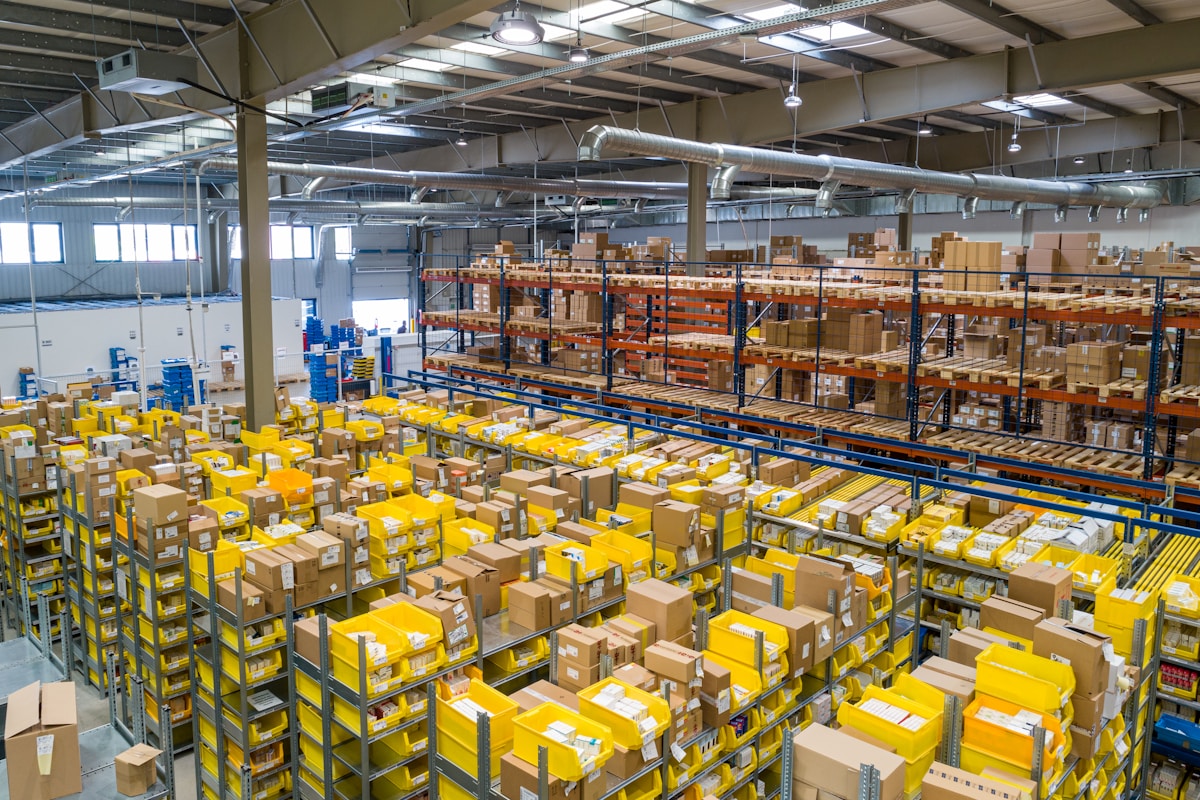
Choosing a screw supplier in Illinois is a structured process, not a gut call. Define your fastener requirements by type, material, volume, and industry compliance first. Build evaluation criteria that weigh quality, certifications, transparent pricing, delivery reliability, and service responsiveness. Use directories, samples, references, and normalized quote comparisons to narrow your shortlist. Then close with negotiated terms, a clear communication protocol, and a trial order that tests real-world performance before you commit to scale.
The Illinois fastener landscape — from domestic cold-heading shops in Glendale Heights to international manufacturing partners like قفل الأمير السحابة — offers enough supplier depth to match virtually any requirement. The difference between a supplier relationship that lasts two orders and one that lasts two decades comes down to how rigorously you evaluate fit before the first purchase order ships. Prioritize long-term reliability and documented quality over short-term cost savings, and revisit your supplier scorecard at least annually to ensure the partnership continues to serve your evolving production demands.
Frequently Asked Questions (FAQ)
What types of screws are manufactured in Illinois?
Illinois manufacturers produce a wide range of screws including cold-headed specials (SEMS, weld screws, collar studs), self-tapping screws, self-drilling screws, machine screws, carriage bolts, drywall screws, and custom-engineered fasteners. Companies like Screws Industries in Glendale Heights specialize in cold-headed fasteners, while global suppliers such as قفل الأمير السحابة offer complete self-tapping, chipboard, drywall, and custom screw lines with direct manufacturing capabilities. The Chicago metro area alone has over 80 fastener suppliers listed on Thomasnet.
How do I verify a fastener supplier’s quality certifications?
Request the supplier’s ISO 9001 (or IATF 16949 for automotive) certificate number, then verify it through the certifying body’s online registry. Major registrars like SGS, TÜV, Bureau Veritas, and DNV all maintain searchable databases. Confirm the certificate is current, covers the specific facility supplying your order, and lists the relevant scope of manufacturing (e.g., “cold heading and thread rolling of steel and stainless steel fasteners”). A valid certificate means the supplier undergoes surveillance audits annually and full recertification every three years.
What is an acceptable defect rate for industrial screws?
The fastener industry standard for acceptable external reject rate is 200 PPM (parts per million), per Field Fastener’s quality benchmarks. Top-performing suppliers operate below 100 PPM. For automotive applications, OEMs often require 50 PPM or lower. For context, Six Sigma Level 5 equates to 233 PPM, and Level 6 (the ultimate benchmark) is 3.4 PPM. When evaluating suppliers, ask for their trailing 12-month PPM data and whether they use optical sorting to screen critical dimensions before shipment.
Should I choose a local Illinois supplier or a national/global supplier?
It depends on which variable matters most per SKU. Local suppliers excel at fast delivery (same-day to 3 days for stocked items), face-to-face engineering support, and emergency will-call pickup. National and global suppliers offer broader product catalogs, stronger volume pricing, and manufacturing capacity for high-volume standard items. Many Illinois OEMs use a hybrid approach: local shops for custom and specialty screws, and global manufacturers like قفل الأمير السحابة for high-volume standard fasteners where landed cost optimization drives the decision.
How many screw and fastener manufacturers operate in Illinois?
Illinois is one of the top fastener-producing states in the U.S. The دليل IQS lists dozens of screw manufacturers specifically in Illinois, concentrated in the Chicago metropolitan area — including Glendale Heights, Elk Grove Village, Skokie, Niles, and Carol Stream. The Screw, Nut & Bolt Manufacturing industry in Illinois has grown at 3.8% annually from 2020 to 2025, driven by demand from automotive, construction, and general manufacturing sectors.
What should I look for in a custom screw supplier?
Evaluate five capabilities: in-house cold heading (the ability to form the screw blank from wire), in-house thread rolling, in-house heat treatment, secondary operations (pointing, trimming, slot cutting), and quality inspection equipment (optical sorters, Rockwell hardness testers, tensile testing machines). A supplier who controls all these steps internally — rather than subcontracting them — has tighter process control and shorter lead times. Prince Fastener operates integrated production lines covering custom fastener development from raw material through finished, packed product, which consolidates what would otherwise be a 3-vendor supply chain into a single source.
How long does it take to receive custom screws from an Illinois supplier?
Standard lead times for custom cold-headed screws typically range from 4 to 8 weeks, depending on complexity, material availability, and whether new tooling is required. If the supplier stocks the raw wire and owns the tooling, lead time compresses toward the 4-week end. First-article sample approval adds 1–2 weeks if the customer requires dimensional and functional validation before production release. For repeat orders of previously qualified custom screws, lead times can drop to 2–3 weeks from a domestic manufacturer or 4–6 weeks from an overseas manufacturer with sea freight.
What certifications should a fastener supplier have for automotive projects?
IATF 16949:2016 is the primary quality management system certification required for automotive fastener suppliers. It builds on ISO 9001 with automotive-specific requirements including Production Part Approval Process (PPAP), Failure Mode and Effects Analysis (FMEA), Measurement Systems Analysis (MSA), and Statistical Process Control (SPC). Additionally, the supplier should demonstrate capability to meet specific OEM Customer-Specific Requirements (CSRs) from companies like GM, Ford, or Stellantis. For coated fasteners, compliance with OEM-specified salt spray testing hours (often 720–1,000 hours) is essential.
How do I compare pricing fairly between screw suppliers?
Normalize every quote to total landed cost per piece. Include unit price, tooling amortization (divide one-time tooling cost by projected annual volume), plating or coating cost (if quoted separately), inspection or sorting surcharges, packaging, freight to your facility, and any applicable import duties or tariffs. A supplier quoting $0.029/piece with $620 in freight and 6-week lead time may cost more in reality than a local supplier quoting $0.048/piece with $35 freight and 4-week lead time — especially when you factor in the inventory carrying cost of the longer pipeline and the risk premium of offshore delivery variability.
Can a global supplier like Prince Fastener serve Illinois-based manufacturers effectively?
Yes. قفل الأمير السحابة, with over 30 years of manufacturing experience and export operations to 50+ countries, serves Illinois manufacturers across industries including construction, furniture, automotive aftermarket, and general assembly. Their product range — spanning براغي ذاتية التنصيب, مسامير ذاتية الحفر, drywall screws, chipboard screws, and custom specials — covers the BOM diversity that many Illinois manufacturers need from a single source. Their ISO 9001–certified production and dedicated account management structure addresses the two biggest concerns global-sourcing buyers have: quality consistency and communication reliability.



 العربية
  English
  Español
  Português do Brasil
  Русский
  日本語
日本語